
What Is a Tear-Off Seal? A Plain-English Guide
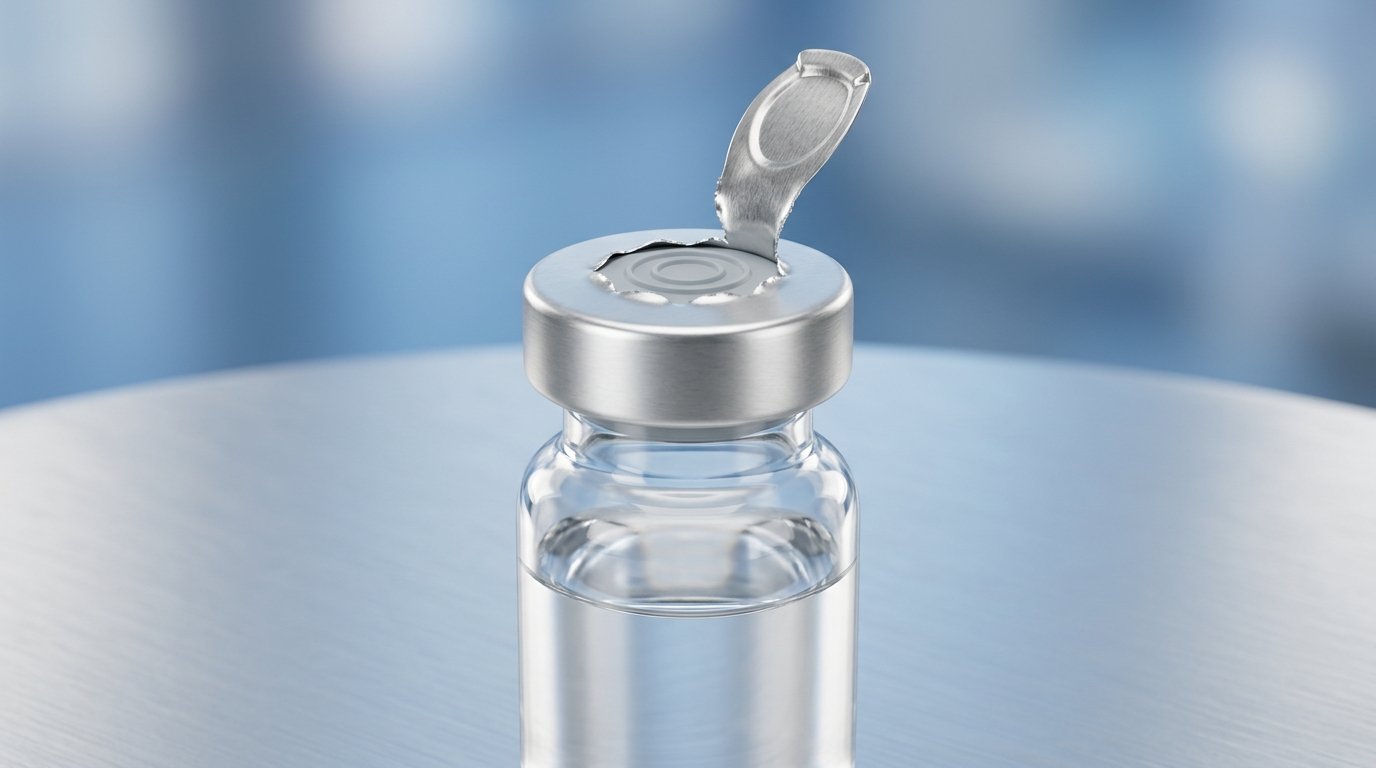
A tear-off seal is an all-aluminium vial cap whose metal top is torn completely away, usually with a small pull tab, to expose the rubber stopper underneath. Unlike a flip-off seal, there is no plastic button: the seal is solid aluminium crimped over the stopper, and opening it means removing the top of the metal rather than flipping a plastic cap. It is used where full exposure of the stopper, or a simple all-metal closure, is wanted. The two categories are written up against different ISO parts and different spec sheets, compared in aluminium-plastic seal vs plain aluminium seal.
This guide explains what a tear-off seal is, how it works, where it is used, and how it differs from flip-off and tear-down seals.
Key takeaways
- A tear-off seal is an all-aluminium vial cap; you tear the metal top away to expose the stopper.
- There is no plastic button; the seal is solid aluminium crimped over the rubber stopper.
- It usually has a pull tab or scored line so the metal top can be torn off by hand.
- Tearing the top off exposes more of the stopper than flipping a button does, and the torn metal is tamper evidence.
- It is used on injectable vials where full stopper access or an all-metal seal is preferred.
- For the formal definition, see the tear-off seal glossary entry; it is compared with the flip-off design in flip-off vs tear-off seals.
What is a tear-off seal?
A tear-off seal is a one-piece aluminium seal that crimps over the rubber stopper of a vial and is opened by tearing the metal top away. It is the all-metal counterpart to the flip-off seal: both crimp over the stopper to seal the vial, but a tear-off seal has no moulded plastic top.
The seal is a formed aluminium shell that covers the vial top and crimps around the neck. To open it, you lift a small tab (or break along a scored line) and tear the upper part of the aluminium away, which removes the metal covering the stopper and exposes it for the needle or for full removal of the stopper. Because the metal is torn and cannot be reformed, the opened seal is visible tamper evidence.
How a tear-off seal works
A tear-off seal works the same way as any vial seal for sealing, but is opened by tearing the metal rather than flipping a plastic button. The lower edge of the aluminium shell is rolled under the vial neck flange during capping, compressing the rubber stopper against the glass to form the sterile barrier. That crimp is what keeps the vial sealed.
To open, the user lifts the pull tab and tears the scored upper section of the aluminium away. Depending on the design, this exposes the central area of the stopper for a needle, or removes enough of the metal to take the stopper out entirely, which is useful where the full contents need to be accessed or reconstituted. The crimp and the stopper provide the seal; the tear feature provides access and tamper evidence.
Where tear-off seals are used
Tear-off seals are used on injectable vials where an all-aluminium closure or fuller exposure of the stopper is preferred over a flip-off button. They suit applications where the stopper may need to be fully exposed or removed, for example reconstituting a lyophilised product or certain laboratory and research reagent uses, and where a simple, robust metal seal is wanted without a coloured plastic top.
Like other vial seals, tear-off seals are made in standard neck sizes, listed on the by-size hub, so they match the vials and stoppers of the same finish. As all-aluminium caps, they fall under the scope of ISO 8362-3, which covers aluminium caps for injection vials.
How a tear-off seal differs from flip-off and tear-down seals
A tear-off seal removes the metal top entirely; a flip-off seal flips only a plastic button, and a tear-down seal tears down a section of the seal. All crimp over the stopper to seal the vial; they differ in how much of the cap is removed and how.
| Seal type | What you remove | Plastic top |
|---|---|---|
| Tear-off | The whole aluminium top | No |
| Flip-off | A plastic button only | Yes |
| Tear-down | A torn-down section of the seal | Usually no |
The flip-off design keeps most of the cap in place and exposes only a small injection point, which suits routine injectables and colour-coding. The tear-off design exposes more of the stopper, which suits applications needing fuller access. The direct comparison is in flip-off vs tear-off seals, the two all-aluminium designs are weighed against each other in tear-off vs tear-down seals, and the related pull-ring design in pull-ring vs tear-down seals.
How this works in practice at Autofits
Autofits manufactures tear-off seals and tear-down seals as all-aluminium closures, alongside its FlipTop aluminium-plastic flip-off range and aluminium pilfer-proof (ROPP) caps; the full range is on the products page. The tear-off seals are produced in standard vial neck sizes with tight dimensional control so they crimp cleanly over the stopper, and the aluminium can be coloured and printed. Production runs under an ISO 15378:2017 quality system, alongside ISO 9001:2015 and ISO 14001:2015 certification and a Drug Master File, in a 75,000 sq ft Nashik facility with an ISO Class 8 cleanroom and high-speed visual inspection. The full certification set is on the quality page.
Frequently asked questions
What is a tear-off seal?
A tear-off seal is an all-aluminium vial cap whose metal top is torn completely away, usually with a pull tab, to expose the rubber stopper. It has no plastic button: the seal is solid aluminium crimped over the stopper. Opening it means removing the top of the metal rather than flipping a plastic cap, and the torn metal serves as tamper evidence.
How does a tear-off seal open?
You lift a small pull tab or break along a scored line and tear the upper section of the aluminium away. Depending on the design, this exposes the central area of the stopper for a needle or removes enough metal to take the stopper out entirely. The crimped lower part of the seal keeps the stopper compressed until the top is torn off.
What is the difference between a tear-off seal and a flip-off seal?
A tear-off seal is all aluminium and is opened by tearing the whole metal top away, exposing more of the stopper. A flip-off seal has a plastic button you flip up to expose only a small injection point, while the aluminium stays crimped. Both crimp over the stopper to seal the vial; they differ in construction and how much of the cap is removed.
Where are tear-off seals used?
Tear-off seals are used on injectable vials where an all-aluminium closure or fuller exposure of the stopper is preferred, including applications where the stopper may need to be fully exposed or removed, such as some reconstitution or laboratory uses. They are made in standard vial neck sizes to match the vials and stoppers.
Do tear-off seals provide tamper evidence?
Yes. Because the metal top is torn and cannot be reformed or reattached, an opened tear-off seal is visibly already opened. The torn aluminium is permanent evidence that the vial has been accessed, in the same way a flipped or missing plastic button signals a flip-off seal has been opened.
Related reading
- Tear-off seal: definition
- Tear-down seal: definition
- Flip-off vs tear-off seals
- ISO 8362-3: aluminium caps for injection vials
- Autofits tear-off seals
Sources
- ISO: ISO 8362-3:2001, Injection containers and accessories, Part 3: Aluminium caps for injection vials (https://www.iso.org/standard/33804.html)
- USP-NF: General Chapter <1207>, Package Integrity Evaluation, Sterile Products (https://www.usp.org/)
*Last updated: 2026-06-18. This article is general technical information, not regulatory or compliance advice; confirm current standard editions and requirements with the issuing bodies.*
