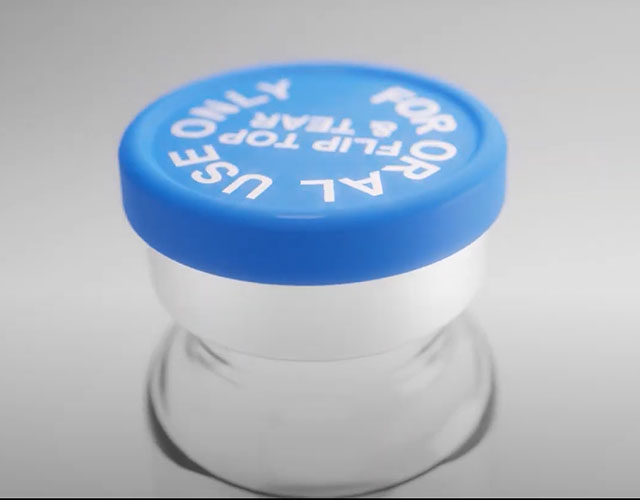
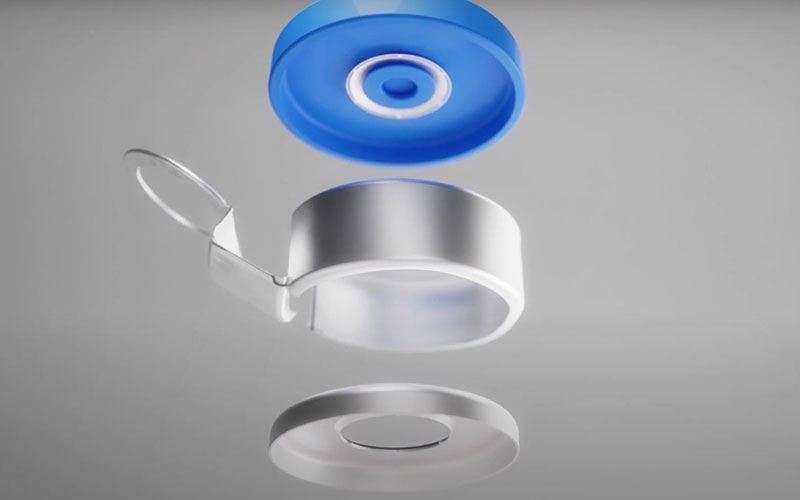
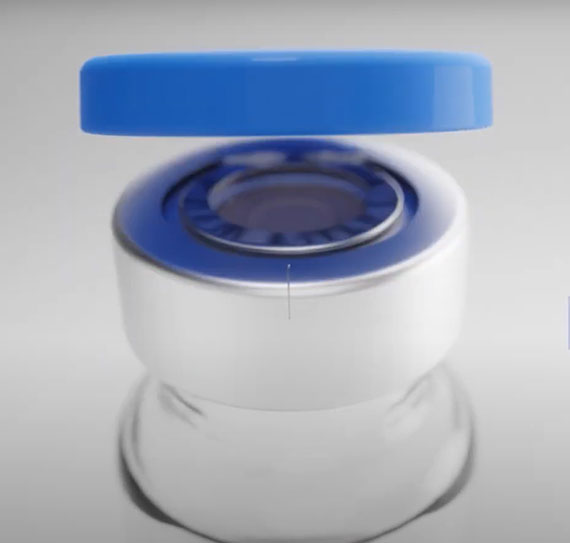

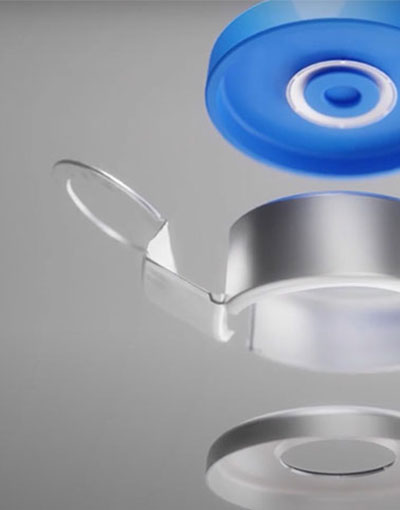
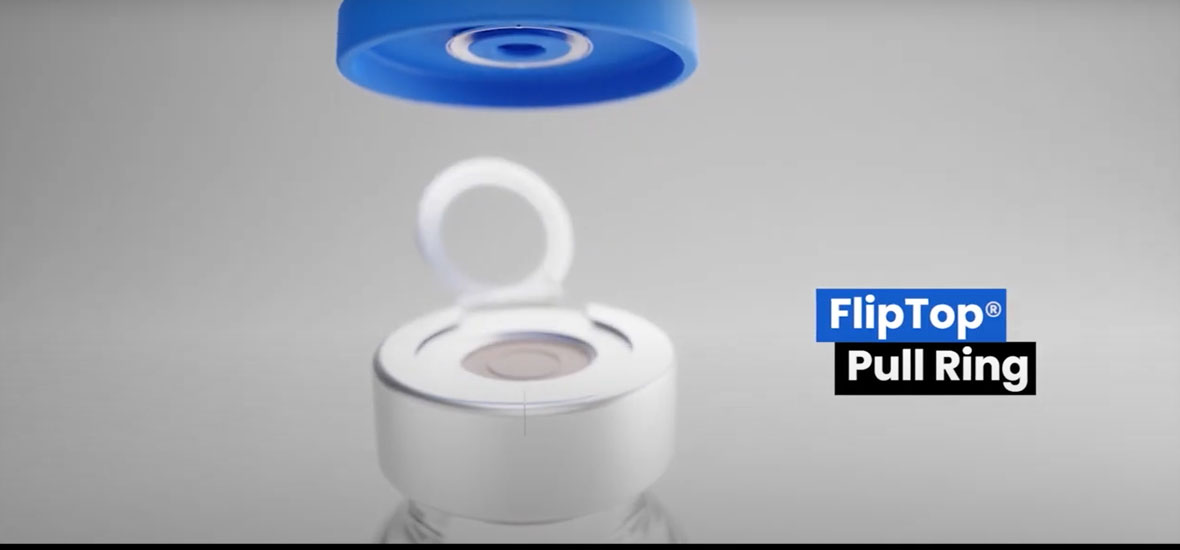
By pulling the aluminum ring and turning it counterclockwise, the entire FlipTop® seal easily separates from the vial, these seals offer effortless detachment ensuring user-friendly operation .
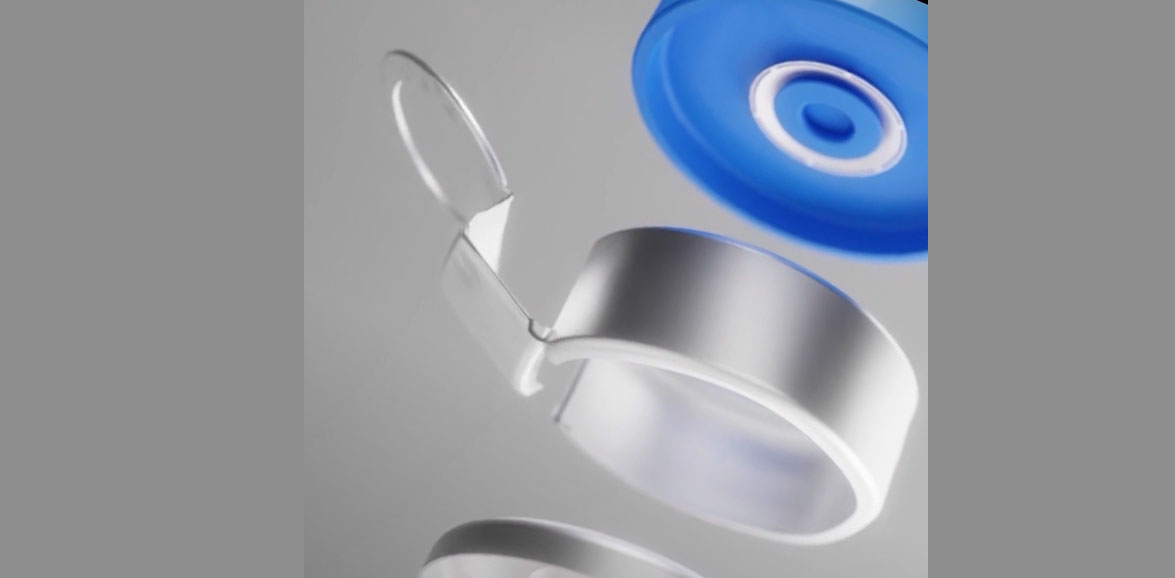
These seals have a PP Disc of bridge type, which flip open to access the Aluminium pull ring inside that allows access to the injectable.
We have standard designs for you to get started with a minimal lead time. We are quick to turnaround with customization as per your specific requirements.
| FLIP TOP PULL RING | 13 MM FTS | 20 MM FTS | 32 MM FTS |
|---|---|---|---|
| Availability | NA | Available in Matte/Glossy | Available in Matte/Glossy |
Our FlipTop® Pull Ring seals, are readily available in sizes 20 and 32 mm.
The plastic discs of our seals come in a variety of finishes: GLOSSY, MATTE, EMBOSSED and PRINTED.
We deliver READY TO USE and READY TO STERILIZE packaging options as per your requirement.
Download Company Profile
We supply to more than 150 of the leading pharmaceutical companies across the world. Choose us for your next requirement.
A pull ring seal vial closure is an aluminium-plastic seal where the entire seal detaches once the operator pulls the aluminium ring and turns it anticlockwise. Unlike a flip-off button, which leaves the aluminium skirt crimped in place, the FlipTop® pull-ring design lets a nurse or patient remove the whole seal in one single-handed action, which is why it suits oral-dosing and reconstitution workflows.
This page sets out what the pull-ring seal is, how it opens, the sizes Autofits supplies, the dimensional and material specifications, and how it is qualified against ISO and pharmacopoeial requirements.
A FlipTop® pull-ring seal is an aluminium-plastic combination cap that crimps over the rubber stopper of a vial and is opened by pulling and rotating an aluminium ring so the whole seal comes free. It belongs to the same aluminium-plastic family as the FlipTop Optima flip-off seal, but the opening mechanism is different: where a flip-off seal flips up only a small plastic button to reveal an injection point, the pull-ring seal is designed for the full seal to leave the vial neck.
The seal combines three elements. A formed aluminium shell, made from AA8011 alloy and coated with epoxy lacquer, crimps around the vial neck flange and holds the stopper compressed against the glass. A moulded polypropylene disc sits on top. An aluminium pull ring is presented at the surface so the operator can grip it without a tool. Because the assembly is built to lift away cleanly, the design is frequently marked "For Oral Use Only / Flip Top & Tear" to direct it to oral and reconstitution use rather than to needle-access injectables.
To open, the operator lifts the aluminium pull ring, pulls it, and turns it anticlockwise; the whole seal then detaches from the vial. The crimped lower edge of the aluminium is released as the ring is pulled, so the metal, the PP disc, and the stopper-retaining structure come away together, exposing the stopper or the vial mouth for dosing or reconstitution.
The advantage for the workflow is that this can be done with one hand and without a crimp tool, decapper, or scissors. In a nursing or oral-dosing setting, where an operator may be holding a vial in one hand and a syringe, spoon, or cup in the other, single-handed removal saves a step and reduces the risk of dropping the vial. The pulled ring and detached seal are also visible tamper evidence: once removed, the seal cannot be reseated.
The pull-ring seal fits applications where the whole seal should come away quickly and by hand, rather than where a needle is pushed through a retained button. That makes it a natural fit for oral liquids and for products that are reconstituted before use. It is positioned for repeated, fast, single-handed access rather than for the small, retained injection point that a flip-off button provides.
Autofits supplies the FlipTop® pull-ring seal in two sizes. Dimensions below are taken from the Autofits engineering drawings. Match the seal size to the vial neck finish and stopper of the same nominal size.
| Parameter | Value |
|---|---|
| Inner Ø aluminium seal (D1) | 20.00–20.60 mm |
| Outer Ø disc (D2) | 22.00–23.00 mm |
| Disc height | 3.00–4.00 mm |
| Inner aluminium height | 7.00–7.60 mm |
| Total / assembled height | 9.00–10.00 mm |
| Aluminium thickness | 0.18–0.22 mm |
| Bridges | 6 taper bridges |
| Max opening force | 35 N |
| Standard packing (per box) | 6,000 (2,000 × 2 bags) |
| Parameter | Value |
|---|---|
| Inner Ø aluminium seal (D1) | 32.15–32.40 mm |
| Outer Ø PP disc (D2) | 36.20–36.60 mm |
| Inner aluminium height | 13.20–13.60 mm |
| Total / assembled height | 14.30–15.30 mm |
| Aluminium thickness | 0.20–0.26 mm |
| Fins | 8 fins (flower) |
| Max opening force | 65 N |
Opening force varies with the number and geometry of the bridges or fins. Where a parameter is not listed for a given size, it was not specified on the drawing supplied; it is available on request. Box dimensions are 420 × 270 × 320 mm, and Tyvek bagging is available as an option.
The pull-ring seal is built from pharmaceutical-grade aluminium, food-contact-compliant lacquer, and a moulded polypropylene disc, all produced in-house. Each component is specified against a recognised standard so the closure can be qualified for primary packaging contact.
The aluminium-plastic seal manufacturing process is the same disciplined route used across the FlipTop range, which keeps dimensional control tight enough for clean, repeatable crimping.
The pull-ring seal is manufactured to ISO 15378:2017 GMP and follows ISO 8362-6 for aluminium-plastics combination caps, with documented material compliance for pharmaceutical contact. Relevant references and controls are:
The complete certification set is on the quality page.
The pull-ring seal suits products that are accessed by hand for oral dosing or reconstitution rather than by needle through a retained button. Typical uses include:
For products that need a small retained injection point instead, the FlipTop flip-off range is the better fit; for emergency or frequently accessed vials, see the tear-down seal.
| Closure | What you remove | Plastic disc | Single-handed open | Typical route |
|---|---|---|---|---|
| Pull-ring | The whole seal | Yes | Yes | Oral, reconstitution |
| Flip-off | A plastic button only | Yes | Yes | Injectable |
| Tear-down | The whole seal, after opening the disc | Yes (riveted) | Yes | Oral vaccines |
| Tear-off | The whole aluminium top | No | Yes | Injectable, full access |
The pull-ring and tear-down designs both remove the entire seal; they differ in how the disc and aluminium are joined and in how the operator initiates removal. See the direct read-out in pull-ring vs tear-down seals, and the flip-off contrast in flip-off vs tear-off seals.
Autofits supplies the pull-ring seal Regular, Ready-to-Use or Ready-to-Sterilize, sterilized by gamma irradiation or ETO, with shelf life defined for each form.
Sterilization is by gamma irradiation or ETO; Tyvek bagging is available. To confirm the right size, finish, colour and form of supply for your fill line and route of administration, contact the Autofits technical team with your vial neck finish and stopper details.
A pull ring seal is an aluminium-plastic vial closure with a small aluminium ring at the surface. When the ring is pulled and turned anticlockwise, the whole seal detaches from the vial neck, exposing the stopper or the vial mouth. It differs from a flip-off seal, where only a plastic button flips up and the aluminium skirt stays crimped.
Lift the aluminium pull ring, pull it, and rotate it anticlockwise. The crimp releases and the whole seal, including the aluminium and the polypropylene disc, comes away in one action. It is designed to be done by hand, single-handed, without a crimp tool or decapper.
Autofits supplies two sizes: 20 mm in the bridge type and 32 mm in the flower type. The 20 mm seal has an inner aluminium diameter of 20.00 to 20.60 mm and six taper bridges; the 32 mm seal has an inner aluminium diameter of 32.15 to 32.40 mm and eight fins. Match the seal to the vial neck finish of the same nominal size.
The pull-ring design is built for the whole seal to lift away by hand, which suits oral liquids and reconstitution rather than needle access through a retained button. The "For Oral Use Only / Flip Top & Tear" marking directs the closure to the correct route of administration and signals the opening method to the operator.
Both remove the whole seal rather than just a button. In the pull-ring seal, the operator pulls the aluminium ring and rotates anticlockwise. In the FlipTop tear-down seal, the polypropylene disc is riveted to the aluminium; the disc is opened first, then pulled and rotated anticlockwise so the whole seal comes off. The pull-ring suits oral dosing; the tear-down is used mainly for oral vaccinations.
Yes. It is available Ready-to-Use, assembled and washed in an ISO Class 8 cleanroom and gamma sterilized (or ETO), double-bagged for aseptic areas, with a 2-year shelf life before capping. It is also available Regular (non-sterile, 3.5-year shelf life before capping) and Ready-to-Sterilize for in-house terminal sterilization.
It is manufactured under an ISO 15378:2017 GMP quality system and follows ISO 8362-6 for aluminium-plastics combination caps. Materials are documented for pharmaceutical contact: lacquer to 21 CFR 175.300, polypropylene to 21 CFR 177.1520, heavy metals at not more than 100 ppm total, and BSE/TSE-free. Autofits also holds ISO 9001:2015, ISO 14001:2015, a Drug Master File (DMF 18100) and CFDA registration.
*Last updated: 2026-06-26. This page is general technical and product information, not regulatory or compliance advice; confirm current standard editions, material specifications and requirements with the issuing bodies and with the Autofits technical team for your specific application.*
