
Pull-Ring vs Tear-Down Seals: Which Aluminium Seal for Oral Medicines?
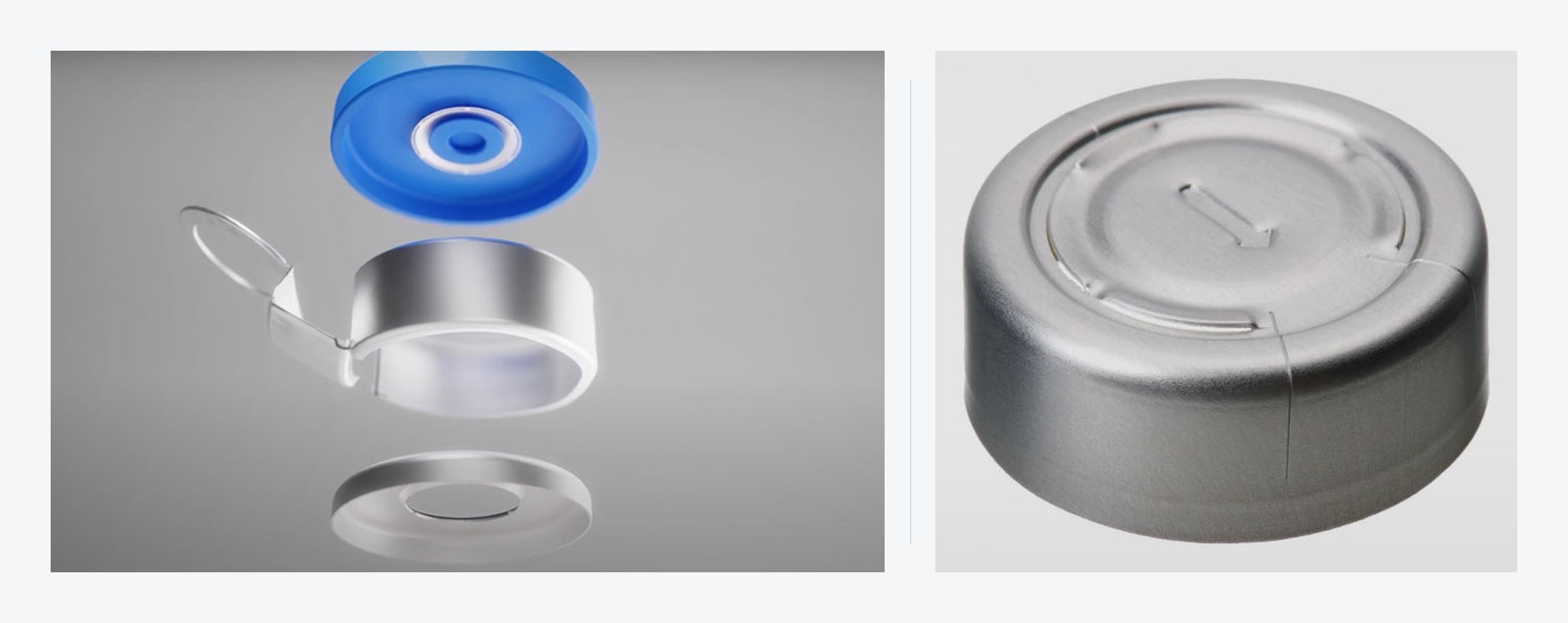
Pull-ring and tear-down seals are both tamper-evident aluminium closures used to seal oral medicine bottles, and they differ mainly in how they open and how hard they are to copy. A pull-ring seal is opened by lifting a pre-formed ring or tab that tears an aluminium band away, while a tear-down seal is opened by tearing down a perforated strip in the aluminium. The pull-ring is the more complex design: its tooling is harder to duplicate, which makes it more counterfeit-resistant and more premium, while the tear-down is the simpler, lower-cost option for the same application.
This page compares the two seal types on opening mechanism, tamper evidence, counterfeit resistance, cost, and typical use so a packaging or procurement team can choose between them.
Key takeaways
- Both seal types are aluminium tamper-evident closures used for oral medicines, and both show visible evidence once opened.
- The opening action differs: a pull-ring is lifted and pulled to tear an aluminium band; a tear-down is opened by tearing down a perforated section of the seal.
- The pull-ring is harder to duplicate. Its more complex forming tooling raises the barrier to counterfeiting, which is why it is positioned as the premium option.
- The tear-down is simpler and lower-cost, suited to applications where the priority is a reliable tamper-evident seal at lower unit cost.
- A 32 mm pull-ring is used for contrast media in diagnostic imaging, an example of the premium, counterfeit-resistant end of the range.
- Tamper-evident packaging is a regulatory expectation for many medicines, so the seal choice is part of the container closure system, not just a cosmetic decision.
How does a pull-ring seal open?
A pull-ring seal opens when the user lifts a pre-formed ring or tab on top of the aluminium seal and pulls it, which tears a scored band of aluminium and releases the closure. The ring gives the user a defined grip and a controlled tear line, so the seal comes away cleanly and leaves obvious evidence that it has been opened.
Because the ring and its tear path are formed into the aluminium during manufacturing, the tooling and process are more involved than for a plain seal. That complexity is the point: a closure that is difficult to manufacture is also difficult to reproduce convincingly, which supports tamper evidence and anti-counterfeiting. Autofits produces this design as its FlipTop Pull Ring seal, available in 13 mm, 20 mm, and 32 mm. Tamper-evident packaging is a long-standing regulatory expectation for many over-the-counter and prescription products, and a seal that cannot be removed and replaced without visible damage is central to meeting it.
How does a tear-down seal open?
A tear-down seal opens by tearing down a perforated or scored section of the aluminium, peeling the seal away from the container. The user starts the tear at the perforation and pulls downward, removing the seal and exposing the contents. Like the pull-ring, it is single-use: once torn, it cannot be reinstated without the damage being visible.
The tear-down uses a simpler aluminium form than the pull-ring, with no separate lifting ring to manufacture. That keeps tooling and unit cost lower while still delivering a tamper-evident closure suitable for oral medicines. For a product where the main requirement is a dependable, visible tamper seal at scale, the FlipTop Tear Down seal is the straightforward choice.
Pull-ring vs tear-down: factual comparison
Both seals protect oral medicines and provide tamper evidence; the trade-off is complexity and counterfeit resistance versus simplicity and cost. The table summarises the practical differences.
| Attribute | Pull-ring seal | Tear-down seal |
|---|---|---|
| Opening action | Lift the ring/tab and pull to tear an aluminium band | Tear down a perforated/scored section to peel the seal |
| Material | Aluminium | Aluminium |
| Relative complexity | Higher (formed ring and tear path) | Lower (simpler aluminium form) |
| Counterfeit resistance | Higher (harder tooling to duplicate) | Standard tamper evidence |
| Relative cost | More premium | Lower-cost |
| Tamper evidence | Yes, visible once opened | Yes, visible once opened |
| Typical use | Oral medicines; 32 mm used for contrast media | Oral medicines |
| Reusable | No, single-use | No, single-use |
Why counterfeit resistance favours the pull-ring
The pull-ring resists counterfeiting because its forming process is harder to replicate, so a copied seal is more likely to look or feel wrong. Counterfeit medicines are a documented patient-safety problem: the World Health Organization estimates that a meaningful share of medicines in some markets are substandard or falsified. Packaging that is difficult to imitate raises the cost and effort for a counterfeiter and gives downstream handlers and patients a clearer signal of authenticity.
This does not make any seal a complete anti-counterfeit solution on its own. It is one layer alongside printing, embossing, batch coding, and supply-chain controls. Where a manufacturer wants that extra barrier built into the closure itself, the pull-ring is the more defensible choice; where the priority is a reliable tamper-evident seal at lower cost, the tear-down meets the need, and both sit alongside the flip-off and tear-off designs on tamper evident vial seals.
Where each seal is used
Both seals are used for oral medicines, and the pull-ring also serves higher-value applications such as contrast media. Contrast media are the imaging agents used in diagnostic procedures such as CT and X-ray; a 32 mm pull-ring is used for this category, reflecting the premium, counterfeit-resistant positioning of the design.
Seal diameter follows the container neck. Aluminium seals of this type are commonly made across a 13–32 mm range, with the right size chosen to fit the bottle or vial finish. Beyond oral solids and liquids, aluminium tear and pull seals appear across pharmaceutical and related categories wherever a tamper-evident, single-use closure is required.
How this works in practice at Autofits
Autofits manufactures both pull-ring and tear-down aluminium seals as part of its FlipTop® and Tear Off / Tear Down range, in 13 mm, 20 mm, and 32 mm sizes, with a 32 mm pull-ring used for contrast media. The pull-ring is among the more complex closures Autofits produces, and the company describes itself as one of the few manufacturers of pull-ring seals in India. Production runs in a 75,000 sq ft Nashik (Maharashtra) plant with an ISO Class 8 cleanroom and high-speed visual inspection, under an ISO 15378:2017 quality system alongside ISO 9001:2015 and ISO 14001:2015 certification and a Drug Master File (DMF). The aluminium and any plastic components can be printed and coloured to customer specification, which supports brand identity and anti-counterfeit artwork on the seal itself. The full certification set is on the quality page.
Both designs have a home application. The pull-ring is the standard on contrast media vials, where a 32 mm neck has to open fully for power-injector spiking, and it also suits cytotoxic and oncology fills because the whole seal comes away in one controlled single-handed action. The tear-down is the one to specify where the product is poured rather than drawn, which covers the oral presentations described on the vaccines and veterinary pages.
Frequently asked questions
What is the difference between a pull-ring seal and a tear-down seal?
A pull-ring seal is opened by lifting a pre-formed ring or tab and pulling it to tear an aluminium band, while a tear-down seal is opened by tearing down a perforated section of the seal. Both are aluminium, tamper-evident, and used for oral medicines. The pull-ring is more complex to make and harder to duplicate, so it is positioned as the more premium, counterfeit-resistant option; the tear-down is simpler and lower-cost.
Which seal is better for preventing counterfeiting?
The pull-ring seal generally offers stronger counterfeit resistance because its forming tooling is harder to duplicate, so a fake is more likely to look or feel wrong. Neither seal is a complete anti-counterfeit solution on its own; both work best combined with printing, embossing, batch coding, and supply-chain controls.
Are pull-ring and tear-down seals used for the same products?
Both are used for oral medicines. The pull-ring also serves higher-value applications: a 32 mm pull-ring is used for contrast media in diagnostic imaging. The choice between them usually comes down to the balance of counterfeit resistance and cost a manufacturer needs for a given product.
Are these seals tamper-evident?
Yes. Both pull-ring and tear-down seals are single-use and show visible evidence once opened, so they cannot be removed and reinstated without the tampering being apparent. Tamper-evident packaging is a regulatory expectation for many medicines.
What sizes do pull-ring and tear-down seals come in?
Aluminium pull-ring and tear-down seals are commonly produced across a 13–32 mm range, sized to fit the container neck. Autofits offers 13 mm, 20 mm, and 32 mm, with a 32 mm pull-ring used for contrast media.
Related reading
- What a tear-down seal is
- Tear Down aluminium seals
- Aluminium-plastic seals explained
- Flip-off vs tear-off seals compared
- ISO 15378:2017 and GMP for primary packaging
Sources
- FDA: Tamper-Resistant Packaging Requirements for Certain OTC Human Drug Products (https://www.fda.gov/drugs/development-resources/tamper-resistant-packaging-requirements-certain-otc-human-drug-products)
- World Health Organization: Substandard and falsified medical products (https://www.who.int/news-room/fact-sheets/detail/substandard-and-falsified-medical-products)
- ISO: ISO 15378:2017, Primary packaging materials for medicinal products (https://www.iso.org/standard/70729.html)
*Last updated: 2026-06-10. This article is general packaging information, not regulatory or compliance advice; confirm current standard editions and tamper-evidence requirements with the relevant authority.*
