
Lyophilization Vial Seals
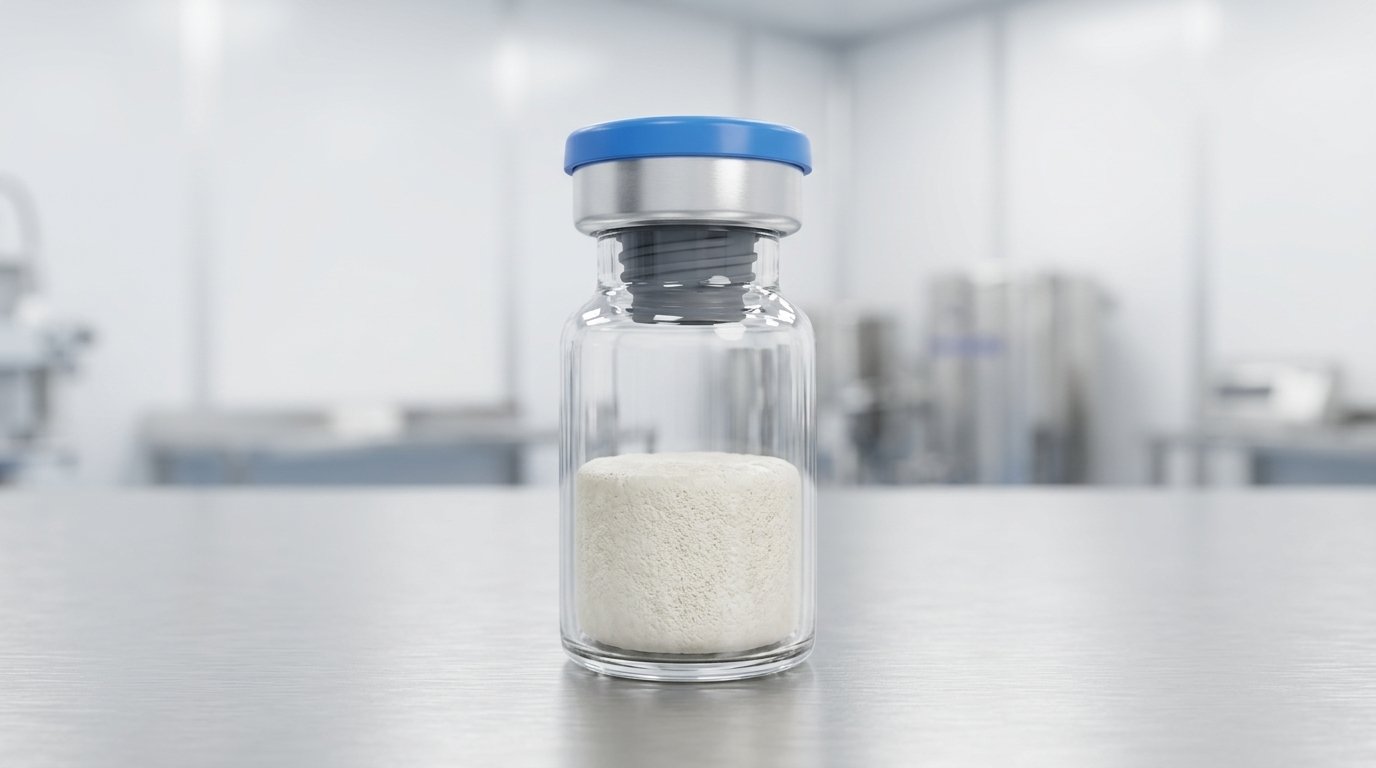
A lyophilized vial seal is the aluminium-plastic flip-off seal crimped over the stopper of a freeze-dried product after lyophilisation is complete. Freeze-drying adds a step most fills do not have: the stopper sits half-seated inside the drying chamber, then is fully seated and sealed under controlled conditions. The seal and crimp are what hold container-closure integrity for the shelf life of the product.
This page explains what a lyophilised drug product is, the closure requirements that freeze-drying imposes, why the seal choice matters for integrity after lyo, which Autofits seals fit, and the standards that apply.
Key takeaways
- A lyophilized vial seal is the flip-off seal crimped over the stopper once freeze-drying is finished; it locks in the integrity the stopper established at chamber close.
- Freeze-drying uses a two-position lyophilisation stopper: half-seated to let vapour escape during drying, then fully seated and sealed.
- The crimp seal protects container-closure integrity (CCI) after lyo: a poorly seated or loosely crimped seal lets moisture and gas back into a hygroscopic cake.
- Lyophilisation stoppers and their seals are covered by ISO 8362-5 (closures for injection vials, freeze-drying type), within the ISO 15378:2017 GMP framework.
- Autofits supplies the FlipTop® Optima flip-off seal in 20 mm and 28 mm, the common freeze-dry neck sizes, with 100% camera inspection and Ready-to-Use sterilised forms.
- Integrity is verified against USP <1207> package integrity methods; aseptic sealing follows EU GMP Annex 1.
What a lyophilised product is and its container-closure requirements
Lyophilisation, or freeze-drying, removes water from a filled product by freezing it and then subliming the ice under vacuum, leaving a dry cake that is reconstituted before use. It is used for molecules that are not stable in solution: many biologics, antibiotics, and oncology agents are presented as lyophilised powders for this reason. The dry cake is stable on the shelf, then dissolved with a diluent immediately before dosing, which is why so many freeze-dried products ship as a two-part kit, a case covered in secondary packaging for prefilled syringes.
The container-closure system for a freeze-dried product has to do two jobs that a liquid fill does not. First, it has to let water vapour leave the vial during the long drying phase, which is why the stopper is a special two-leg (or slotted) lyophilisation design that can sit in a raised, half-seated position. Second, once drying is complete, the stopper is fully seated inside the chamber and the system has to close to a tight, durable seal that keeps moisture and oxygen out for the whole shelf life. A lyophilised cake is often hygroscopic; even small moisture ingress can collapse the cake, raise residual moisture, or degrade the molecule.
The workflow runs in sequence. Vials are filled, the lyophilisation stopper is placed in the half-seated position, and the loaded shelves are frozen and dried. At the end of the cycle the chamber shelves press the stoppers fully home, often under vacuum or an inert-gas backfill such as nitrogen, so the chosen headspace is locked in. The vials are then unloaded and the aluminium seal is crimped over the seated stopper. The crimp is the last barrier: it holds the stopper compressed against the glass so the seal the stopper made under controlled conditions is preserved.
Why seal choice matters here
For a freeze-dried product the seal and crimp are the final guarantee of container-closure integrity, so the seal has to crimp cleanly and consistently over a stopper that may have a different profile from a standard injectable stopper. If the seal is the wrong size, under-crimped, or dimensionally inconsistent, the residual seal force on the stopper can fall below what is needed to keep the vial gas-tight, and a hygroscopic cake will not forgive that.
Three things matter in practice. Dimensional control: the seal’s inner aluminium diameter and height have to match the vial neck finish and the seated height of the lyophilisation stopper so the crimp pulls down evenly. Consistent aluminium thickness and bridge geometry: these govern how the skirt rolls under the flange and how much residual force the closed seal holds. And particle and sterility control: because freeze-dried products are aseptically filled and sealed, the seal often needs to arrive sterile and clean, with no loose particles that could fall onto the stopper or into the open vial during the half-seated phase.
A flip-off design suits the freeze-dry workflow because it leaves the aluminium skirt crimped permanently in place and exposes only a small central injection point when the plastic button is flipped, which is the right access pattern for a powder that is reconstituted in the vial by injecting diluent through the stopper. The seal is qualified, alongside the stopper, against the package-integrity methods in USP <1207>, and the sealing step on an aseptic line falls under the contamination-control expectations of EU GMP Annex 1.
Residual moisture and cake stability end up as shelf-life claims, so the stability programme behind them matters: ICH Q1A(R2) and Q1B sets the storage conditions and durations those claims are generated under. Capping a part-seated stopper is also a machine problem, and vial sealing machine types covers what a capper has to do differently when the stopper starts proud of the neck. The vial sealing applications hub maps the freeze-dried case against the liquid ones, and oncology vial closures covers the large overlap where the freeze-dried product is also a hazardous one. Freeze-drying is also how many cell and gene therapy intermediates, plasmid and vector material among them, are stabilised for storage. Many freeze-dried presentations are biologic products that are not stable in solution, so the material-compliance argument on that page applies here too.
Which Autofits seals fit
For lyophilised products Autofits supplies lyophilization vial seals: the FlipTop® Optima flip-off seal in the neck sizes commonly used for freeze-drying, with the dimensional control and clean, sterilised supply that integrity-critical fills require. The flip-off button keeps the aluminium crimp intact for the life of the vial and presents a single injection point for reconstitution.
- FlipTop® Optima flip-off seal, 20 mm: the most common injectable and freeze-dry neck size. Inner aluminium diameter 20.22 mm (min), total seal height 9.02 to 9.91 mm, aluminium thickness 0.16 to 0.20 mm, six taper bridges, maximum opening force 35 N. Standard packing is 6,000 per box.
- FlipTop® Optima flip-off seal, 28 mm: used for larger freeze-dry vials and higher fill volumes. Inner aluminium diameter 27.60 to 28.20 mm, total seal height 11.06 to 12.06 mm, aluminium thickness 0.17 to 0.23 mm, eight bridges, maximum opening force 35 N. Standard packing is 3,000 per box.
Both sizes are available Regular, Ready-to-Use or Ready-to-Sterilize. The Ready-to-Use form is assembled in an ISO Class 8 cleanroom, double-lacquered, washed to control particles and gamma sterilised, then double-bagged for aseptic areas, which suits the aseptic sealing step that follows lyophilisation. The Optima Button design also carries intrinsic tamper evidence. Match the seal to the vial neck finish and the lyophilisation stopper of the same nominal size; for the wider option set see the full FlipTop seal range and the 20 mm vial seals listing.
Relevant standards
The freeze-dry closure system sits under a defined set of references:
- ISO 8362-5: closures made of elastomeric materials for injection vials, freeze-drying type. This is the standard most specific to lyophilisation stoppers and the closures that go with them.
- ISO 8362-6: caps made of aluminium-plastics combinations for injection vials, the family the FlipTop Optima seal belongs to.
- ISO 15378:2017: primary packaging materials for medicinal products, with GMP requirements, the quality framework the seals are manufactured under.
- USP <1207>: package integrity evaluation for sterile products, the basis for CCI testing of the sealed vial.
- ICH Q1A(R2) and Q1B: stability testing, which sets the storage conditions and durations behind the residual-moisture and shelf-life claims the closure has to hold.
- EU GMP Annex 1: manufacture of sterile medicinal products, which governs the aseptic environment in which the stopper is seated and the seal is crimped.
Frequently asked questions
What is a lyophilized vial seal?
A lyophilized vial seal is the aluminium-plastic flip-off seal crimped over the stopper of a freeze-dried product once lyophilisation is finished. During drying the lyophilisation stopper sits half-seated to let vapour escape; at the end of the cycle the stopper is fully seated, then the aluminium seal is crimped over it to hold the closure tight for the product’s shelf life.
Why is the stopper half-seated during freeze-drying?
A lyophilisation stopper has legs or slots so it can rest in a raised, half-seated position on the vial. That gap lets water vapour escape from the vial during the long sublimation phase. When drying is complete, the freeze-dryer shelves press the stoppers fully home, often under vacuum or a nitrogen backfill, before the vials are unloaded and sealed.
Why does the seal matter for container-closure integrity after lyo?
A freeze-dried cake is often hygroscopic, so even small moisture or gas ingress can raise residual moisture, collapse the cake, or degrade the molecule. The crimped seal holds the stopper compressed against the glass and is the final barrier that preserves the closure the stopper made under controlled conditions. A poorly sized or under-crimped seal can let the residual seal force fall too low to stay gas-tight.
Which seal sizes does Autofits supply for freeze-dried products?
Autofits supplies the FlipTop Optima flip-off seal in 20 mm and 28 mm, the common freeze-dry neck sizes. The 20 mm seal has an inner aluminium diameter of 20.22 mm (min) with six taper bridges; the 28 mm seal has an inner aluminium diameter of 27.60 to 28.20 mm with eight bridges. Match the seal to the vial neck finish and lyophilisation stopper of the same nominal size.
What standard covers freeze-drying closures?
ISO 8362-5 covers elastomeric closures for injection vials of the freeze-drying type, so it is the most specific standard for lyophilisation stoppers and their closures. The aluminium-plastics seal that goes over the stopper follows ISO 8362-6, and the whole system is qualified for integrity against USP <1207> and sealed under EU GMP Annex 1.
Are the seals available sterilised for aseptic lyophilisation lines?
Yes. The FlipTop Optima seal is available Ready-to-Use: assembled and washed in an ISO Class 8 cleanroom, double-lacquered and gamma sterilised (or ETO), then double-bagged for aseptic areas, with a 2-year shelf life before capping. Regular (non-sterile) and Ready-to-Sterilize forms are also available for in-house sterilisation.
Related reading
- FlipTop Optima flip-off seals
- FlipTop seal range
- Vaccine vial seals
- Biologics vial seals
- ISO 8362-5: freeze-drying closures
- USP <1207>: package integrity
- 20 mm vial seals
Sources
- ISO: ISO 8362-5:2008, Injection containers and accessories, Part 5: Freeze drying closures for injection vials (https://www.iso.org/standard/41653.html)
- ISO: ISO 8362-6:2010, Injection containers and accessories, Part 6: Caps made of aluminium-plastics combinations for injection vials (https://www.iso.org/standard/45831.html)
- USP-NF: General Chapter <1207>, Package Integrity Evaluation, Sterile Products (https://www.usp.org/)
- EudraLex Volume 4, EU GMP Annex 1, Manufacture of Sterile Medicinal Products (https://health.ec.europa.eu/)
- Autofits engineering drawings and FlipTop Seals dossier (internal, on file)
*Last updated: 2026-06-27. This page is general technical and product information, not regulatory or compliance advice; confirm current standard editions, material specifications and requirements with the issuing bodies and with the Autofits technical team for your specific application.*
