
ICH Q1A(R2) and Q1B: Stability Testing and Packaging’s Role
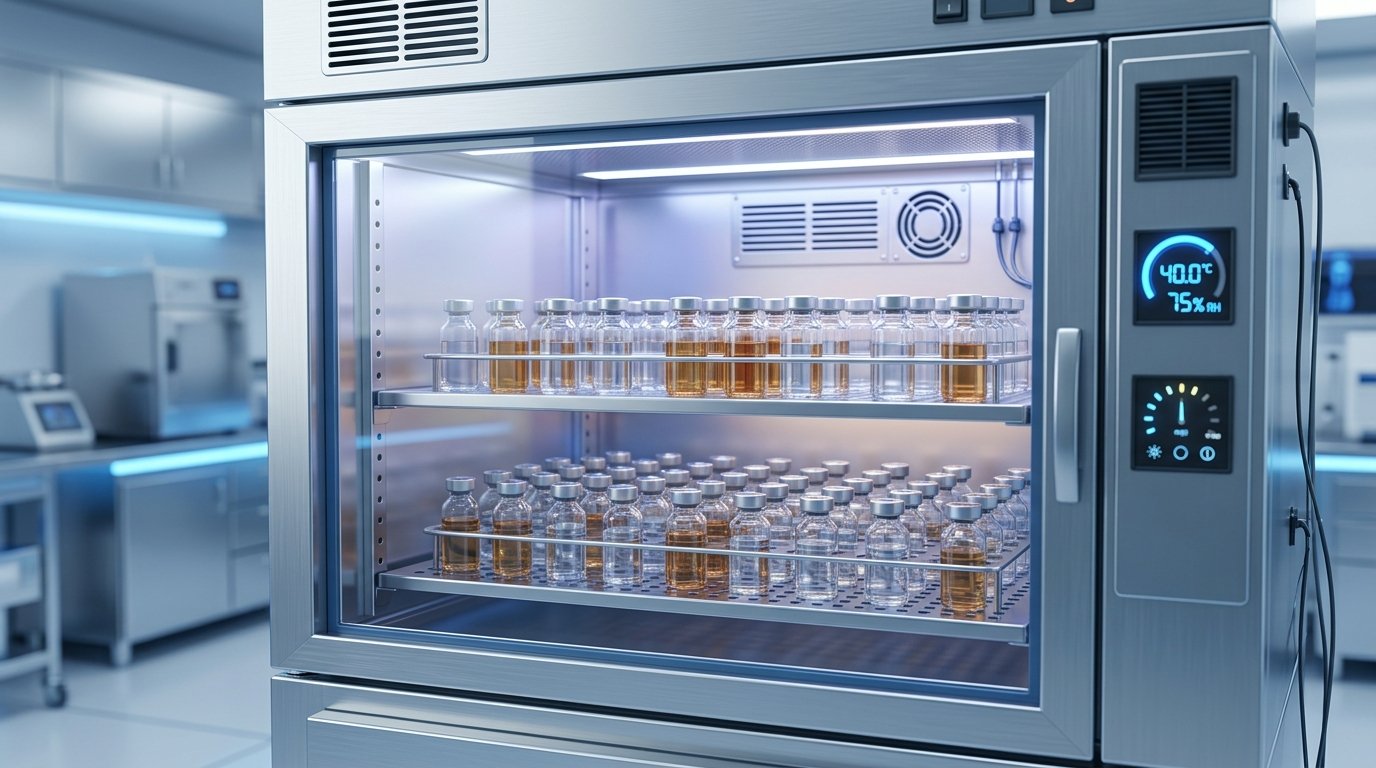
ICH Q1A(R2) is the international guideline that sets the stability testing requirements for new drug substances and drug products, defining the storage conditions and study designs used to establish a product’s shelf life, and ICH Q1B is the companion guideline for photostability testing. Stability testing shows how a drug’s quality changes over time under the influence of temperature, humidity, and light, and the container closure system is central to it: the packaging is what protects the product across its shelf life. The studies are conducted in the product’s actual packaging.
This guide explains what ICH Q1A(R2) and Q1B require, how the container closure system affects stability, and the status of the consolidated ICH Q1 guideline now in development.
Key takeaways
- ICH Q1A(R2) defines the stability testing requirements (storage conditions, study durations, design) for new drug substances and products.
- ICH Q1B covers photostability testing: how a product behaves on exposure to light.
- Stability studies are run in the product’s actual container closure system, because the packaging is part of what determines stability.
- A package that protects against moisture, oxygen, and light supports a longer, more robust shelf life.
- A consolidated ICH Q1 guideline (merging Q1A through Q1F and Q5C) is in development; as of mid-2026 it is at the draft stage, with Q1A(R2) and Q1B remaining the operative guidelines until it is finalised.
- Packaging quality connects to stability through barrier properties and container closure integrity.
What is ICH Q1A(R2)?
ICH Q1A(R2), Stability Testing of New Drug Substances and Products, is the International Council for Harmonisation guideline that sets out how to test a pharmaceutical’s stability to establish its shelf life and recommended storage conditions. It is published by the International Council for Harmonisation (ICH) and adopted by regulators including the FDA and the EMA.
Stability testing is how a manufacturer demonstrates that a drug retains its identity, strength, quality, and purity over its labelled shelf life under defined storage conditions. Q1A(R2) specifies the framework: the storage conditions (combinations of temperature and humidity, defined for long-term, intermediate, and accelerated testing), the climatic zones considered, the testing frequency, and how the data support a retest period or shelf life. The “(R2)” denotes the second revision of the guideline. Because the package interacts with the product, these studies are performed on the product in the container closure system proposed for marketing.
What ICH Q1B adds: photostability
ICH Q1B, Photostability Testing of New Drug Substances and Products, is the companion guideline that defines how to test a product’s response to light. Some drugs degrade when exposed to light, so Q1B sets out a standard approach: exposing the drug substance and product to defined light conditions and evaluating any changes.
Photostability testing typically proceeds in stages, assessing the exposed drug and then, if needed, the product in its immediate pack and its marketing pack, to determine whether the packaging provides adequate light protection. This is where packaging choices matter directly: an amber or otherwise light-protective container, secondary packaging such as a carton, or an opaque overwrap can be the means by which a light-sensitive product meets its stability requirements. Q1B is one of the Q1 family of stability guidelines that sit under the overall ICH stability framework.
How packaging affects stability
The container closure system is integral to stability because it controls the product’s exposure to moisture, oxygen, and light, the very factors stability testing measures. A package that is a good barrier slows degradation; a package that leaks, transmits light, or admits moisture and oxygen shortens shelf life or causes failures. The effect shows up first on lyophilised products, where residual moisture is a specification in its own right, and on biologic formulations, where oxidation and light exposure drive degradation.
For an injectable in a glass vial, several packaging factors feed into stability:
- Barrier to moisture and gases. The elastomeric closure, usually a low-permeability butyl rubber stopper, and the seal that holds it compressed limit the ingress of moisture and oxygen.
- Light protection. Amber glass or protective secondary packaging addresses photostability under Q1B.
- Container closure integrity. The package must stay sealed across its shelf life, the property addressed by USP <1207>; a loss of integrity is a stability and sterility risk.
- Compatibility. What migrates from the packaging into the drug, studied through extractables and leachables, can itself be a stability concern.
Because stability is demonstrated in the actual package, the seal that maintains the closure and the materials that contact the drug are part of the stability story, not separate from it.
The consolidated ICH Q1 guideline
ICH is consolidating its stability guidelines (Q1A through Q1F and Q5C) into a single new guideline, ICH Q1, but as of mid-2026 it is still in development. A Step 2 draft of the consolidated ICH Q1 was released for public consultation in 2025, with the comment period closing in August 2025; the final Step 4 version had not yet been adopted as of mid-2026 and is expected later in the year.
Until the consolidated guideline is finalised and implemented, ICH Q1A(R2) and Q1B remain the operative guidelines for stability and photostability testing. The consolidated Q1 is expected to combine and update the existing stability guidance into one modular document and to expand coverage to product types such as biologics and advanced therapies. Anyone relying on the specifics should confirm the current status of ICH Q1A(R2), Q1B, and the consolidated ICH Q1 directly with ICH and the relevant regulator, since this area is changing.
How this works in practice at Autofits
ICH Q1A(R2) and Q1B apply to the drug manufacturer running stability studies, not directly to a packaging supplier, but the packaging is part of what those studies evaluate. Autofits manufactures the aluminium and aluminium-plastic seals that, with the rubber stopper and glass vial, form the container closure system a product’s stability is demonstrated in. The range includes FlipTop Optima flip-off seals, tear-off and tear-down aluminium seals, and aluminium pilfer-proof (ROPP) caps, in 13, 20, and 32 mm sizes (the full products page lists the range). A correctly applied seal holds the stopper compressed so the package maintains its barrier and integrity across shelf life, which supports the stability the studies confirm. Autofits produces its seals under an ISO 15378:2017 quality system, alongside ISO 9001:2015 and ISO 14001:2015 certification and a Drug Master File, in a 75,000 sq ft Nashik facility with an ISO Class 8 cleanroom and high-speed visual inspection. The full certification set is on the quality page.
Frequently asked questions
What is ICH Q1A(R2)?
ICH Q1A(R2), Stability Testing of New Drug Substances and Products, is the international guideline that defines how to test a pharmaceutical’s stability to establish its shelf life and storage conditions. It specifies the storage conditions (temperature and humidity), climatic zones, testing frequency, and study design, and the studies are run in the product’s actual container closure system. The “(R2)” denotes the second revision.
What does ICH Q1B cover?
ICH Q1B covers photostability testing: how a drug substance and product respond to light. It sets a standard approach to exposing the product to defined light conditions and evaluating changes, including assessing whether the immediate and marketing packaging provide adequate light protection. It is the companion to Q1A(R2) within the ICH stability family.
How does packaging affect drug stability?
Packaging affects stability by controlling exposure to moisture, oxygen, and light, the factors stability testing measures. A low-permeability closure, a well-maintained seal, light-protective packaging, and intact container closure integrity all slow degradation and support shelf life. Because stability is demonstrated in the actual package, the container closure system is integral to the result.
Is ICH Q1A(R2) still current?
As of mid-2026, ICH Q1A(R2) and Q1B remain the operative guidelines for stability and photostability testing. A consolidated ICH Q1 guideline, merging Q1A through Q1F and Q5C, was released as a Step 2 draft in 2025 but had not reached final Step 4 adoption as of mid-2026. Confirm the current status with ICH and the relevant regulator, as this is changing.
Are stability studies done in the final packaging?
Yes. Stability studies under ICH Q1A(R2) are conducted on the product in the container closure system proposed for marketing, because the package interacts with the product and is part of what determines stability. Photostability studies under Q1B similarly assess whether the immediate and marketing packaging protect a light-sensitive product.
Related reading
- USP <1207>: container closure integrity
- Extractables and leachables in vial closures
- Butyl rubber stopper: definition
- Container closure system: definition
- EU GMP Annex 1: manufacture of sterile medicinal products
Sources
- ICH: Q1A(R2), Stability Testing of New Drug Substances and Products (https://www.ich.org/page/quality-guidelines)
- ICH: Q1B, Photostability Testing of New Drug Substances and Products (https://www.ich.org/page/quality-guidelines)
- ICH / EMA: ICH Q1 guideline on stability testing of drug substances and drug products (draft) (https://www.ema.europa.eu/en/ich-q1-guideline-stability-testing-drug-substances-drug-products)
- U.S. FDA: Q1A(R2) Stability Testing of New Drug Substances and Products (https://www.fda.gov/regulatory-information/search-fda-guidance-documents/q1ar2-stability-testing-new-drug-substances-and-products)
*Last updated: 2026-06-18. This article is general regulatory information, not legal or compliance advice; confirm current guideline status and requirements with ICH and the relevant regulator.*
