
Butyl Rubber Stopper: Definition, Properties, and Use in Vials
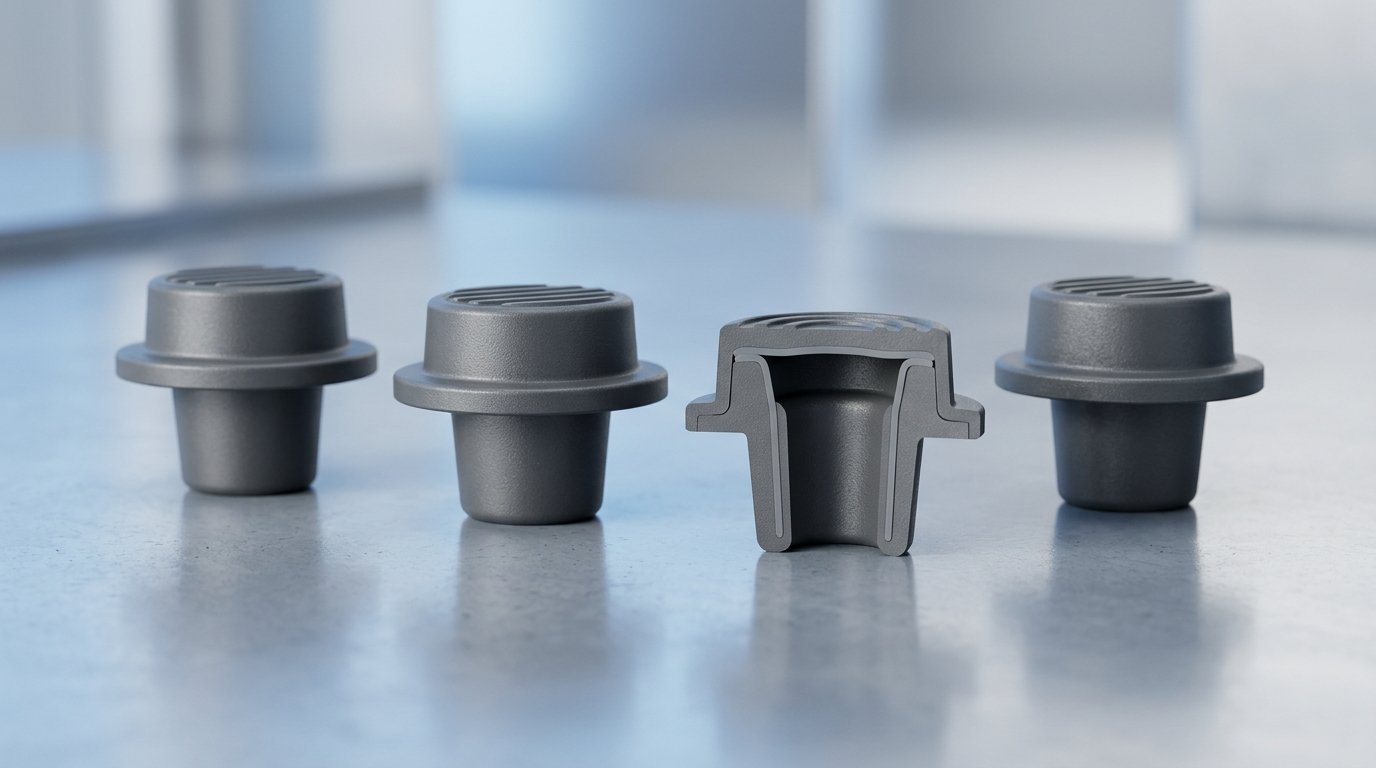
A butyl rubber stopper is the elastomeric closure used to seal injectable vials, moulded from butyl (or halobutyl) rubber because that polymer has very low permeability to oxygen and water vapour. It seats in the vial mouth, is pierced by a needle to withdraw or deliver the drug, and reseals when the needle is removed. Butyl rubber is the standard base material for pharmaceutical vial stoppers precisely because its tight molecular structure keeps gases and moisture out, protecting sensitive drug products through their shelf life.
This page defines a butyl rubber stopper, explains the difference between butyl and halobutyl, lists the properties that make it suitable for parenterals, and outlines the standards that apply.
Key takeaways
- A butyl rubber stopper is a vial closure moulded from butyl or halobutyl rubber, used because of its low gas and moisture permeability.
- Butyl rubber is a synthetic isobutylene-isoprene polymer; its tight structure resists the passage of oxygen and water vapour.
- Halobutyl rubbers (bromobutyl and chlorobutyl) add a halogen to the butyl backbone for better curing and chemical compatibility, and are now widely used for parenteral stoppers.
- Butyl’s low permeability protects oxygen- and moisture-sensitive drugs, which is why it replaced natural rubber for most injectable closures.
- A butyl rubber stopper is an elastomeric closure; its material sits under USP <381> and its function under USP <382>.
- The stopper is held in the vial by the aluminium or aluminium-plastic seal crimped over it.
What is a butyl rubber stopper?
A butyl rubber stopper is a moulded rubber plug, made from a butyl-based elastomer, that seals the mouth of an injectable vial and forms the resealable barrier a needle passes through. It is the most common type of pharmaceutical vial stopper. The stopper sits in the vial neck and is compressed against the glass by the metal seal crimped over it; together they form the container closure system.
The choice of butyl rubber is deliberate. Earlier stoppers used natural rubber, but natural rubber is relatively permeable and can introduce more extractables. Butyl rubber’s much lower permeability to oxygen and water vapour makes it far better at protecting drugs that degrade on exposure to air or moisture, which is why it became the standard base polymer for parenteral closures. The barrier requirement is strictest for biologic products, where moisture and oxygen ingress drive degradation across shelf life.
Butyl vs halobutyl rubber
Butyl rubber is a copolymer of isobutylene and a small amount of isoprene; halobutyl rubber is butyl that has been halogenated, adding bromine (bromobutyl) or chlorine (chlorobutyl) to improve curing and chemical compatibility. All three are used for pharmaceutical stoppers, and “butyl rubber stopper” is often used loosely to cover the halobutyl grades as well.
| Type | What it is | Why it is used |
|---|---|---|
| Butyl | Isobutylene-isoprene copolymer | Very low gas and moisture permeability |
| Bromobutyl | Brominated butyl | Faster, more flexible curing; good compatibility |
| Chlorobutyl | Chlorinated butyl | Improved curing; good compatibility |
Halobutyl grades cure more efficiently and bond well in laminated or coated constructions, so much of the modern parenteral stopper market uses bromobutyl or chlorobutyl rather than plain butyl. The drug-contact surface is sometimes coated or laminated with a fluoropolymer film to further reduce extractables and improve machinability on filling lines.
Why butyl rubber suits injectable vials
Butyl rubber suits injectable vials because it combines a strong moisture and gas barrier with the elasticity needed to seal, be pierced, and reseal. The properties that matter for a parenteral closure are:
- Low permeability. Butyl’s tight molecular structure resists oxygen and water vapour, protecting sensitive drugs and freeze-dried products that must stay dry.
- Self-sealing. The rubber recovers after a needle is withdrawn, closing the puncture so the container does not leak, which is essential for multiple-dose vials.
- Chemical inertness. Butyl compounds are relatively unreactive, limiting interaction with the drug, although compatibility is still confirmed per formulation.
- Cleanliness and low extractables. Modern compounds and coatings are formulated to keep what migrates into the drug to a minimum, verified by extractables and leachables studies.
Because the closure contacts the drug directly, the specific compound is matched to the formulation, and the assembled stopper is qualified for both material and function. Where a non-butyl elastomer is under consideration, the trade-offs are set out in butyl versus EPDM stoppers.
Standards for butyl rubber stoppers
A butyl rubber stopper is qualified on its material and on its function, the same two fronts as any elastomeric closure. The material’s physicochemical requirements are set out in USP <381>, and the European Pharmacopoeia carries parallel requirements for rubber closures for containers for aqueous parenteral preparations. The component’s functional suitability, such as penetrability and self-sealing, is evaluated under USP <382>.
Dimensions and requirements for closures for injection vials are covered by ISO 8362-2, with the special slotted closures used for freeze-drying under ISO 8362-5. What can migrate from the rubber into the drug product is controlled through extractables and leachables work for the specific formulation. A stopper that meets the material standard, performs functionally, and is dimensionally correct for the vial and seal is what completes a reliable closure. The European material requirements sit in Ph. Eur. 3.2.9, and animal-derived processing aids inside the compound are assessed under BSE/TSE compliance.
How this works in practice at Autofits
The butyl rubber stopper forms the resealable barrier; Autofits manufactures the aluminium and aluminium-plastic seals that crimp over it to hold it in compression. The range includes FlipTop Optima flip-off seals, tear-off and tear-down aluminium seals, and aluminium pilfer-proof (ROPP) caps, in 13, 20, and 32 mm sizes (the full products page lists the range). The aluminium seal crimps over the stopper and the vial neck, holding the rubber compressed against the glass so it can maintain its seal between needle penetrations. Autofits produces these seals under an ISO 15378:2017 quality system, alongside ISO 9001:2015 and ISO 14001:2015 certification and a Drug Master File, in a 75,000 sq ft Nashik facility with an ISO Class 8 cleanroom and high-speed visual inspection. The full certification set is on the quality page.
Frequently asked questions
What is a butyl rubber stopper?
A butyl rubber stopper is the rubber closure used to seal an injectable vial, moulded from butyl or halobutyl rubber because that polymer has very low permeability to oxygen and water vapour. It seats in the vial mouth, is pierced by a needle, and reseals when the needle is withdrawn, forming the resealable barrier of the vial’s container closure system.
What is the difference between butyl and halobutyl rubber?
Butyl rubber is a copolymer of isobutylene and a small amount of isoprene. Halobutyl rubber is butyl that has been halogenated, adding bromine (bromobutyl) or chlorine (chlorobutyl) to the polymer. Halobutyl grades cure more efficiently and have better chemical compatibility, so much of the modern parenteral stopper market uses bromobutyl or chlorobutyl. All are commonly described as butyl rubber stoppers.
Why are vial stoppers made of butyl rubber?
Vial stoppers are made of butyl rubber because it has a very low permeability to oxygen and moisture, protecting sensitive drugs and freeze-dried products, while still being elastic enough to seal, be pierced by a needle, and reseal. Butyl replaced natural rubber for most injectable closures because it is a far better moisture and gas barrier and tends to release fewer extractables.
Are butyl rubber stoppers coated?
Some butyl rubber stoppers are coated or laminated on the drug-contact surface, often with a fluoropolymer film, to further reduce extractables and improve how the stopper runs on filling lines. Coating is a formulation choice made to suit the specific drug product; many stoppers are also used uncoated.
What standards apply to butyl rubber stoppers?
The material requirements of a butyl rubber stopper are covered by USP <381> (and the parallel European Pharmacopoeia chapter for rubber closures), and its functional suitability by USP <382>. Dimensions and requirements for closures for injection vials are in ISO 8362-2, with freeze-drying closures in ISO 8362-5. Migration into the drug is controlled through extractables and leachables studies.
Related reading
- Elastomeric closure: definition
- Vial closure: definition and components
- USP <381>: elastomeric components in injectable packaging
- Extractables and leachables in vial closures
- ISO 8362-2: closures for injection vials
Sources
- USP-NF: General Chapter <381>, Elastomeric Components in Injectable Pharmaceutical Product Packaging/Delivery Systems (https://www.usp.org/)
- USP-NF: General Chapter <382>, Elastomeric Component Functional Suitability in Parenteral Product Packaging/Delivery Systems (https://www.usp.org/)
- ISO: ISO 8362-2:2024, Injection containers and accessories, Part 2: Closures for injection vials (https://www.iso.org/standard/87251.html)
- European Directorate for the Quality of Medicines (EDQM): European Pharmacopoeia, Rubber closures for containers for aqueous parenteral preparations (https://www.edqm.eu/)
*Last updated: 2026-06-18. This article is general technical information, not regulatory or compliance advice; confirm current standard editions and requirements with the issuing bodies.*
