
Vaccine Vial Seals
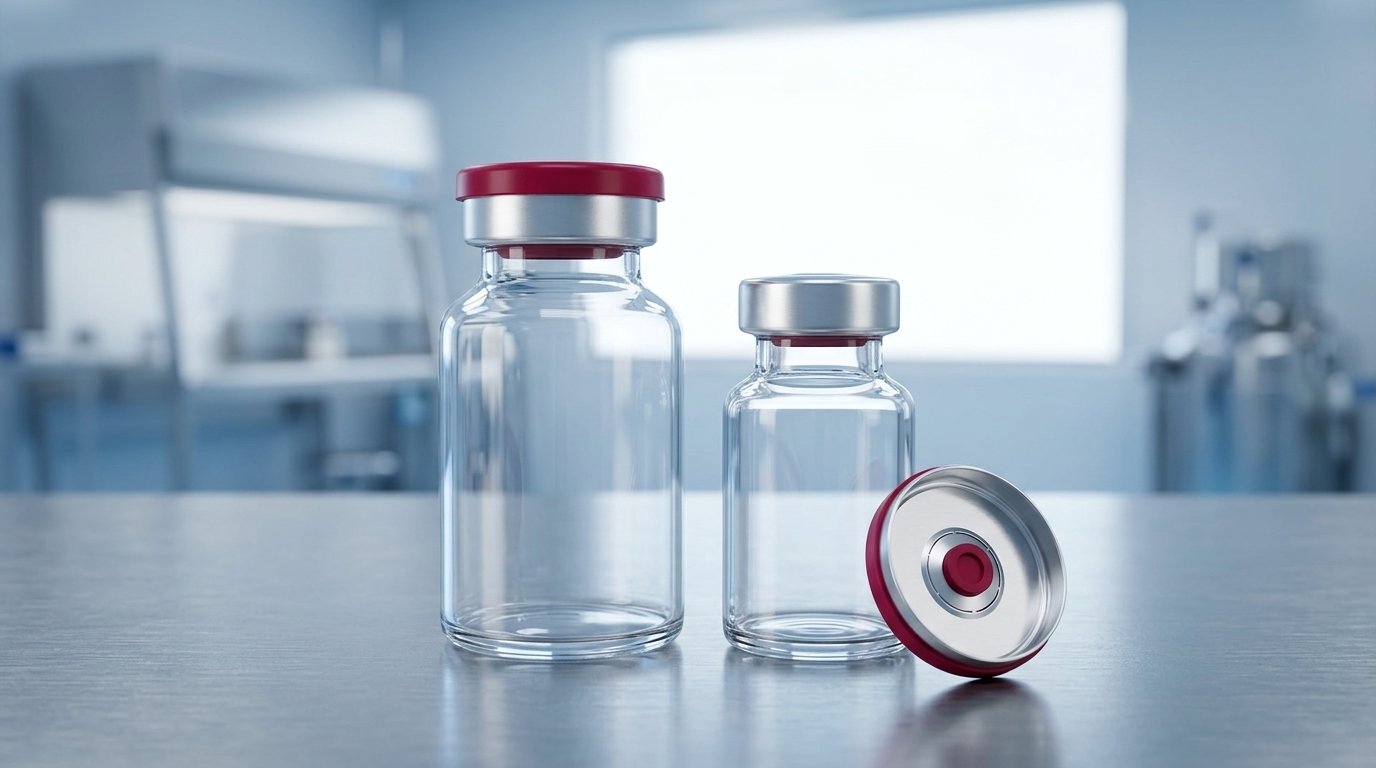
A vaccine vial seal has to do more than hold the sterile barrier: it must support fast, repeated access for multidose presentations, give clear tamper evidence, carry colour coding for product identification, and keep its crimp through the cold chain, whether the vaccine is a liquid or a lyophilised cake. Getting the closure right is part of getting the dose to the patient intact.
This page is for vaccine formulators, packaging engineers and sourcing managers selecting a vial closure. It covers liquid versus lyophilised vaccines, multidose versus single-dose, cold-chain and tamper-evidence requirements, the Autofits seals that fit, and the standards involved.
Key takeaways
- Vaccine closures must balance container closure integrity (CCI), fast repeated access for multidose use, tamper evidence, colour coding and cold-chain robustness.
- Liquid vaccines are filled and capped conventionally; lyophilised vaccines are capped after freeze-drying, often on a part-seated stopper, which puts a premium on a clean crimp.
- Multidose vials are punctured repeatedly, so the closure and stopper must reseal and the opened state must be obvious; single-dose vials prioritise a secure, tamper-evident one-time closure. Where a vaccine ships as a prefilled syringe or a syringe-and-diluent kit instead, the design problem moves to the carton, as set out in secondary packaging for prefilled syringes.
- The FlipTop® Optima flip-off seal in 13 mm and 20 mm is the default for injectable vaccines; the Button design adds intrinsic tamper evidence.
- For oral vaccinations, the FlipTop® Tear-Down seal is designed for full seal removal (twist anticlockwise).
- Closure standards: ISO 8362-6, ISO 15378, USP <1207> and EU GMP Annex 1.
What vaccine packaging needs from the closure
A vaccine vial is a sterile container-closure system: glass vial, rubber stopper and an aluminium or aluminium-plastic seal that crimps under the neck flange to compress the stopper against the glass. For vaccines, several requirements sit on top of that barrier.
Access pattern. Many vaccines are presented as multidose vials, so the closure has to allow the stopper to be punctured several times while the seal stays intact between doses. A flip-off seal suits this well: the user flips the plastic button to expose a small central injection point, the needle goes through the stopper, and the aluminium stays crimped. Single-dose vaccines instead need a secure, clearly tamper-evident one-time closure.
Identification. Vaccination programmes run many products and strengths in parallel, so colour coding on the seal is a primary means of identification at the point of care. Flip-off buttons are made in a wide range of colours for exactly this reason.
Tamper evidence. A vaccine vial that has been opened or tampered with must be obvious. A flipped or missing button signals an opened flip-off seal; the Optima Button design carries intrinsic tamper evidence via a 12-stem flower formed under the button disc, so the opened state is visibly distinct.
Liquid versus lyophilised vaccines
Liquid vaccines are filled into the vial and the stopper is fully seated before the seal is crimped on a conventional capping line. The closure decisions are about access, colour and tamper evidence.
Lyophilised (freeze-dried) vaccines are different. The vial is filled, the stopper is part-seated to leave a vent path, the vial goes through the freeze-drying cycle, the stopper is fully seated under vacuum or inert gas inside the lyophiliser, and only then is the seal crimped on. This puts the emphasis on machinability and on a clean, consistent crimp over a stopper that has just been seated, because any incomplete crimp compromises the sterile barrier on a product that will later be reconstituted at the point of care. Tight dimensional control on the seal helps the crimp form cleanly run after run; the Optima dimensions are held to the engineering drawings for this reason, and the sizes and specifications for freeze-dried fills are on lyophilization vial seals.
Cold chain
Most vaccines move through a temperature-controlled supply chain, and some are stored frozen. The closure system has to keep its seal through freezing, transport and thawing without the crimp loosening or the materials losing integrity. The aluminium-plastic construction, an AA8011 aluminium shell with a polypropylene button, is a robust, well-characterised combination for this duty, and the crimp itself does not rely on adhesives that could fail at low temperature. Container closure integrity through the intended storage range should be confirmed for the specific product against USP <1207>.
Cold-chain behaviour is a subject in its own right, and vial closures for cold-chain drugs covers what freezing and thawing do to the crimp and the stopper. Lyophilised vaccine presentations follow the freeze-dry sequence rather than the liquid one, which is set out on lyophilised vial seals, and animal-health vaccines run on the same multidose logic at larger neck sizes, covered on veterinary vial seals. Vaccine vials cluster on two necks, so the 13 mm and 20 mm size pages cover the range in practice.
Which Autofits seals fit vaccines
For injectable vaccines, the FlipTop® Optima flip-off seal is the default closure:
- 20 mm Optima is the highest-volume size for injectable vials and suits most multidose and single-dose vaccine vials. The 20 mm seal has a total height of 9.02 to 9.91 mm, six tapered bridges and a maximum opening force of 35 N.
- 13 mm Optima suits smaller-volume vaccine vials. The 13 mm seal has a total height of 7.62 to 8.38 mm, six tapered bridges and a maximum opening force of 30 N.
- The Button design adds intrinsic tamper evidence; colour coding is specified per order from a wide range of colours, matte or glossy.
For oral vaccinations, the FlipTop® Tear-Down seal is designed for full seal removal: the polypropylene disc is opened, then pulled and rotated anticlockwise so the whole seal comes off, which suits the oral dosing workflow rather than needle access. The Tear-Down is made in 13, 20 and 32 mm.
All seals are supplied Regular, Ready-to-Use (gamma or ETO sterilized, double-bagged for aseptic areas) or Ready-to-Sterilize, so they slot into both terminal and aseptic vaccine fill lines. Browse by neck size from the 20 mm index, or see the products page for the full range.
Relevant standards
- ISO 8362-6: the design standard for caps made of aluminium-plastics combinations for injection vials, which the Optima follows. Vial necks follow ISO 8362-1.
- ISO 15378: GMP requirements for primary packaging materials; Autofits seals are produced under ISO 15378:2017.
- USP <1207>: package integrity evaluation for sterile products, the reference for demonstrating container closure integrity across the cold chain and shelf life.
- EU GMP Annex 1: manufacture of sterile medicinal products, which sets aseptic-filling and CCI expectations for sterile vaccines.
FAQ
What seal is best for a multidose vaccine?
A flip-off seal such as the FlipTop® Optima suits multidose vaccines: you flip the plastic button to expose a central injection point, the stopper is punctured for each dose, and the aluminium stays crimped so the seal holds between doses. The 20 mm size is the most common for multidose vaccine vials, and the Button design adds intrinsic tamper evidence.
How are lyophilised vaccines sealed?
A lyophilised vaccine is filled, the stopper is part-seated to leave a vent path, the vial is freeze-dried, the stopper is fully seated inside the lyophiliser, and the seal is then crimped on. The priority for the closure is a clean, consistent crimp over the just-seated stopper, since an incomplete crimp would compromise the sterile barrier. The FlipTop® Optima in 13 mm or 20 mm is the usual choice.
Do vaccine seals support cold-chain storage?
Yes. The aluminium-plastic construction, an AA8011 shell with a polypropylene button and a mechanical crimp rather than an adhesive bond, is robust through freezing, transport and thawing. Container closure integrity through the intended storage range should be confirmed for the specific product against USP <1207>.
How does the seal provide tamper evidence on a vaccine vial?
A flip-off seal shows it has been opened once the plastic button is flipped or missing. The Optima Button design goes further with intrinsic tamper evidence: a 12-stem flower formed under the button disc makes the opened state visibly distinct. This matters for vaccines so that an accessed or tampered vial is obvious at the point of care.
What size seal do vaccine vials use?
The 20 mm neck is the most common for injectable vaccine vials, including multidose presentations. Smaller-volume vaccines use 13 mm. Match the seal to the vial finish and the stopper of the same nominal diameter; the 20 mm index lists dimensions to check against your vial.
Which seal suits oral vaccinations?
The FlipTop® Tear-Down seal is designed for oral vaccinations. Instead of a flip-off button for needle access, the polypropylene disc is opened and the seal is pulled and rotated anticlockwise so the whole seal comes off, which fits oral dosing. It is made in 13, 20 and 32 mm.
Related reading
- Vial sealing applications hub
- Biologics vial seals and closures
- FlipTop® Optima flip-off seals
- FlipTop Tear-Down seals
- Flip-off seal: definition
- USP <1207>: package integrity for sterile products
- EU GMP Annex 1: sterile manufacture
Sources
- Autofits FlipTop Seals dossier and engineering drawings (working/spec-sheets/)
- ISO: ISO 8362-6:2010, Injection containers and accessories, Part 6: Caps made of aluminium-plastics combinations for injection vials (https://www.iso.org/standard/45641.html)
- ISO: ISO 15378:2017, Primary packaging materials for medicinal products, GMP requirements (https://www.iso.org/standard/70729.html)
- USP-NF: General Chapter <1207>, Package Integrity Evaluation, Sterile Products (https://www.usp.org/)
- EudraLex Volume 4, EU GMP Annex 1, Manufacture of Sterile Medicinal Products (https://health.ec.europa.eu/)
*Last updated: 2026-06-27. This page is general technical information, not regulatory or compliance advice; confirm current standard editions and your own specification with Autofits and the issuing bodies.*
