
Veterinary Vial Seals and Closures
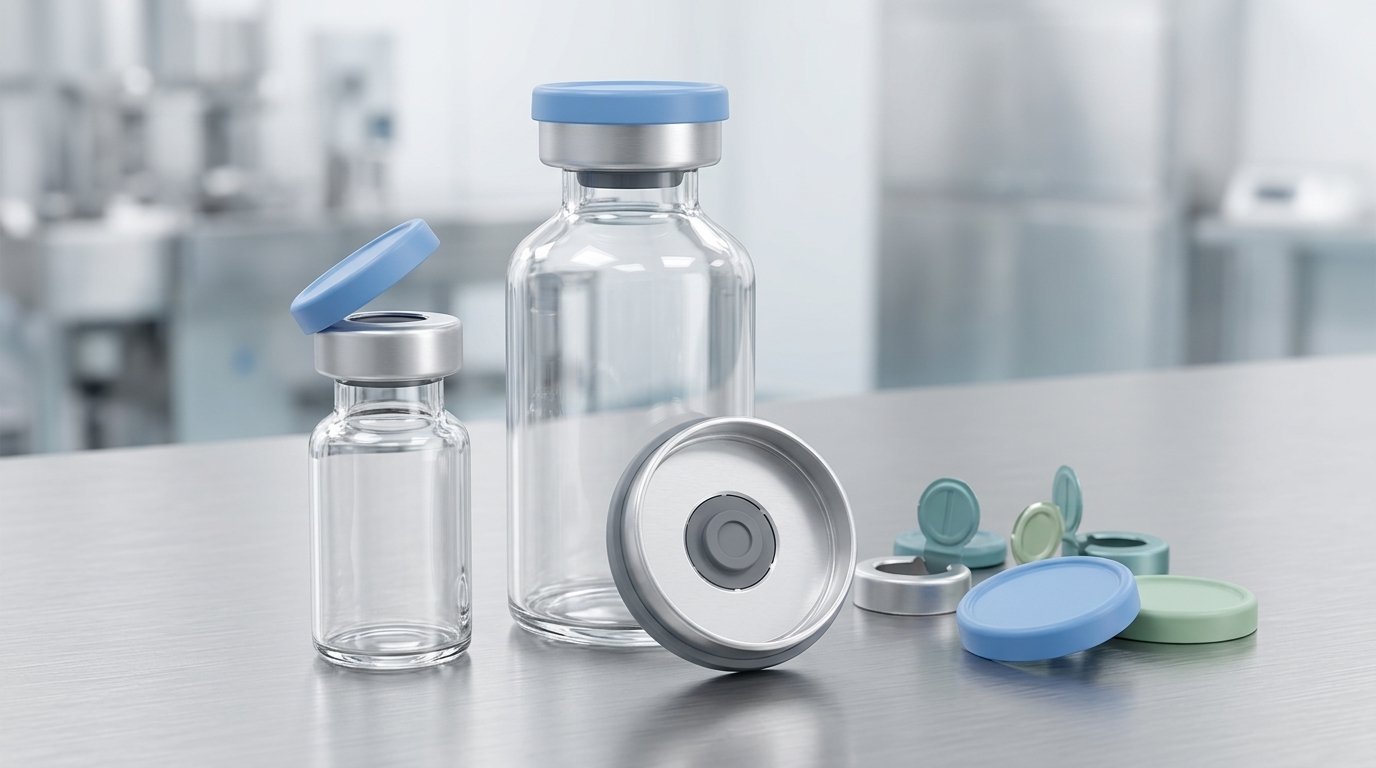
Veterinary products cover a wider size range and heavier multidose use than most human injectables, so the closure has to support repeated access on large-format vials, give clear tamper evidence, and carry colour coding, across neck sizes from 13 mm to 34 mm. A herd-treatment vial that is punctured many times in a working day puts the crimp and the reseal under real duty.
This page is for veterinary formulators, packaging engineers and sourcing managers selecting a vial closure, including buyers in the large Indian veterinary-pharma sector. It covers the wide size spread of veterinary vials, multidose use, tamper evidence and identification, the Autofits seals that fit, and the standards involved.
Key takeaways
- Veterinary closures must support multidose access on large-format vials, give clear tamper evidence, and carry colour coding across a wide size range.
- Veterinary vials use the full neck range: 13 mm for small products up to 28 mm, 32 mm and 34 mm for large multidose and herd-treatment presentations.
- The FlipTop® Optima flip-off seal covers 13, 20, 28, 32 and 34 mm; the Button design adds intrinsic tamper evidence.
- Autofits is an Indian manufacturer, based in Nashik, which suits domestic vet-pharma buyers on lead time and support.
- Closure standards: ISO 8362-6, ISO 15378, USP <381> and USP <1207>.
What veterinary packaging needs from the closure
A veterinary vial is a sterile container-closure system: glass vial, rubber stopper and an aluminium-plastic seal that crimps under the neck flange to compress the stopper against the glass. Veterinary use puts particular weight on three requirements.
Size range. Veterinary products span a wider set of fill volumes than human injectables, from small single-species doses to large herd-treatment bottles. That means the closure programme has to cover the full neck range. The Optima flip-off is made in 13, 20, 28, 32 and 34 mm, so a single supplier can seal a whole veterinary portfolio.
Multidose access. Many veterinary products are large multidose vials punctured repeatedly through a treatment session, so the closure has to allow the stopper to be accessed several times while the serum vial seal stays crimped between doses. A flip-off seal suits this: the user flips the plastic button to expose a small central injection point, the needle goes through the stopper, and the aluminium stays crimped.
Tamper evidence and identification. A veterinary vial that has been opened must be obvious, and a busy veterinary practice runs many products in parallel, so colour coding on the seal helps identification. A flipped or missing button signals an opened seal; the Optima Button design carries intrinsic tamper evidence via a 12-stem flower formed under the button disc.
Large-format and multidose veterinary vials
Large veterinary vials use the bigger neck sizes, where the crimp forms over a longer skirt and more bridges. The 28 mm Optima has eight bridges and a maximum opening force of 35 N; the 32 mm Optima has twelve tapered bridges and a maximum opening force of 65 N. For products that call for full seal removal rather than needle access, the FlipTop® Pull Ring in 20 mm and 32 mm removes the whole seal by pulling the ring and opening anticlockwise, and the FlipTop® Tear-Down in 13, 20 and 32 mm removes the whole seal by twisting anticlockwise, which suits oral veterinary dosing.
All seals are supplied Regular, Ready-to-Use (gamma or ETO sterilized, double-bagged for aseptic areas) or Ready-to-Sterilize, so they slot into both terminal and aseptic veterinary fill lines.
Made in India for the veterinary-pharma market
India has a large and growing veterinary-pharmaceutical sector, and Autofits manufactures its seals in Nashik, Maharashtra, in a 75,000 sq ft facility. Domestic production suits Indian vet-pharma buyers on lead time and technical support, while the quality system, ISO 9001:2015, ISO 14001:2015 and ISO 15378:2017, supports export presentations as well. Assembly is in an ISO Class 8 cleanroom with 100% high-speed camera inspection.
Animal-derived materials are a live question in veterinary supply chains, and BSE and TSE compliance for pharma packaging covers the declarations a buyer should be asking a closure supplier for. The elastomer specification is moving as well: the new USP <382> testing requirements set out what the revised chapter adds to the functional testing of elastomeric components. On size, veterinary is the broadest portfolio on this site, so the 28 mm, 32 mm and 34 mm size pages matter more here than anywhere else. The nearest human-medicine equivalents by requirement are multidose vaccine vial seals and insulin and hormone closures, which share the repeated-puncture case. On the sourcing side, cGMP for vial closure suppliers is the checklist a veterinary buyer can run a supplier audit against.
Which Autofits seals fit veterinary vials
- FlipTop® Optima flip-off in 13, 20, 28, 32 and 34 mm: the default for injectable veterinary vials across the size range. The Button design adds intrinsic tamper evidence, and colour coding is available in a wide range of colours, matte or glossy, customised to requirement.
- FlipTop® Pull Ring in 20 mm and 32 mm: full seal removal by pulling the ring, for products that need the whole closure off.
- FlipTop® Tear-Down in 13, 20 and 32 mm: full seal removal by twisting anticlockwise, which suits oral veterinary dosing.
See the FlipTop® Optima page or the applications hub for the full range.
Relevant standards
- ISO 8362-6: the design standard for caps made of aluminium-plastics combinations for injection vials, which the Optima follows. Vial necks follow ISO 8362-1.
- ISO 15378: GMP requirements for primary packaging materials; Autofits seals are produced under ISO 15378:2017.
- USP <381>: elastomeric closures for injections, the reference for the stopper that the seal crimps over on a multidose veterinary vial.
- USP <1207>: package integrity evaluation for sterile products, the reference for demonstrating container closure integrity.
- BSE/TSE compliance: the animal-derived-material declarations a veterinary buyer should be asking a packaging supplier for.
Frequently asked questions
What size seal do veterinary vials use?
Veterinary vials use the full neck range, from 13 mm for small products up to 28 mm, 32 mm and 34 mm for large multidose and herd-treatment presentations. The FlipTop® Optima is made in all five sizes, so one supplier can seal a whole veterinary portfolio.
What seal is best for a multidose veterinary vial?
A flip-off seal such as the FlipTop® Optima suits multidose veterinary vials: you flip the plastic button to expose a central injection point, the stopper is punctured for each dose, and the aluminium stays crimped so the seal holds between doses. The Button design adds intrinsic tamper evidence.
Which seal suits oral veterinary products?
The FlipTop® Tear-Down seal removes the whole closure by twisting anticlockwise, which suits oral veterinary dosing rather than needle access. It is made in 13, 20 and 32 mm. The FlipTop® Pull Ring in 20 mm and 32 mm is an alternative for full seal removal.
Does Autofits supply veterinary seals within India?
Yes. Autofits manufactures its seals in Nashik, Maharashtra, in a 75,000 sq ft facility, which suits Indian veterinary-pharma buyers on lead time and technical support. The quality system supports export presentations as well.
How does the seal provide tamper evidence on a veterinary vial?
A flip-off seal shows it has been opened once the plastic button is flipped or missing. The Optima Button design adds intrinsic tamper evidence with a 12-stem flower formed under the button disc, so the opened state is visibly distinct.
Related reading
- Vial sealing applications hub
- Vaccine vial seals and closures
- FlipTop® Optima flip-off seals
- FlipTop® Pull Ring seals
- FlipTop® Tear-Down seals
- USP <381>: elastomeric closures for injections
- Flip-off seal: definition
Sources
- Autofits FlipTop Seals dossier and engineering drawings (working/spec-sheets/)
- ISO: ISO 8362-6:2010, Injection containers and accessories, Part 6: Caps made of aluminium-plastics combinations for injection vials (https://www.iso.org/standard/45641.html)
- ISO: ISO 15378:2017, Primary packaging materials for medicinal products, GMP requirements (https://www.iso.org/standard/70729.html)
- USP-NF: General Chapter <381>, Elastomeric Closures for Injections (https://www.usp.org/)
- USP-NF: General Chapter <1207>, Package Integrity Evaluation, Sterile Products (https://www.usp.org/)
*Last updated: 2026-07-06. This page is general technical information, not regulatory or compliance advice; confirm current standard editions and your own specification with Autofits and the issuing bodies.*
