
How to Open a Vial Cap: Identify Your Seal Type and Open It Safely
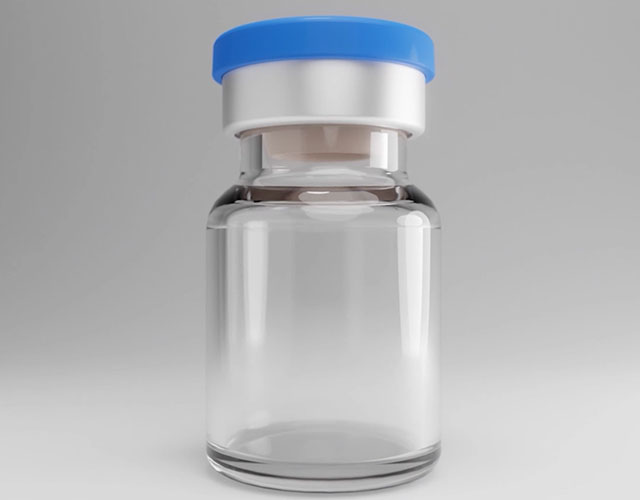
To open a vial cap, first identify the seal type, then use the matching method: flip the plastic button up on a flip-off seal, pull the tab on a tear-off seal, pull the ring on a pull-ring seal, tear along the perforation on a tear-down seal, or twist off a threaded pilfer-proof (ROPP) cap. Most injectable vials use a flip-off seal, where only the plastic button comes off and the aluminium skirt stays crimped on as a tamper-evident, integrity-securing ring you should not remove by hand.
This guide helps you tell the seal types apart and shows the correct way to open each.
Key takeaways
- Identify before you open. The opening action depends on whether the cap has a plastic flip button, a metal pull tab, a ring, a perforated tear line, or a threaded band.
- Flip-off seals are the most common injectable closure. Flip up the plastic button; the aluminium skirt stays crimped on by design.
- Tear-off and pull-ring seals remove the whole metal top via a tab or ring, exposing the stopper or bottle mouth.
- Tear-down seals open along a perforated section and are used mainly for oral medicines.
- Pilfer-proof (ROPP) caps are threaded aluminium closures on bottles; the lower pilfer band separates as you unscrew.
- For any injectable vial, wipe the exposed rubber stopper with an alcohol swab before inserting a needle, and never use a vial whose seal is already loose, lifted, or broken.
How to identify your vial seal type
Look at the top of the vial and the metal band around the neck. The cue is whether there is a coloured plastic button, a metal pull tab or ring, a perforated tear line, or a threaded cap on a bottle rather than a crimped seal on a vial.
| Seal type | What you see | How it opens |
|---|---|---|
| Flip-off | Coloured plastic button on top, aluminium skirt around the neck | Flip the button up; metal skirt stays on |
| Tear-off | All-aluminium top with a small pull tab, no plastic button | Pull the tab to remove the whole metal top |
| Pull-ring | Aluminium seal with a pull ring | Pull the ring to tear and lift the top |
| Tear-down | Aluminium seal with a perforated section | Tear down along the perforation |
| Pilfer-proof (ROPP) | Threaded aluminium cap on a bottle with a lower band | Unscrew; the pilfer band separates |
These closures are all forms of primary packaging, the layer in direct contact with the medicine. If a seal looks tampered with, lifted, or damaged, set the vial aside and do not use it.
How to open a flip-off seal
Flip the coloured plastic button up and off with your thumb; the aluminium skirt stays crimped on the vial, exposing the rubber stopper underneath. The flip-off seal is an aluminium-plastic combination seal: a plastic button sits over an aluminium shell crimped around the stopper and vial neck. Flipping the button lifts the centre away, while the crimped aluminium ring stays in place to hold the stopper and preserve container closure integrity. That retained ring is also the tamper-evidence feature, so leaving it on is correct.
For the full step-by-step, see how to open a vial with a metal cap, and read about the flip-off seal to understand the design. If the button will not lift cleanly, the flip-off cap removal techniques comparison covers the alternatives. Most injectable flip-off closures, including the FlipTop Optima flip-off seals used for vaccines, work this way.
How to open a tear-off seal
Lift the small metal tab and pull it across the top so the entire aluminium disc tears away, exposing the stopper. A tear-off seal is an all-aluminium cap with no plastic button; the whole metal top is designed to come off in one piece. Once the tab tears the scored aluminium, the top separates and cannot be reseated, which gives the closure its tamper evidence. Pull steadily and keep fingers clear of the cut aluminium edge, which can be sharp. Learn more on the tear-off seal page, or see the Tear Off seal product range.
How to open a pull-ring seal
Hook a finger through the ring and pull it outward and up so the seal tears along its line and the top lifts away. A pull-ring seal opens with a built-in ring that gives you leverage to tear the aluminium in a controlled path, rather than relying on a small flat tab. Pull-ring seals are used for oral medicines and, in a 32 mm format, for contrast media. The more involved geometry of a pull-ring also makes the closure harder to duplicate, which supports counterfeit resistance. To compare it with the simpler perforated alternative, see pull-ring vs tear-down seals, or view the FlipTop Pull Ring seal range.
How to open a tear-down seal
Grip the seal at the perforated section and tear downward to open it. A tear-down seal is an aluminium seal opened by tearing along a perforated or scored line, a simpler and lower-cost counterpart to the pull-ring, used mainly for oral medicines. Because the metal tears rather than unscrews or flips, opening leaves clear visual evidence that the seal was breached. Keep fingers away from the torn edge. For a side-by-side of the two oral-medicine closures, see pull-ring vs tear-down seals, and read the tear-down seal definition.
How to open a pilfer-proof (ROPP) cap
Twist the threaded aluminium cap counter-clockwise; as it turns, the lower pilfer band separates and stays on the container neck, showing the closure has been opened. A pilfer-proof cap, also called a roll-on pilfer-proof (ROPP) cap, is an aluminium closure threaded onto a bottle during capping with a tear-away band at the bottom. Unlike a crimped flip-off seal on an injectable vial, a ROPP cap is unscrewed like a normal screw cap, and the separated band is the tamper-evidence signal; the two closing methods are compared in crimp versus screw vial closures. ROPP caps are used on bottles for products such as oral liquids. See the pilfer-proof cap page for how it differs from crimped vial seals.
What not to do
Do not pry off the crimped aluminium skirt of a flip-off seal during normal use, and never use a vial whose seal is already loose, lifted, or broken. On a flip-off vial you only remove the plastic button; removing the aluminium ring by hand risks contaminating the stopper, breaking the glass, or cutting yourself on the metal edge. Full removal of an aluminium skirt is a lab procedure done with a decapping tool, not a routine clinical step; see removing a metal vial cap without a tool if you genuinely need the whole seal off. Always disinfect the exposed stopper before piercing it, and follow the product’s instructions for use and your local clinical protocol.
How this works in practice at Autofits
Autofits manufactures the main vial closure types covered here across its full product range: aluminium-plastic FlipTop® flip-off seals (including Optima, Pull Ring, and Tear Down sub-ranges), tear-off and tear-down aluminium seals, and aluminium pilfer-proof (ROPP) caps, in 13 mm, 20 mm, and 32 mm sizes. These are produced under an ISO 15378:2017 quality system in a 75,000 sq ft Nashik facility with an ISO Class 8 cleanroom and high-speed visual inspection. Consistent seal geometry is what makes a closure open the way it should and stay crimped where it should, which is why dimensional control matters for closures. You can review the certifications on the quality page.
Frequently asked questions
How do I know which vial seal type I have?
Look at the top of the vial. A coloured plastic button means a flip-off seal; a plain aluminium top with a small tab means a tear-off seal; a seal with a ring is a pull-ring seal; a seal with a perforated line is a tear-down seal; and a threaded aluminium cap on a bottle with a lower band is a pilfer-proof (ROPP) cap.
Do I need to remove the metal part of a flip-off vial?
No. On a flip-off seal you only flip off the plastic button. The aluminium skirt is crimped on by design to hold the stopper and maintain container closure integrity, and it provides tamper evidence. Removing it by hand is unnecessary and risks contaminating the stopper or breaking the vial.
Do I need a tool to open a vial cap?
Usually not. Flip-off, tear-off, pull-ring, and tear-down seals are all designed to open by hand. A decapping tool is only used in laboratory settings when the entire aluminium skirt must be removed, which is not part of normal clinical use.
Should I clean the stopper before using the vial?
Yes. After opening any injectable vial, wipe the exposed rubber stopper with an alcohol swab and let it dry before inserting a needle. This is standard aseptic practice to reduce contamination risk.
What does a broken or loose seal mean?
A seal that is already lifted, loose, cracked, or missing its tamper-evidence feature should be treated as compromised, and the vial should not be used. Tamper-evident designs exist precisely so this is visible before use.
Related reading
Sources
- U.S. Pharmacopeia (USP-NF): USP General Chapter <1207>, Sterile Product Packaging, Integrity Evaluation (https://www.usp.org/)
- European Commission, EudraLex Volume 4, EU GMP Annex 1, Manufacture of Sterile Medicinal Products, 2022 (https://health.ec.europa.eu/medicinal-products/eudralex_en)
- ISO: ISO 15378:2017, Primary packaging materials for medicinal products (https://www.iso.org/standard/70729.html)
*Last updated: 2026-06-10. This article is general guidance on closure types and is not a substitute for a product’s official instructions for use or your clinical protocol; always follow the manufacturer’s directions and aseptic technique.*
