
How to Open a Vial With a Metal Cap: Step-by-Step Guide
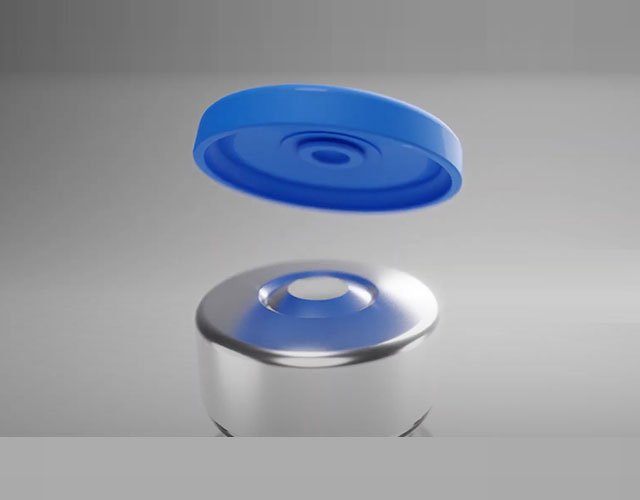
To open a vial sealed with a flip-off metal cap, place a thumb under the lip of the coloured plastic button and flip it up and off. The plastic centre tears away at its scoreline, while the aluminium skirt stays crimped around the neck of the vial. That is correct: you only remove the plastic button, not the metal. The exposed grey rubber stopper is then wiped with an alcohol swab and the needle is inserted straight through it. The aluminium is meant to stay on, because the crimp is what holds the stopper in place and provides the tamper-evidence seal.
This guide covers the safe step-by-step method, what not to do, why the metal stays on, and how flip-off, tear-off, and pull-ring closures differ when you open them.
Key takeaways
- Flip the plastic button up and off with your thumb. Do not try to pry off the whole aluminium cap.
- The plastic centre tears away at a moulded scoreline; the aluminium skirt stays crimped on the neck. This is by design.
- The metal stays because the crimp secures the rubber stopper and keeps the container closure system sealed.
- After flipping the button, disinfect the exposed stopper with a 70% isopropyl alcohol swab and let it dry before inserting a needle.
- Insert the needle straight through the centre of the stopper to avoid coring (shaving off a fragment of rubber).
- Flip-off, tear-off, and pull-ring caps open differently: only flip-off leaves the metal on after a single-handed flip.
How to open a flip-off vial step by step
Opening a flip-off vial takes one motion with your thumb and a clean stopper afterwards. Most injectable vials use a flip-off seal, an aluminium-plastic combination cap with a coloured plastic button on top of a crimped aluminium shell. Follow these steps:
- Inspect the vial first. Check that the plastic button is intact and still attached, the liquid is clear of unexpected particles, and the label and expiry are correct. An already-flipped or missing button means the tamper-evidence seal has been broken, so do not use it.
- Flip the plastic button up. Hook a thumbnail or fingertip under the raised lip of the coloured button and push it upward. The button lifts and the plastic centre tears away from the aluminium ring at its scoreline.
- Let the aluminium skirt stay in place. Once the button is off, you will see the grey rubber stopper inside a metal ring. The aluminium skirt is still crimped around the vial neck. This is correct and expected.
- Disinfect the exposed stopper. Wipe the rubber stopper with a fresh 70% isopropyl alcohol swab and let it air dry. The World Health Organization injection-safety guidance calls for skin and equipment to be clean before injection.
- Insert the needle straight down. Hold the vial steady and push the needle through the centre of the stopper at a 90 degree angle. A straight insertion reduces the risk of coring, where the needle shaves a small fragment of rubber into the contents. The US CDC guidance on safe injection practices covers using a sterile needle and syringe for each entry.
- Withdraw the dose and discard sharps safely. Draw the required volume, withdraw the needle, and place the used sharp directly into a sharps container.
What not to do when opening a metal-capped vial
Do not try to remove the whole aluminium cap, and do not skip disinfecting the stopper. A few specific mistakes are worth calling out:
- Do not pry off the aluminium skirt. It is crimped on deliberately, and the safe alternatives are set out in flip-off cap removal techniques. Forcing it risks cracking the glass, contaminating the stopper, and breaking the seal you rely on. If a procedure genuinely requires the full metal removed, see removing the metal cap without a tool.
- Do not use a knife, scissors, or other blade to lever the cap. This is a cut and glass-breakage hazard and can shed metal or glass fragments.
- Do not touch the rubber stopper with fingers after disinfecting it.
- Do not insert the needle at an angle or re-use a needle between vials.
- Do not use a vial whose button is already flipped, loose, or missing. A broken tamper seal means the contents may not be sterile or intact.
Why the metal cap stays on
The aluminium skirt stays on because crimping it over the rubber stopper is what holds the closure system together and keeps the vial sealed. On an injectable vial, the rubber stopper sits in the neck and the aluminium seal is crimped tightly around both the stopper and the glass lip. That crimp compresses the stopper against the glass to maintain container closure integrity, the sealed barrier that keeps the contents sterile.
The plastic flip button is only an access feature. It covers and protects the small target area of the stopper before first use and provides tamper evidence: once the button has been flipped, you cannot reattach it, so anyone can see the vial has been opened. Removing the button exposes the stopper for the needle without disturbing the crimp. If the aluminium came off too, the stopper would no longer be held in place and the seal would be lost. That is the whole point of a flip-off seal: easy single-use access to the stopper while the integrity-critical crimp stays put.
Flip-off vs tear-off vs pull-ring: how opening differs
The three common metal vial closures open in different ways, and only the flip-off is designed to leave the aluminium on the vial. Knowing which one you have tells you what to expect.
| Closure type | How you open it | Does the metal stay on? | Typical use |
|---|---|---|---|
| Flip-off (aluminium-plastic) | Flip the plastic button up with a thumb | Yes, the aluminium skirt stays crimped | Injectable vials |
| Tear-off (full aluminium) | Pull a tab or ring to tear off the whole top | No, the top section comes away | Some injectable and other vials |
| Pull-ring | Lift and pull a metal ring to tear the seal open | No, a section is removed | Oral medicines and contrast media |
A flip-off cap is the one most clinical and lab users handle: a single thumb-flip removes the plastic button and the metal stays put, as described above. Purpose-built FlipTop Optima flip-off seals are the aluminium-plastic design behind this single-flip action. A tear-off seal and a pull-ring seal are full-aluminium designs where you remove part of the metal itself, so the access action and the resulting closure look different. If you are unsure which closure you have, how to open a vial cap walks through each type; identify it before opening rather than forcing it.
How this works in practice at Autofits
Autofits manufactures aluminium-plastic FlipTop Optima seals along with Pull Ring and Tear Down sub-ranges, tear-off and tear-down aluminium seals, and aluminium pilfer-proof (ROPP) caps in 13, 20, and 32 mm sizes. The flip-off design described here, a coloured plastic button over a crimped aluminium shell, is produced under an ISO 15378:2017 quality system in a 75,000 sq ft Nashik facility that includes an ISO Class 8 cleanroom, with high-speed visual inspection on the closure lines. The plastic button can be coloured and printed, which is why injectable vials often use button colours to distinguish products at the point of use, a practice covered in seal colour coding in pharma. The wider closure range is on the products page, and the full set of certifications on the quality page.
Frequently asked questions
Do you remove the whole metal cap from an injectable vial?
No. On a standard flip-off vial you only remove the coloured plastic button by flipping it up. The aluminium skirt is crimped around the neck and is meant to stay on, because it holds the rubber stopper in place and keeps the vial sealed. You access the medicine by inserting a needle through the exposed stopper, not by removing the metal.
Why does the aluminium ring stay on after I flip the cap?
The aluminium ring stays on by design. Its crimp compresses the rubber stopper against the glass to maintain the sealed, sterile barrier. The plastic button on top is only a protective, tamper-evident access cover. Flipping it off exposes the stopper for a needle while leaving the integrity-critical crimp undisturbed.
How do I open a vial without the plastic flip button?
If the vial has no plastic button, it is likely a tear-off or pull-ring aluminium seal rather than a flip-off. Those are opened by pulling a tab or ring to tear away part of the aluminium, not by flipping a button. Identify the closure type first, then open it the way that design intends.
Do I need to disinfect the stopper before inserting a needle?
Yes. After flipping off the button, wipe the exposed rubber stopper with a fresh 70% isopropyl alcohol swab and let it dry before inserting a sterile needle. Cleaning the access surface and using a new needle and syringe for each entry are part of standard safe-injection practice.
What is coring and how do I avoid it?
Coring is when a needle shaves off a small fragment of the rubber stopper that can fall into the vial contents. To reduce the risk, insert the needle straight down through the centre of the stopper at a 90 degree angle rather than at a slant, and use a sharp, sterile needle.
Sources
- World Health Organization: Injection safety (https://www.who.int/teams/integrated-health-services/injection-safety)
- US Centers for Disease Control and Prevention: Safe injection practices for healthcare providers (https://www.cdc.gov/injection-safety/hcp/clinical-safety/index.html)
- USP General Chapter <1207>, Package Integrity Evaluation for Sterile Products (https://www.usp.org/)
*Last updated: 2026-06-10. This article is general practical and educational information, not medical advice. Always follow your facility’s protocols and the product’s instructions for use.*
