
Pilfer-Proof Cap (ROPP): What It Is and How It Works
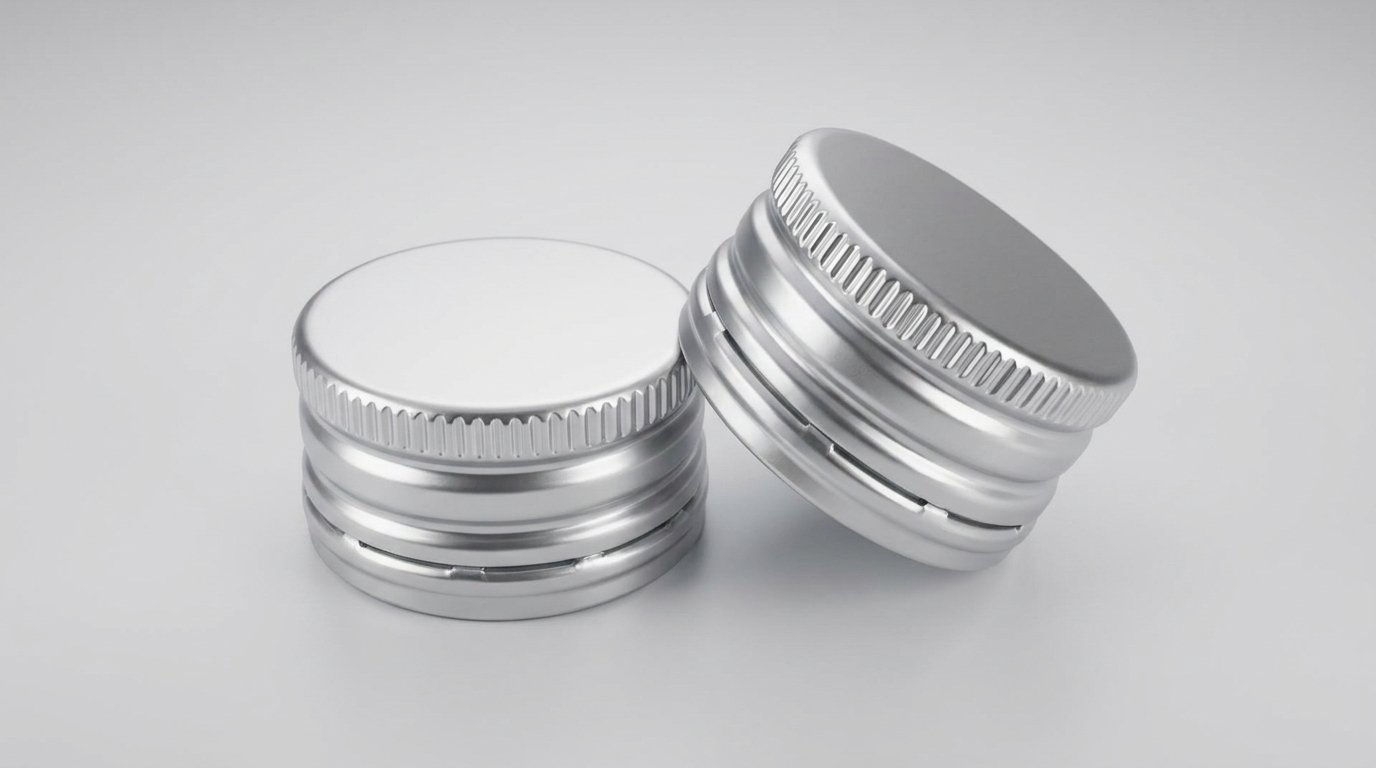
A pilfer-proof cap is a tamper-evident aluminium closure with a perforated tear-off band at its base that separates from the cap the first time the container is opened. It is most often a ROPP cap, short for “roll-on pilfer-proof,” meaning the cap starts as a plain threadless aluminium shell that is threaded directly onto the container during capping by rolling forming wheels against the bottle neck. Once the band breaks, it cannot be re-attached, so the broken or missing band is permanent visible evidence that the container has been opened.
This page defines the pilfer-proof cap, explains how the ROPP process forms the threads and the tamper band, and outlines where these caps are used and how they differ from flip-off vial seals.
Key takeaways
- A pilfer-proof cap is an aluminium screw cap with a tear-off pilfer band that provides permanent, irreversible tamper evidence.
- ROPP stands for roll-on pilfer-proof: the cap is supplied as a smooth threadless shell and its threads are formed in place by rolling tooling during capping.
- The pilfer band is held to the cap by small bridges; opening the cap shears the bridges so the band drops or detaches.
- Pilfer-proof caps are used on threaded bottles and jars: oral liquids, syrups, food and beverage, cosmetics, and chemicals.
- They differ from flip-off vial seals, which are crimped (not threaded) combination aluminium-plastic seals used on injectable vials.
- Aluminium is the common material because it is soft enough to be cold-formed onto the thread profile yet holds the formed shape.
What is a pilfer-proof cap?
A pilfer-proof cap is a metal closure designed so that the act of first opening it produces obvious, irreversible evidence of tampering. The “pilfer-proof” feature is the lower ring of the cap, the pilfer band (also called a tamper-evident band or security ring), which is joined to the main body of the cap by a line of thin bridges across a perforation. When the cap is unscrewed, the band catches on a retaining bead below the bottle thread and the bridges shear, so the band stays behind or hangs loose while the cap comes off. The consumer can see at a glance whether the seal was intact.
Tamper-evident packaging exists so that a consumer or patient can detect whether a product has been interfered with before purchase or use. Regulators treat visible tamper evidence as a core element of consumer and patient protection for many product categories, and the World Health Organization identifies tamper-evident packaging among the measures that help protect the legitimate supply chain against substandard and falsified medical products. A pilfer-proof cap is one of the simplest and most widely used ways to deliver that evidence on a threaded container.
How does ROPP (roll-on pilfer-proof) work?
ROPP works by forming the cap’s threads and securing its tamper band directly onto the container during the capping operation, rather than supplying a pre-threaded cap. The cap is manufactured as a plain aluminium shell: a cylinder, closed at the top, with a sealing liner (wad) inside and a knurled or scored skirt, but no threads. It is delivered in this smooth, threadless state.
During capping, the shell is placed over the bottle neck and a capping head presses down while a set of forming rollers (thread rollers and a pilfer roller) press against the soft aluminium skirt. The thread rollers iron the metal into the glass or plastic thread profile of the neck, creating threads that match the container exactly. At the same time, the pilfer roller tucks the lower edge of the skirt under the retaining ring on the neck, locking the pilfer band in place below the bottle’s locking bead. Because the threads are formed against the actual container, the fit is tight and the seal between the cap liner and the bottle finish is consistent.
The result is a screw cap that opens and recloses like any threaded cap, but whose tamper band is mechanically captured beneath the bottle bead. The first time the cap is unscrewed, the band cannot ride up over the bead, so the bridges break and the tamper evidence is created. ROPP is a cold-forming process, which is why aluminium is the typical material: it is malleable enough to take the thread form under pressure yet rigid enough to hold it.
Where are pilfer-proof caps used?
Pilfer-proof caps are used wherever a threaded bottle or jar needs visible, irreversible tamper evidence. Common applications include:
- Pharmaceutical and oral liquid products: syrups, oral suspensions, and other bottled medicines where tamper evidence supports patient safety.
- Food and beverage: edible oils, spirits and other bottled drinks, and condiments.
- Cosmetics and personal care: lotions, oils, and toiletries.
- Chemicals and agrochemicals: bottled fluids where a secure, evident seal matters.
The size of a pilfer-proof cap is specified by its diameter and the neck finish it is designed to fit (for example a 28 mm screw neck), and the cap can be plain, printed, coloured, or embossed depending on the brand and product.
How a pilfer-proof cap differs from a flip-off vial seal
A pilfer-proof cap is a threaded, roll-on screw closure for bottles, while a flip-off seal is a crimped combination seal for injectable vials. Both are aluminium-based and both give tamper evidence, but they close the container in fundamentally different ways and serve different package types.
| Feature | Pilfer-proof (ROPP) cap | Flip-off vial seal |
|---|---|---|
| Closure method | Threaded onto the neck (roll-formed) | Crimped over a rubber stopper |
| Container | Screw-neck bottles and jars | Injectable vials |
| Construction | All-aluminium screw cap with liner | Aluminium shell plus moulded plastic flip button |
| Tamper evidence | Tear-off pilfer band | Intact plastic button and crimped skirt |
| Reclosable | Yes (screws back on) | No (single-access closure) |
| Typical contents | Oral liquids, food, cosmetics, chemicals | Sterile injectables and vaccines |
A flip-off seal secures a rubber stopper onto a vial so that a needle can be inserted through the stopper; the aluminium skirt is crimped, not threaded, and stays crimped after the plastic button is flipped off. A pilfer-proof cap, by contrast, is fully removable and recloses on the same threads. Both are primary packaging, and both carry the tamper-evidence function set out in tamper-evident vial closures. For a side-by-side comparison, see pilfer-proof cap versus flip-off seal.
How this works in practice at Autofits
Autofits manufactures aluminium pilfer-proof (ROPP) caps alongside its FlipTop® aluminium-plastic seals and tear-off and tear-down aluminium seals, part of its broader aluminium closures product range, supplying primary packaging to pharmaceutical customers. Production runs under an ISO 15378:2017 quality system (the GMP-aligned standard for primary packaging materials) together with ISO 9001:2015 and ISO 14001:2015 certification and a Drug Master File (DMF). The aluminium closures are made in a 75,000 sq ft Nashik facility that includes an ISO Class 8 cleanroom, with high-speed visual inspection on the lines. You can review the full set of certifications on the quality page.
Frequently asked questions
What does ROPP stand for?
ROPP stands for roll-on pilfer-proof. It describes an aluminium cap that is supplied as a plain threadless shell and has its threads rolled, or formed, directly onto the container neck during capping, while a tamper-evident pilfer band is locked under the bottle bead at the same time.
What is the difference between a pilfer-proof cap and a ROPP cap?
In practice the terms are used interchangeably. “Pilfer-proof cap” describes the tamper-evident feature (the tear-off band), and “ROPP cap” describes how that cap is applied (roll-on threading). Most aluminium pilfer-proof caps are ROPP caps, so a pilfer-proof cap and a ROPP cap usually refer to the same closure.
How does a pilfer-proof cap show tamper evidence?
The lower ring of the cap, the pilfer band, is connected to the cap body by thin bridges and is captured beneath a bead on the bottle neck. When the cap is first unscrewed, the band cannot pass back over the bead, so the bridges break and the band detaches or drops down. A broken, separated, or missing band is permanent evidence that the container has been opened.
Are pilfer-proof caps reclosable?
Yes. Because the threads are formed onto the container, a pilfer-proof cap screws back on after opening and can reseal the bottle. The tamper evidence is one-time: once the pilfer band has broken on first opening, it stays broken, but the cap itself can be removed and replaced as a normal screw cap.
What material are pilfer-proof caps made from?
Pilfer-proof ROPP caps are most commonly made from aluminium. Aluminium is soft enough to be cold-formed against the container thread profile during the roll-on process, yet rigid enough to hold the formed threads and keep the seal. The caps can be coloured, printed, or embossed for branding.
Where are pilfer-proof caps used?
Pilfer-proof caps are used on threaded bottles and jars across pharmaceuticals (oral liquids and syrups), food and beverage (edible oils and spirits), cosmetics and personal care, and chemicals. They suit any product where a reclosable screw cap needs to carry clear, irreversible tamper evidence.
Related reading
- Flip-off seal: definition and how it works
- Pilfer-proof cap versus flip-off seal
- Tear-off seal: definition and how it works
- ISO 15378:2017 for primary packaging
- Autofits aluminium pilfer-proof (ROPP) caps
Sources
- World Health Organization: Substandard and falsified medical products (https://www.who.int/health-topics/substandard-and-falsified-medical-products)
- ISO: ISO 15378:2017, Primary packaging materials for medicinal products (https://www.iso.org/standard/70729.html)
*Last updated: 2026-06-10. This article is general technical information, not regulatory or compliance advice; confirm packaging requirements for your product with the applicable authority.*
