
Oncology Vial Seals and Closures | Autofits
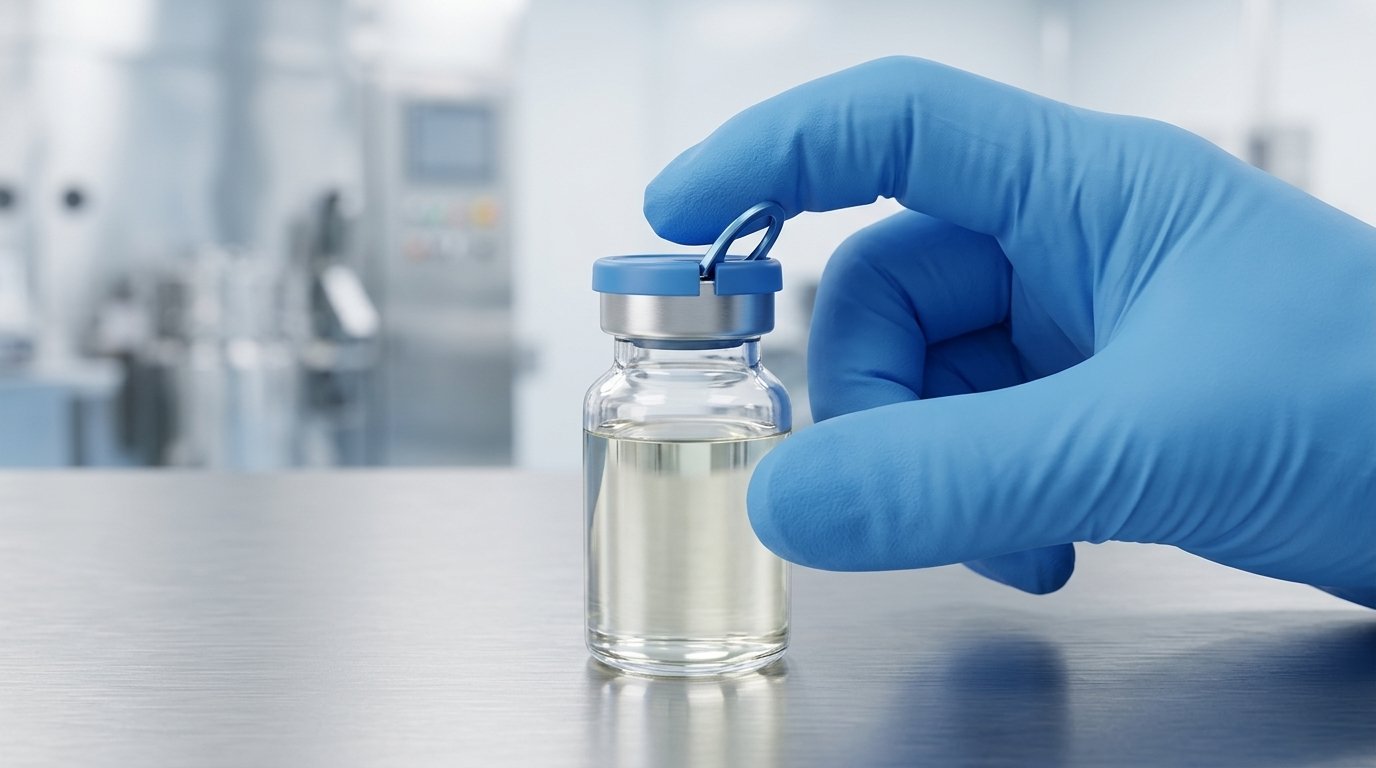
An oncology vial seal is the aluminium-plastic closure on a vial of cytotoxic or otherwise hazardous drug, chosen so it opens cleanly and predictably without creating aerosols, spills, or sharps risk. Oncology products are handled by pharmacists and nurses who are protecting themselves as much as the patient, so the seal’s opening behaviour and tamper evidence matter as much as its barrier performance.
This page explains what oncology drug presentations require of a closure, why seal choice matters for hazardous-drug handling, which Autofits seals fit, and the standards that apply.
Key takeaways
- An oncology vial seal is the closure on a cytotoxic or hazardous-drug vial; it is selected for safe, controlled opening as well as for barrier integrity.
- Cytotoxic drug handling aims to minimise operator exposure, so a seal that opens single-handed, by hand, without scissors or a decapper reduces fumbling, aerosol generation, and spill risk.
- Tamper evidence is essential: an oncology vial must visibly show whether it has already been opened.
- Many oncology products are lyophilised powders reconstituted before dosing, so the closure must also hold container-closure integrity over shelf life.
- Autofits supplies the FlipTop® Pull-Ring (whole-seal, single-handed removal) and the FlipTop® Optima flip-off seal (retained button, single injection point), in the relevant neck sizes.
- Hazardous-drug compounding and aseptic sealing follow EU GMP Annex 1; integrity is verified against USP <1207>.
What oncology presentations are and their container-closure requirements
Oncology drug products are frequently cytotoxic or otherwise hazardous, supplied as sterile injectables that are either ready-to-use liquids or lyophilised powders reconstituted before administration. Because these molecules are toxic to the people handling them, the whole presentation, including the closure, is designed around containment and controlled access, not just around the patient who eventually receives the dose.
The container-closure system for an oncology product has to meet the usual demands of a sterile injectable: a tight, durable seal that holds the rubber stopper compressed against the glass, documented material compliance for primary contact, and verified container-closure integrity over shelf life. On top of that it carries two handling-specific demands. The closure should open in a way that does not disturb the contents or generate aerosols, and it must give clear, irreversible tamper evidence so a compounding pharmacist can confirm an unused vial before drawing a hazardous dose.
Where the product is a lyophilised powder, the closure also has to survive the freeze-drying workflow: the stopper is seated under controlled conditions at the end of the cycle and the seal is crimped over it, after which it has to keep the hygroscopic cake dry until reconstitution. The handling and the integrity requirements are additive, not alternatives.
Why seal choice matters here
For hazardous oncology drugs the seal’s opening behaviour is a containment control, so the seal is chosen to open predictably, single-handed, and without tools that could slip, splash, or generate aerosols. Cytotoxic handling guidance is built around reducing operator exposure: fewer manipulations, no improvised tools, and no actions that flick liquid or release powder. A closure that pries off unevenly, needs scissors, or requires two hands and a struggle is working against that.
A single-handed, by-hand opening helps because the operator, often gloved and working inside a containment cabinet or with a closed-system transfer device, can keep one hand on the vial and one on the syringe or transfer device without setting anything down. That stability reduces the chance of knocking the vial, generating splash, or aerosolising residue around the stopper. The opened seal then has to be unambiguous tamper evidence: once a hazardous vial is opened it cannot be made to look unopened, so a pharmacist can trust the integrity of an apparently sealed vial.
Two access patterns suit oncology, depending on the workflow. A retained flip-off button exposes only a small central injection point, which keeps the stopper covered and is the right pattern for needle or spike access into a closed system. A pull-ring removes the whole seal by hand, which suits presentations accessed without a retained button and gives a fast, controlled, single-handed action. Both are crimped permanently before opening, both give tamper evidence, and the compounding and sealing steps fall under the contamination-control expectations of EU GMP Annex 1.
Handling is only half of the closure argument here. Particulate control is the other half: a cytotoxic product is reconstituted and drawn through a closed-system transfer device before it reaches the patient, and the injectable has to meet the limits in USP <788> particulate matter in injectables, which is one reason a low-particulate Ready-to-Use closure is worth specifying rather than washing seals in-house. Opening technique deserves to be written down rather than assumed, and how to open a vial cap by seal type, alongside the flip-off cap removal techniques comparison, covers the flip, twist and pull actions and which of them keeps the vial still. For the freeze-dried presentations that make up much of oncology the capping detail sits on lyophilised vial seals, and the vial sealing applications hub maps this category against the others. A large share of oncology molecules are biologic products, which brings the extractables and leachables case set out on that page into scope as well.
Which Autofits seals fit
For oncology products Autofits supplies two closures: the FlipTop® Pull-Ring for fast single-handed whole-seal removal, and the FlipTop® Optima flip-off seal where a retained injection point is preferred. Both crimp permanently over the stopper, give visible tamper evidence, and are available sterilised for aseptic supply.
- FlipTop® Pull-Ring seal: the operator lifts the aluminium ring, pulls it, and turns it anticlockwise; the whole seal detaches in one single-handed action, with no scissors or decapper. Supplied in 20 mm (bridge type), inner aluminium diameter 20.00 to 20.60 mm, six taper bridges, maximum opening force 35 N; and 32 mm (flower type), inner aluminium diameter 32.15 to 32.40 mm, eight fins, maximum opening force 65 N. These closures are often marked “For Oral Use Only / Flip Top & Tear”, so confirm the marking and route with the technical team for a parenteral oncology fill.
- FlipTop® Optima flip-off seal: flips up a small plastic button to expose a single central injection point while the aluminium skirt stays crimped, which suits needle or spike access and reconstitution of lyophilised oncology powders. Common sizes are 20 mm (inner aluminium diameter 20.22 mm min, six taper bridges, 35 N) and 28 mm (inner aluminium diameter 27.60 to 28.20 mm, eight bridges, 35 N). The Optima Button design carries intrinsic tamper evidence.
Both seals are available Regular, Ready-to-Use or Ready-to-Sterilize. The Ready-to-Use form is assembled in an ISO Class 8 cleanroom, double-lacquered, washed to control particles and gamma sterilised, then double-bagged for aseptic areas. Match the seal to the vial neck finish and stopper of the same nominal size; for the wider option set see the full FlipTop seal range and the 20 mm vial seals listing. For lyophilised oncology powders, the freeze-dry closure requirements are covered in detail on the lyophilised products page.
Relevant standards
The oncology closure system sits under a defined set of references:
- EU GMP Annex 1: manufacture of sterile medicinal products, which governs the aseptic environment and contamination control under which hazardous products are filled, stoppered and sealed.
- USP <1207>: package integrity evaluation for sterile products, the basis for container-closure integrity testing of the sealed vial.
- USP <788>: particulate matter in injections, the limits a reconstituted cytotoxic dose has to meet, which is part of the case for a low-particulate closure.
- ISO 8362-6: caps made of aluminium-plastics combinations for injection vials, the family the FlipTop seals belong to.
- ISO 15378:2017: primary packaging materials for medicinal products, with GMP requirements, the quality framework the seals are manufactured under.
Frequently asked questions
What is an oncology vial seal?
An oncology vial seal is the aluminium-plastic closure on a vial of cytotoxic or otherwise hazardous drug. Beyond holding the stopper compressed against the glass for barrier integrity, it is chosen so it opens cleanly and single-handed without creating aerosols or spills, and so it gives clear tamper evidence that a compounding pharmacist can rely on before drawing a hazardous dose.
Why does single-handed opening matter for cytotoxic drugs?
Cytotoxic handling guidance aims to reduce operator exposure by minimising manipulations and avoiding improvised tools. A seal that opens single-handed and by hand, with no scissors or decapper, lets a gloved operator keep one hand on the vial and one on the syringe or transfer device, which reduces the chance of knocking the vial, splashing, or aerosolising residue around the stopper.
Which Autofits seals suit oncology products?
Autofits supplies the FlipTop Pull-Ring, where the whole seal lifts away in one single-handed action, in 20 mm and 32 mm; and the FlipTop Optima flip-off seal, which exposes a small retained injection point for needle or spike access, in 20 mm and 28 mm. The pull-ring suits hand access; the flip-off suits closed-system or reconstitution access into a retained button.
Do these seals provide tamper evidence?
Yes. Both designs crimp permanently over the stopper and cannot be reseated once opened. A removed pull-ring or a flipped or missing flip-off button is irreversible evidence that the vial has been accessed. The Optima Button design also carries intrinsic tamper evidence built into the structure under the button disc.
Many oncology drugs are freeze-dried. Does the same closure work?
Lyophilised oncology powders use the same flip-off closure family, but the seal also has to survive the freeze-drying workflow and keep the hygroscopic cake dry until reconstitution. The FlipTop Optima flip-off seal in 20 mm or 28 mm is the usual choice; the freeze-dry-specific requirements are covered on the lyophilised products page.
What standards apply to oncology vial closures?
Hazardous oncology products are filled, stoppered and sealed under EU GMP Annex 1 for sterile manufacturing and contamination control, and the sealed vial is qualified for container-closure integrity against USP <1207>. The aluminium-plastics seal follows ISO 8362-6 and is manufactured under the ISO 15378:2017 GMP quality framework.
Related reading
- FlipTop Pull-Ring seals
- FlipTop Optima flip-off seals
- Lyophilised products vial seals
- Biologics vial seals
- EU GMP Annex 1
- USP <1207>: package integrity
- 20 mm vial seals
Sources
- EudraLex Volume 4, EU GMP Annex 1, Manufacture of Sterile Medicinal Products (https://health.ec.europa.eu/)
- USP-NF: General Chapter <1207>, Package Integrity Evaluation, Sterile Products (https://www.usp.org/)
- ISO: ISO 8362-6:2010, Injection containers and accessories, Part 6: Caps made of aluminium-plastics combinations for injection vials (https://www.iso.org/standard/45831.html)
- ISO: ISO 15378:2017, Primary packaging materials for medicinal products, GMP requirements (https://www.iso.org/standard/70729.html)
- Autofits engineering drawings and FlipTop Seals dossier (internal, on file)
*Last updated: 2026-06-27. This page is general technical and product information, not regulatory or compliance advice; confirm current standard editions, material specifications and requirements with the issuing bodies and with the Autofits technical team for your specific application.*
