
How Flip-Off Caps Work: The Mechanism of a Vial Flip-Off Seal
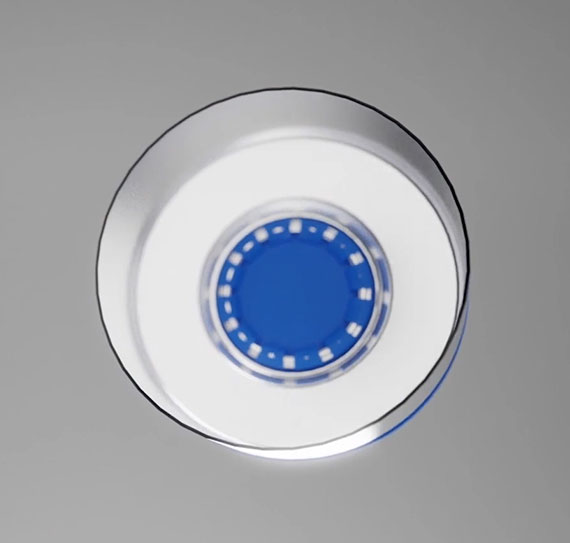
A flip-off cap works by combining two parts: an aluminium shell crimped tightly around the vial neck over the rubber stopper, and a plastic flip button on top that lifts away to expose the centre of the stopper. The aluminium crimp holds the stopper compressed against the glass to maintain a sealed barrier, while the plastic button (released by snapping a thin scoreline) gives quick access to the injection point without disturbing the crimp. Once the button is flipped off, it cannot be reseated, so the seal also serves as tamper evidence.
This guide explains the anatomy of a flip-off seal, how crimping secures the stopper for container closure integrity, why the button can flip while the metal stays in place, and the main sub-types used in regulated markets.
Key takeaways
- A flip-off seal has two functional parts: an aluminium shell crimped over the stopper and a plastic flip button with a scoreline that snaps open.
- Crimping rolls the lower edge of the aluminium shell under the vial neck flange, compressing the rubber stopper to form the sealed barrier.
- The crimp is what maintains container closure integrity (CCI), the property that keeps the sterile contents sealed from the outside environment.
- The plastic button flips off independently of the crimp, exposing only the central injection area of the stopper for the needle.
- Because the button breaks at a scoreline and cannot be reattached, a flipped seal provides visual tamper evidence.
- Common sub-types differ only in the flip feature itself: button, bridge, and flower / scoreline designs, chosen to suit different filling lines and market preferences.
What is a flip-off cap made of?
A flip-off cap is a combination (combi) seal made of an aluminium shell and a moulded plastic button, applied over a rubber stopper that already sits in the vial neck. It is the topmost component of an injectable vial’s container closure system, which combines the glass vial, the elastomeric stopper, and the seal that secures them.
The three elements work together:
- The aluminium shell is a thin formed cap that covers the top of the vial and extends down as a skirt around the neck. It is the part that does the mechanical sealing work.
- The rubber (elastomeric) stopper sits in the mouth of the vial and is the surface a needle pierces. Its functional behaviour, such as resealing after a needle is withdrawn, is governed by standards for elastomeric closures for injections and, since February 2026, by the revised USP <382> functional-suitability requirements.
- The plastic flip button is moulded onto the top of the aluminium shell, covering the central area over the stopper. It carries a thin scoreline so it can be snapped off cleanly by hand.
This aluminium-plus-plastic construction is why the product family is described as an aluminium-plastic seal. The plastic top adds a colour-codeable, easy-open surface, which is why product families with several strengths on one ward, such as insulin and hormone vials, lean on it so heavily; the aluminium underneath provides the structural crimp.
How crimping secures the stopper
Crimping seals the vial by rolling the lower edge of the aluminium skirt inward and under the lip (flange) of the glass vial neck, which compresses the stopper down against the glass and locks the whole assembly together. This happens on a capping station at the end of the fill-finish line, after the vial is filled and the stopper inserted.
Mechanically, the capping head applies a controlled downward force while rollers fold the aluminium skirt under the neck flange. The result is a permanent mechanical bond: the stopper is held under compression so its sealing surfaces stay pressed against the glass, and the aluminium can no longer be lifted off by hand.
The quality of this crimp is what determines the seal of the package. If the crimp is too loose, the stopper is not compressed enough and the barrier can leak; if it is too tight or uneven, it can damage the stopper or the glass. Capping and crimping are therefore treated as a critical step in sterile manufacturing, and guidance such as EU GMP Annex 1 for sterile medicinal products expects capping to be controlled and sealed vials to be inspected.
How the crimp maintains container closure integrity
Container closure integrity (CCI) is the ability of the sealed package to keep its contents in and contamination out, and for a flip-off vial it depends almost entirely on the crimped stopper, not the plastic button. The compressed stopper and the glass form the sterile barrier; the aluminium crimp is the clamp that keeps that barrier under load for the life of the product.
Regulators and pharmacopoeias treat CCI as part of sterility assurance for injectable products. The informational framework for evaluating package integrity is set out in USP <1207>, and the practical leak-test methods used to confirm a vial stays sealed are covered under container closure integrity testing. A correctly applied flip-off seal is what those tests are verifying: that the crimp has held the stopper tightly enough, with no leak path, across storage and handling.
Because the plastic button is removed in normal use, it plays no part in maintaining integrity. Flipping the button does not break the seal; the crimp and stopper remain in place and the sterile barrier is unaffected until a needle is introduced.
How the button flips while the metal stays
The plastic button is moulded with a thin scoreline (a deliberate weak line) that lets a thumb snap the button up and off while the aluminium shell stays crimped under the vial neck. Lifting the button breaks the scoreline and detaches only the plastic top, uncovering the small central area of the stopper that the needle will pierce. The aluminium skirt, and therefore the crimp holding the stopper, is untouched.
This separation of functions is the whole point of the flip-off design. One component (the metal crimp) handles the permanent seal and stays put; another (the plastic button) handles single-use access and comes away cleanly. The user gets a quick, tool-free way to expose a clean injection site without ever loosening the part that keeps the vial sealed.
It also creates the tamper-evidence feature. The button breaks at the scoreline and cannot be snapped back into place, so a vial whose button is missing or broken is visibly already opened. This is what defines the product as a flip-off seal, and it is the main practical difference between flipping the button and the full-removal action of a tear-off seal, where the entire aluminium top is pulled away.
Flip-off sub-types: button, bridge, and flower
Flip-off seals come in a few sub-types that differ only in the design of the flip feature on top, not in how the crimp seals the vial. The aluminium shell, the crimp, and the stopper work the same way across all of them; the variation is in how the plastic button is shaped and how it releases.
- Button type: a solid raised plastic button over the centre of the seal that lifts straight up and off at the scoreline. It is the most common general-purpose design.
- Bridge type: the flip feature is connected by a small plastic bridge or hinge (sometimes formed with or without a groove), giving a slightly different lift action and feel when opened.
- Flower / scoreline type: the plastic top is formed with a scored or petal-like pattern that defines where it separates when flipped.
Different regulated markets and filling lines prefer different sub-types, often based on their own customer or line requirements rather than any difference in sealing performance, and the FlipTop construction is set against the older design in FlipTop versus traditional flip-off seals. The structural comparison between these designs is covered in more detail under bridge-type versus button-type seals. For most purposes, the choice affects opening feel and line behaviour, while the crimp and stopper continue to do the sealing work the same way.
How this works in practice at Autofits
Autofits manufactures aluminium-plastic FlipTop Optima flip-off seals (the Optima range) in 13 mm, 20 mm, and 32 mm sizes, with the four flip sub-types (bridge with or without groove, button, and flower / scoreline) developed around the standards of specific pharmaceutical customers. The plastic disc is available in matte or glossy finish and can be printed and embossed for colour-coding and branding, while the metal can also be coloured and printed. Production runs in a 75,000 sq ft Nashik facility with an ISO Class 8 cleanroom and high-speed visual inspection, under an ISO 15378:2017 quality system alongside ISO 9001:2015 and ISO 14001:2015 certification and a Drug Master File (DMF). You can review the full set of certifications on the quality page and browse the complete vial seal product range.
Frequently asked questions
Why does the metal part stay on the vial after you flip the cap?
The metal stays because it is crimped, not loose. During capping, the lower edge of the aluminium shell is rolled under the vial neck flange, locking it permanently in place and compressing the stopper to seal the vial. Only the plastic button is designed to come off; flipping it breaks a thin scoreline and detaches the plastic top while the crimped aluminium skirt remains, keeping the seal and tamper evidence intact.
Does flipping the button break the sterile seal?
No. The sterile barrier is formed by the rubber stopper compressed against the glass and held by the aluminium crimp, not by the plastic button. Flipping the button only uncovers the central injection area of the stopper. The vial stays sealed until a needle pierces the stopper, which is why the stopper is wiped with alcohol before use.
What is the scoreline on a flip-off cap for?
The scoreline is a deliberately thin, weakened line in the plastic button that lets it snap off cleanly by hand without a tool. It controls exactly where the button separates, gives a consistent opening action, and ensures the button cannot be reattached afterwards, which provides the visual tamper evidence.
How does a flip-off cap provide tamper evidence?
A flip-off cap provides tamper evidence because the plastic button breaks at its scoreline when removed and cannot be put back. A vial with a missing or broken button is visibly already opened, signalling to the user that the closure has been disturbed. The crimped aluminium also cannot be lifted and reseated by hand without obvious damage.
What is the difference between the flip-off sub-types?
The sub-types (button, bridge, and flower / scoreline) differ only in the shape of the plastic flip feature and how it releases, not in how the vial is sealed. The aluminium crimp and the stopper provide the seal identically across all of them. Different markets and filling lines choose a sub-type based on opening feel, line behaviour, and their own customer requirements.
Related reading
- What a flip-off seal is
- How to open a vial with a metal cap
- Container closure integrity testing methods
- Flip-off versus tear-off seals
- Flip-off vs flip-up: one closure, two names
- What an aluminium-plastic seal is
- The FlipTop Optima flip-off seal range
- Bridge-type with groove seal
- Bridge-type without groove seal
- Button-type flip-off seal
- Flower-type flip-off seal
Sources
- USP-NF: General Chapter <1207>, Package Integrity Evaluation, Sterile Products (https://www.usp.org)
- USP-NF: General Chapter <381>, Elastomeric Closures for Injections (https://www.usp.org)
- European Commission / EMA: EU GMP Annex 1, Manufacture of Sterile Medicinal Products (https://health.ec.europa.eu/medicinal-products/eudralex/eudralex-volume-4_en)
- PDA: Parenteral Drug Association technical resources on fill-finish and container closure integrity (https://www.pda.org)
*Last updated: 2026-06-10. This article is general technical information, not regulatory or compliance advice; confirm current standard editions and requirements with the issuing bodies.*
