
Tamper-Evident Vial Closures: How They Work
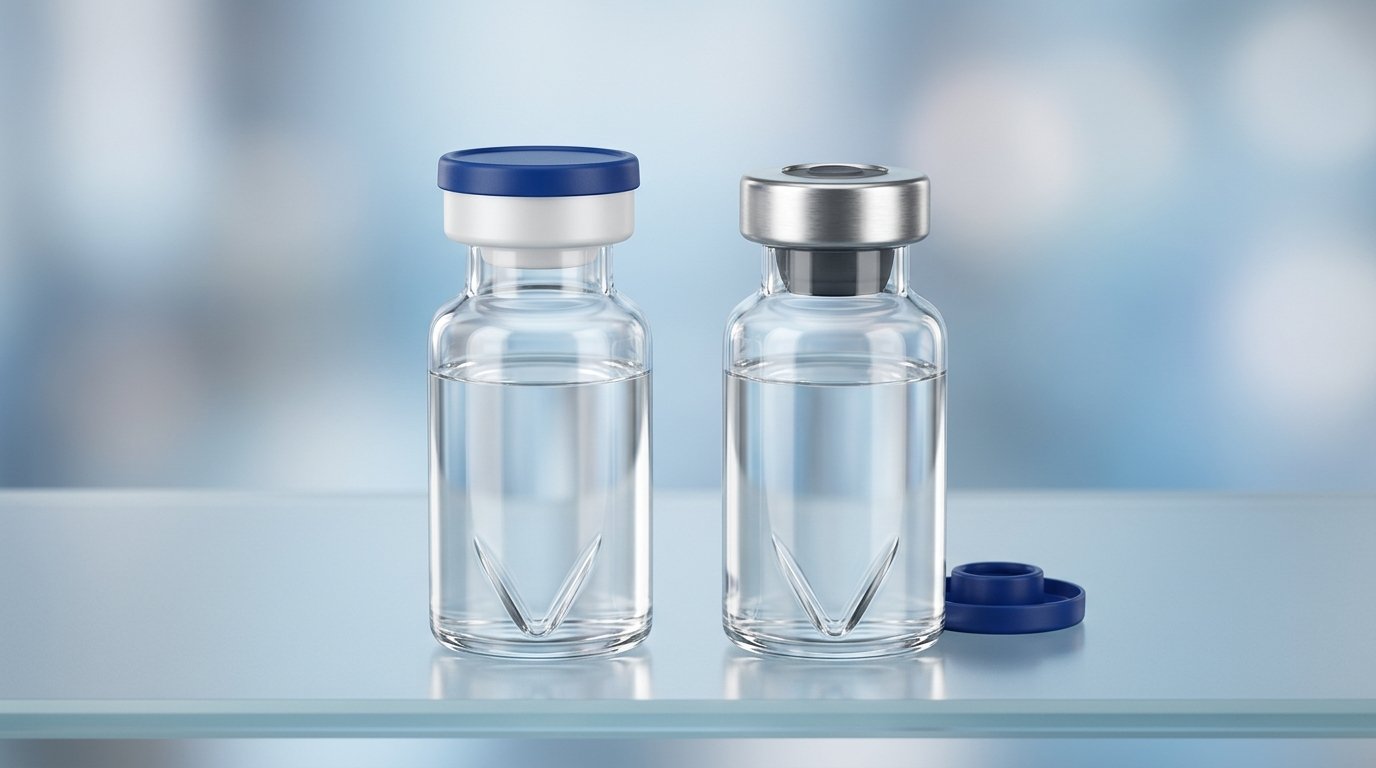
A tamper-evident vial closure is a seal designed so that any attempt to open the vial leaves obvious, irreversible evidence, so a user can tell whether the vial has been opened before. On injectable vials this is built into the seal itself: a flip-off seal’s plastic button snaps off and cannot be reseated, a tear-off seal’s metal top is torn away, and a pilfer-proof cap’s band breaks. The evidence is permanent because the feature cannot be restored to its original state once disturbed.
This guide explains what tamper evidence is, how the different vial closures provide it, why it matters, and how it relates to the seal’s other job of maintaining container closure integrity.
Key takeaways
- A tamper-evident closure shows clear, irreversible evidence if the vial has been opened or interfered with.
- On vials, the tamper evidence is built into the seal: a flipped or missing flip-off button, a torn tear-off or tear-down top, or a broken pilfer band.
- The evidence is permanent: the feature cannot be returned to its original, unopened state.
- Tamper evidence supports patient safety and helps protect the supply chain against falsified products.
- Tamper evidence is distinct from, but works alongside, container closure integrity (keeping the contents sterile).
- It is one of the measures the World Health Organization associates with protecting against substandard and falsified medical products.
What is tamper evidence?
Tamper evidence is a packaging feature that reveals, in a way that cannot be reversed, whether a container has been opened or interfered with. It does not necessarily prevent opening; it makes opening visible. A user or patient can inspect the closure and see whether the tamper-evident feature is intact.
The purpose is protection. If a product can be opened and resealed without trace, a consumer cannot trust that what is inside is what the manufacturer sealed. Tamper-evident packaging is treated as a basic element of patient and consumer protection across regulated products, and it is one of the measures recognised internationally for helping keep falsified or substandard medical products out of the legitimate supply chain. For injectable vials, the tamper-evident feature is part of the seal that closes the vial. It also does quieter work on stock that sits unattended for months, such as the emergency drugs held on a crash cart, where an intact seal is the only routine check a trolley audit makes.
How vial closures provide tamper evidence
Each type of vial closure provides tamper evidence through a feature that breaks or detaches irreversibly when the vial is opened. The mechanism differs by seal type:
- Flip-off seal. The plastic button snaps off at a moulded scoreline and cannot be reattached, so a missing or broken button shows the vial has been opened. The crimped aluminium also cannot be lifted and reseated by hand without obvious damage. See what is a flip-off seal.
- Tear-off and tear-down seals. The aluminium top is torn away and cannot be reformed, so a torn or missing metal top is the evidence. See what is a tear-off seal and the side-by-side of tear-off versus tear-down seals.
- Pilfer-proof (ROPP) caps. A tear-off band at the base of the cap shears from the cap body on first opening and cannot be reattached, so a broken or missing band is the evidence. See what is a pilfer-proof cap.
In every case the feature is one-way: once disturbed it stays disturbed, which is what makes the evidence reliable.
Why tamper evidence matters
Tamper evidence matters because it lets a patient, pharmacist, or clinician verify before use that a sealed product has not been opened, supporting both safety and trust in the supply chain. For injectable medicines administered directly into the body, the assurance that the vial is as the manufacturer sealed it is especially important.
Beyond the individual product, tamper-evident packaging is a defence at the system level. Falsified and substandard medicines are a recognised global problem, most acute in high-value categories such as oncology and biologics, and visible, irreversible tamper evidence raises the difficulty of substituting or adulterating product without detection. It works alongside other measures such as serialisation and secure distribution. The tamper-evident seal on a vial is the most immediate of these, checkable by anyone handling the vial.
Tamper evidence vs container closure integrity
Tamper evidence and container closure integrity are two different jobs the closure does: tamper evidence shows whether the vial was opened, while integrity keeps the contents sterile and sealed. They are related but not the same.
| Aspect | Tamper evidence | Container closure integrity |
|---|---|---|
| What it does | Reveals if the vial has been opened | Keeps contents in, contamination out |
| Provided by | Flip button, torn metal, pilfer band | The crimped stopper sealing the vial |
| How it is verified | Visual inspection by the user | CCI testing |
| Reversible? | No, the evidence is permanent | The seal must stay intact for shelf life |
On a flip-off seal, for example, flipping the button gives tamper evidence but does not break the sterile barrier; the barrier is the stopper held by the crimp, which is the integrity function described under USP <1207>. A closure has to deliver both: visible tamper evidence and a sound, sterile seal.
How this works in practice at Autofits
Tamper evidence is built into every Autofits closure, and the four designs are compared with their specifications on tamper evident vial seals. The FlipTop Optima flip-off seals provide it through the flip button that snaps at a scoreline and cannot be reseated; the tear-off and tear-down seals through the torn aluminium; and the aluminium pilfer-proof (ROPP) caps through the tear-off band. The full range is on the products page. Because the seals are produced to tight dimensions and inspected at high speed, the tamper-evident feature forms and breaks consistently while the crimp maintains the seal. Production runs under an ISO 15378:2017 quality system, alongside ISO 9001:2015 and ISO 14001:2015 certification and a Drug Master File, in a 75,000 sq ft Nashik facility with an ISO Class 8 cleanroom and high-speed visual inspection. The full certification set is on the quality page.
Frequently asked questions
What is a tamper-evident vial closure?
A tamper-evident vial closure is a seal designed so that opening the vial leaves obvious, irreversible evidence, letting a user tell whether the vial has been opened before. On injectable vials the feature is built into the seal: a flipped or missing flip-off button, a torn tear-off top, or a broken pilfer band. The evidence is permanent because the feature cannot be restored.
How does a flip-off seal show tamper evidence?
A flip-off seal shows tamper evidence because its plastic button snaps off at a moulded scoreline and cannot be reattached. A vial with a missing or broken button is visibly already opened. The crimped aluminium beneath the button also cannot be lifted and reseated by hand without obvious damage.
Is tamper evidence the same as keeping the vial sterile?
No. Tamper evidence shows whether the vial has been opened; container closure integrity is what keeps the contents sterile and sealed. They are different jobs. On a flip-off seal, flipping the button gives tamper evidence but does not break the sterile barrier, which is the stopper held compressed by the crimp. A closure must provide both.
Why is tamper-evident packaging important for medicines?
Tamper-evident packaging lets patients and healthcare staff verify before use that a product has not been opened, which matters most for injectables given directly into the body. At the system level, it helps protect the supply chain against falsified and substandard medicines by making undetected substitution or adulteration harder. It is one of several recognised supply-chain protection measures.
Can a tamper-evident seal be resealed?
No. A genuine tamper-evident feature is one-way: once the flip-off button is snapped, the metal top is torn, or the pilfer band is broken, it cannot be returned to its original, unopened state. That irreversibility is what makes the evidence reliable. A reclosable cap like a pilfer-proof cap can be screwed back on, but its broken band still shows it was opened.
Related reading
- What is a flip-off seal?
- What is a tear-off seal?
- What is a pilfer-proof cap?
- Container closure integrity testing
- The FlipTop Optima flip-off seal range
Sources
- World Health Organization: Substandard and falsified medical products (https://www.who.int/health-topics/substandard-and-falsified-medical-products)
- USP-NF: General Chapter <1207>, Package Integrity Evaluation, Sterile Products (https://www.usp.org/)
*Last updated: 2026-06-18. This article is general technical information, not regulatory or compliance advice; confirm packaging requirements for your product with the applicable authority.*
