
Ophthalmic Vial Seals and Closures
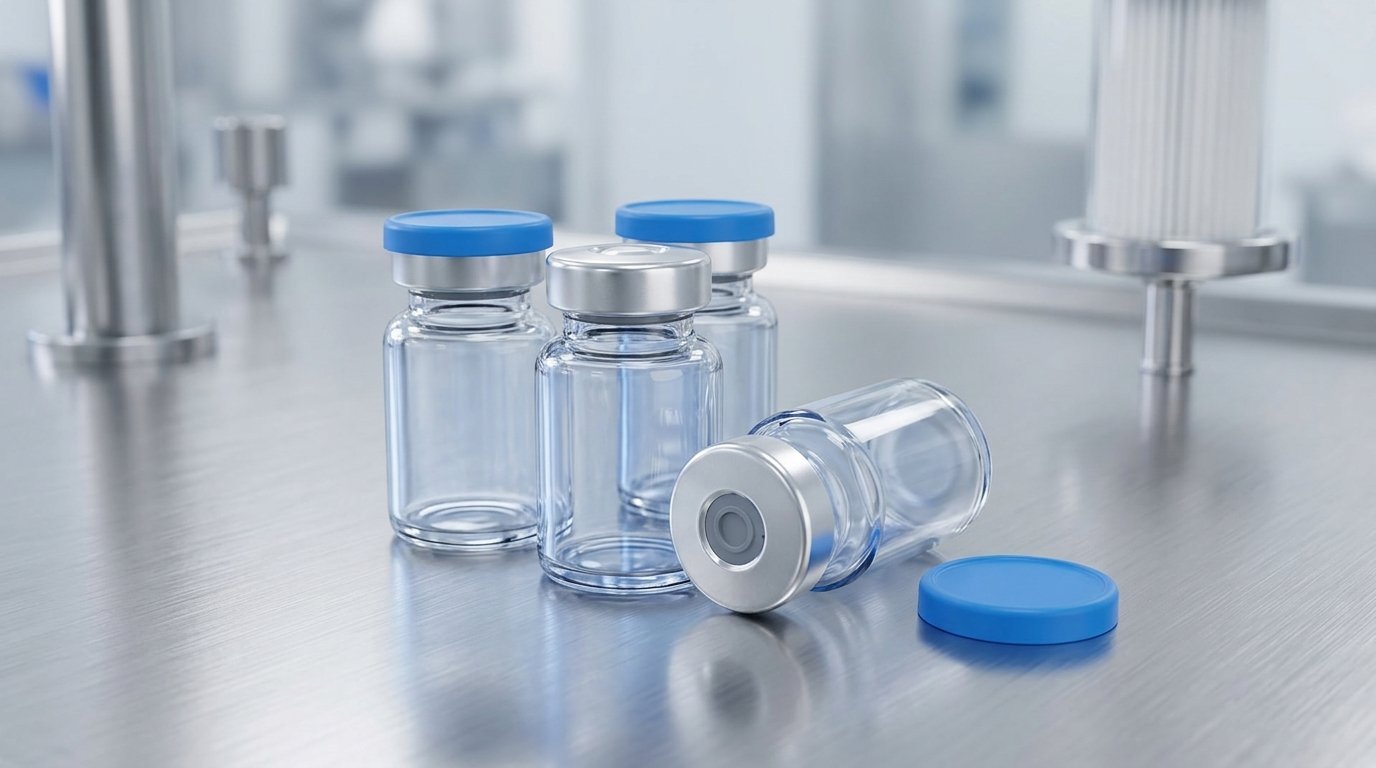
Ophthalmic preparations are small-volume, sterility-critical products, so the closure has to hold container closure integrity on a small neck, give clear tamper evidence, and carry colour coding for identification, most often on a 13 mm vial where every dimension is tight. The eye is an unforgiving route of administration, so the sterile barrier on the vial cannot be a weak link.
This page is for ophthalmic formulators, packaging engineers and sourcing managers selecting a vial closure. It covers the small-size bias of ophthalmic vials, sterility and container closure integrity, single-dose versus multidose presentations, the Autofits seals that fit, and the standards involved.
Key takeaways
- Ophthalmic closures must hold container closure integrity (CCI) on small necks, give clear tamper evidence, and carry colour coding, because eye preparations are sterility-critical.
- The 13 mm neck dominates ophthalmic vials because fill volumes are small; 20 mm is used for larger presentations.
- The FlipTop® Optima flip-off seal in 13 mm is the default; the Button design adds intrinsic tamper evidence.
- All seals are supplied Ready-to-Use (gamma or ETO sterilized) or Ready-to-Sterilize, so they suit aseptic ophthalmic fill lines.
- Closure standards: ISO 8362-6, ISO 15378, USP <1207> and EU GMP Annex 1.
What ophthalmic packaging needs from the closure
An ophthalmic vial is a sterile container-closure system: glass vial, rubber stopper and an aluminium-plastic seal that crimps under the neck flange to compress the stopper against the glass. For ophthalmic products, three requirements sit on top of that barrier.
Small size. Ophthalmic fill volumes are small, so the vial neck is usually 13 mm. On a small neck the crimp forms over a short skirt with little margin, so tight dimensional control on the seal matters: the 13 mm Optima is held to the engineering drawings, with a total seal height of 7.62 to 8.38 mm and six tapered bridges, so the crimp forms cleanly run after run.
Sterility. Eye preparations must be sterile and must stay sterile to expiry, since a compromised barrier on an ophthalmic product carries direct patient risk. The closure has to support that barrier without particulate contribution: Ready-to-Use seals are washed and assembled in an ISO Class 8 cleanroom, double-lacquered, and gamma sterilized.
Tamper evidence. An ophthalmic vial that has been opened must be obvious. A flipped or missing button signals an opened flip-off seal; the Optima Button design carries intrinsic tamper evidence via a 12-stem flower formed under the button disc, so the opened state is visibly distinct.
Sterility and container closure integrity
Because ophthalmic products are sterility-critical, container closure integrity is the central closure requirement. The seal has to keep the crimp tight enough to hold the stopper against the glass across shelf life, transport and any temperature excursions. The aluminium-plastic construction, an AA8011 aluminium shell with a polypropylene button and a mechanical crimp rather than an adhesive bond, is a robust, well-characterised combination for this duty. Container closure integrity should be confirmed for the specific product against USP <1207>, and the aseptic-filling and CCI expectations of EU GMP Annex 1 apply to sterile ophthalmic manufacture.
Single-dose versus multidose ophthalmic vials
Single-dose ophthalmic vials, often preservative-free, prioritise a secure, clearly tamper-evident one-time closure. A flip-off seal with the Button design, one of the tamper evident vial seals, suits this: the closure is accessed once and the opened state is obvious.
Multidose ophthalmic vials are punctured or accessed more than once, so the closure and stopper must reseal and the opened state must be clear between accesses. A flip-off seal suits this well: the user flips the plastic button to expose a small central access point, and the aluminium stays crimped so the seal holds between accesses.
Two things sit just outside the closure specification but govern it. Particulate limits for the finished injection are set by USP <788> particulate matter in injectables, which is why an ophthalmic programme usually specifies Ready-to-Use seals washed and assembled in a cleanroom rather than washing in-house. And integrity is a measured property rather than an assumption: vial closure integrity explained covers the leak paths and the test methods behind a CCI claim. On size, ophthalmic fills stay at the small end of the range, so the 13 mm seal range covers most of it with 20 mm for larger presentations. The nearest neighbours by requirement are oncology vial closures, which share the particulate and single-dose logic, and insulin and hormone vials, which share the small-neck multidose case.
Which Autofits seals fit ophthalmic vials
For ophthalmic vials, the FlipTop® Optima flip-off seal is the default closure:
- 13 mm Optima is the highest-relevance size for ophthalmic vials because fill volumes are small. The 13 mm seal has a total height of 7.62 to 8.38 mm, six tapered bridges and a maximum opening force of 30 N.
- 20 mm Optima suits larger ophthalmic presentations. The 20 mm seal has a total height of 9.02 to 9.91 mm, six tapered bridges and a maximum opening force of 35 N.
- The Button design adds intrinsic tamper evidence; colour coding is available in a wide range of colours, matte or glossy, customised to requirement.
All seals are supplied Regular, Ready-to-Use (gamma or ETO sterilized, double-bagged for aseptic areas) or Ready-to-Sterilize, so they slot into both terminal and aseptic ophthalmic fill lines. See the FlipTop® Optima page or the applications hub for the full range.
Relevant standards
- ISO 8362-6: the design standard for caps made of aluminium-plastics combinations for injection vials, which the Optima follows. Vial necks follow ISO 8362-1.
- ISO 15378: GMP requirements for primary packaging materials; Autofits seals are produced under ISO 15378:2017.
- USP <1207>: package integrity evaluation for sterile products, the reference for demonstrating container closure integrity across shelf life.
- USP <788>: particulate matter in injections, the limits that make a low-particulate, cleanroom-assembled closure worth specifying for ophthalmic fills.
- EU GMP Annex 1: manufacture of sterile medicinal products, which sets aseptic-filling and CCI expectations for sterile ophthalmic preparations.
Frequently asked questions
What size seal do ophthalmic vials use?
Ophthalmic vials most often use a 13 mm neck because fill volumes are small. Larger ophthalmic presentations use 20 mm. Match the seal to the vial finish and the stopper of the same nominal diameter; the 13 mm Optima page lists dimensions to check against your vial.
Why is the closure so important for ophthalmic products?
Ophthalmic preparations are sterility-critical, so a compromised sterile barrier carries direct patient risk. The closure has to hold container closure integrity across shelf life, which is why CCI should be confirmed for the specific product against USP <1207>.
How does the seal provide tamper evidence on an ophthalmic vial?
A flip-off seal shows it has been opened once the plastic button is flipped or missing. The Optima Button design adds intrinsic tamper evidence with a 12-stem flower formed under the button disc, so the opened state is visibly distinct.
Are ophthalmic seals supplied sterile?
Seals can be supplied Ready-to-Use, gamma or ETO sterilized and double-bagged for aseptic areas, or Ready-to-Sterilize for lines that sterilize in house. Ready-to-Use seals are washed and assembled in an ISO Class 8 cleanroom to limit particulates.
Can the seal carry colour coding for ophthalmic identification?
Yes. Flip-off buttons are available in a wide range of colours, matte or glossy, customised to requirement, so the seal can carry colour coding to distinguish ophthalmic products and strengths at the point of use.
Related reading
- Vial sealing applications hub
- Vaccine vial seals and closures
- FlipTop® Optima flip-off seals
- 13 mm Optima seals
- Flip-off seal: definition
- USP <1207>: package integrity for sterile products
- EU GMP Annex 1: sterile manufacture
Sources
- Autofits FlipTop Seals dossier and engineering drawings (working/spec-sheets/)
- ISO: ISO 8362-6:2010, Injection containers and accessories, Part 6: Caps made of aluminium-plastics combinations for injection vials (https://www.iso.org/standard/45641.html)
- ISO: ISO 15378:2017, Primary packaging materials for medicinal products, GMP requirements (https://www.iso.org/standard/70729.html)
- USP-NF: General Chapter <1207>, Package Integrity Evaluation, Sterile Products (https://www.usp.org/)
- EudraLex Volume 4, EU GMP Annex 1, Manufacture of Sterile Medicinal Products (https://health.ec.europa.eu/)
*Last updated: 2026-07-06. This page is general technical information, not regulatory or compliance advice; confirm current standard editions and your own specification with Autofits and the issuing bodies.*
