
Antibiotic Vial Seals: Seals for Dry-Powder Injection Vials
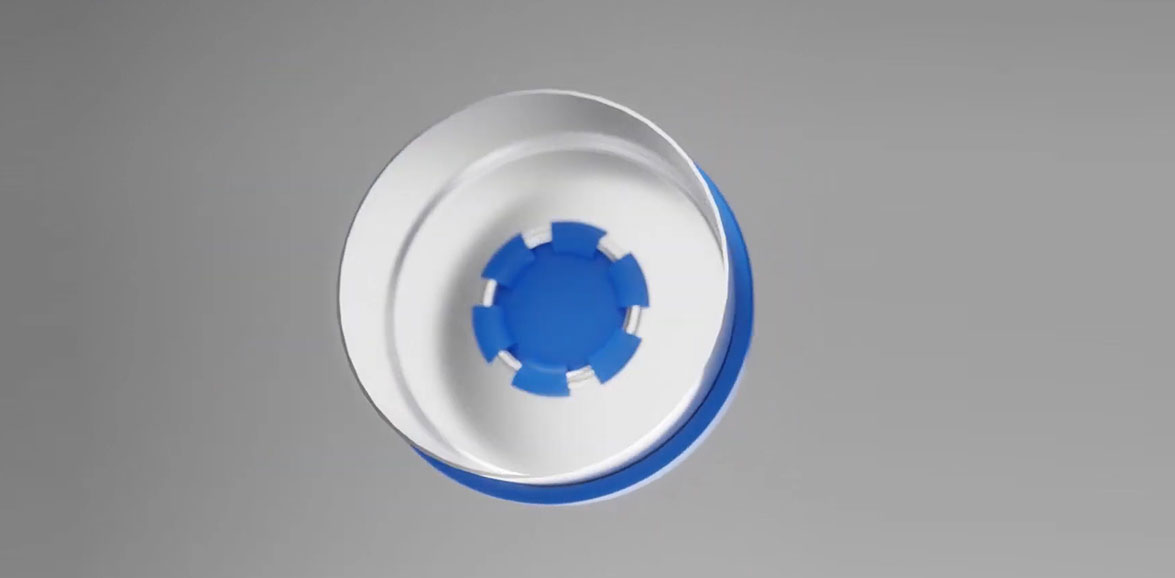
Many injectable antibiotics, the cephalosporins, penicillins and carbapenems among them, are supplied as a sterile dry powder that is reconstituted in the vial before use, and the seal on that vial has to let a needle in twice: once to add the diluent and once to draw the solution. A flip-off seal such as the FlipTop® Optima does this while the aluminium stays crimped, and an all-aluminium tear-off seal is the plain-metal alternative. Autofits makes both in Nashik, India, colour coded to the customer’s scheme and supplied Ready-to-Use for aseptic powder filling.
Key takeaways
- A dry-powder antibiotic vial is filled aseptically and not terminally sterilized, so seals arrive sterile or are sterilized before use.
- The seal must allow two needle entries: diluent in, reconstituted solution out.
- Flip-off seals expose only the stopper centre and stay crimped; tear-off seals remove a perforated centre from an all-aluminium cap.
- Colour coding separates strengths, such as 500 mg and 1 g presentations of the same antibiotic, on the line and on the ward.
- 20 mm is the most common injection vial neck; the FlipTop Optima also comes in 13, 28, 32 and 34 mm, and tear-off seals in 13, 20 and 32 mm.
- Beta-lactam antibiotics are made in segregated facilities, so seals for those lines are delivered and stored to the filler’s segregation rules.
What a dry-powder antibiotic vial asks of its seal
The seal on a powder vial is applied after aseptic filling, sits on the vial through storage and transport, and is opened at the bedside for reconstitution.
| Stage | What happens | What the seal has to do |
|---|---|---|
| Aseptic powder filling | Sterile powder is dosed into sterile vials and stoppered in a grade A zone | Arrive sterile, or be sterilized by the filler, and feed cleanly into the capper |
| Capping | The seal is crimped under the neck flange over the stopper | Crimp consistently over a stopper that has just been seated on a dry fill |
| Storage and transport | Dry powder held until use | Hold container closure integrity, keeping moisture out of a moisture-sensitive powder |
| Reconstitution | Diluent injected, powder dissolved, solution withdrawn | Expose the stopper for two needle entries; the aluminium stays crimped |
| Identification | Several strengths of one antibiotic share a vial format | Carry the colour that identifies the strength |
Because sterile powders are not terminally sterilized, the filling, stoppering and capping sit under the aseptic controls of EU GMP Annex 1, and the closed vial’s integrity is shown against USP <1207>.
Flip-off and tear-off options
A flip-off seal keeps the aluminium on the vial after opening; a tear-off seal removes part of it.
| FlipTop Optima flip-off | All-aluminium tear-off | |
|---|---|---|
| Construction | AA8011 aluminium shell with a polypropylene button | One-piece aluminium, no plastic |
| How it opens | Button flips up to expose the stopper centre | Perforated centre is torn away |
| After opening | Aluminium stays crimped; button cannot be refitted | Centre of the cap is gone; the ring stays crimped |
| Colour | Button and, optionally, the aluminium | Pigmented lacquer on the aluminium |
| Sizes | 13, 20, 28, 32, 34 mm | 13, 20, 32 mm |
| Standard | ISO 8362-6 | ISO 8362-3 |
The flip-off seal gives the larger coloured area and the clearer sign of first opening, which is why it is the usual choice where strengths are colour coded. The two are compared in detail in flip-off vs tear-off seals.
Sizes used on antibiotic vials
The seal is sized by the vial’s neck finish, and two vials of different fill can share one neck. The 20 mm neck is the most common injection vial neck; larger necks are used on larger vials and on some moulded-glass vials. Read the neck from the vial drawing and match a stopper of the same nominal diameter.
| Seal | Size | Total height (mm) | Max opening force | Standard packing per box |
|---|---|---|---|---|
| FlipTop Optima 13 mm | 13 mm | 7.62 to 8.38 | 30 N | 15,000 |
| FlipTop Optima 20 mm | 20 mm | 9.02 to 9.91 | 35 N | 6,000 |
| FlipTop Optima 28 mm | 28 mm | 11.06 to 12.06 | 35 N | 3,000 |
| FlipTop Optima 32 mm | 32 mm | 14.30 to 15.50 | 65 N | 1,400 |
| Tear-off 13 mm | 13 mm | 6.90 to 7.70 | 30 N | 15,000 |
| Tear-off 20 mm | 20 mm | 7.40 to 8.00 | 35 N | 6,000 |
| Tear-off 32 mm | 32 mm | 13.00 to 13.60 | 65 N | 1,400 |
The full drawing dimensions for every line are in the vial seal sizing guide.
Colour coding by strength
When one antibiotic is filled in two or three strengths in the same vial, the seal colour is often the quickest way to tell them apart. The marketing-authorisation holder sets the colour scheme; Autofits reproduces it. FlipTop seals take colour on the polypropylene button and, optionally, on the aluminium, so one aluminium colour can carry a product family while the button changes per strength. Seals are made in a wide range of colours, matte or glossy, and can be printed or embossed. How seal colour is specified is set out on vial seal colours.
Ready-to-Use seals for aseptic powder filling
For an aseptic powder line, seals can be supplied Ready-to-Use, so they go from the bag to the capper without washing or sterilization on site. Ready-to-Use seals are washed, double-lacquered, assembled in an ISO Class 8 cleanroom, gamma or ETO sterilized and double-bagged for aseptic areas, with a shelf life of 2 years before capping. Ready-to-Sterilize seals are supplied for lines that run their own sterilization, and Regular seals for non-sterile use. More on the sterile forms is on sterile vial sealing.
Seals for beta-lactam lines
Penicillins and other beta-lactams can sensitise patients at trace levels, so their manufacture is segregated from other products. The US FDA’s guidance on non-penicillin beta-lactam drugs recommends separate facilities, and India’s Schedule M, enforced by the Central Drugs Standard Control Organisation sets the same expectation for beta-lactam production. The seal itself contains no drug substance; what changes for a segregated line is how seals are received, stored and moved into the filling area, which follows the filler’s own procedures. Ready-to-Use seals arrive double-bagged, which suits that kind of controlled entry.
Materials and quality
Seal shells are AA8011 aluminium alloy with an epoxy lacquer to 21 CFR 175.300, and FlipTop buttons are polypropylene to 21 CFR 177.1520, moulded in-house on Toyo injection-moulding machines. Components are BSE/TSE-free and heavy metals are held to a maximum of 100 ppm total. Every seal passes 100% high-speed camera inspection, and production runs under ISO 15378:2017, ISO 9001:2015 and ISO 14001:2015 with a Drug Master File (DMF 18100), in Nashik, India.
Frequently asked questions
What seal is used on a dry-powder antibiotic injection vial?
Usually a flip-off seal, such as the FlipTop Optima, crimped over the rubber stopper. The button lifts to expose the stopper centre for the diluent needle and then the withdrawal needle, and the aluminium stays crimped. An all-aluminium tear-off seal is the alternative where a plastic button is not wanted.
Why are antibiotic vial seals different colours?
Colour separates products and strengths that share one vial format, such as two strengths of the same cephalosporin. The drug manufacturer sets the scheme, and the seal is made to it, on the plastic button, the aluminium or both.
Are seals for sterile powder filling supplied sterile?
They can be. Ready-to-Use seals are washed, assembled in an ISO Class 8 cleanroom, gamma or ETO sterilized and double-bagged, so they can go straight to an aseptic capper. Ready-to-Sterilize seals are for lines that sterilize their own components.
What size seal do antibiotic vials use?
The size of the vial’s neck finish. The 20 mm neck is the most common injection vial neck, and 13, 28, 32 and 34 mm seals are made for other necks. Read the neck from the vial drawing rather than choosing by fill weight.
Can the same seal be used on penicillin and non-penicillin lines?
The seal design can be the same, because it contains no drug substance. Beta-lactam products are filled in segregated facilities, so seals for each line are received and stored under that facility’s own segregation procedures.
Related reading
- FlipTop Optima flip-off seals
- All-aluminium tear-off seals
- Lyophilization vial seals
- Vial fill-finish process
- Vial seals by size
- Vial sealing applications
Sources
- Autofits FlipTop Seals dossier and engineering drawings
- US FDA: Non-Penicillin Beta-Lactam Drugs, A CGMP Framework for Preventing Cross-Contamination, Guidance for Industry
- Central Drugs Standard Control Organisation, India
- EudraLex Volume 4, EU GMP Annex 1, Manufacture of Sterile Medicinal Products
- ISO 8362-6:2010, Caps made of aluminium-plastics combinations for injection vials
*Last updated: 2026-11-06. General technical information, not regulatory advice; segregation and sterility requirements for a product follow its own registration and the applicable authority.*
