
Diagnostic and IVD Reagent Vial Seals and Closures
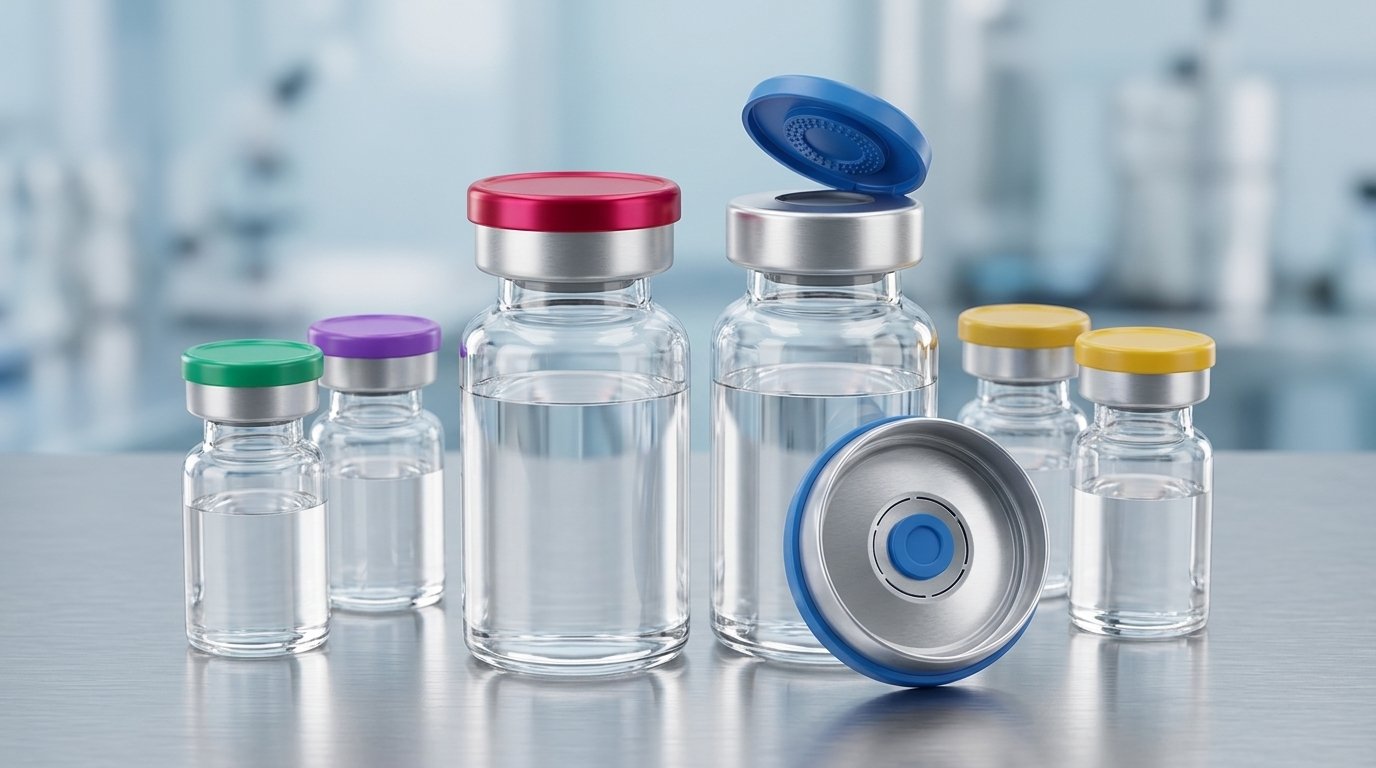
In-vitro diagnostic (IVD) reagents sit under a different regulatory pathway from injectable drugs, so the closure priorities shift: identification and colour coding come to the front, the size range is broad, and injectable-grade sterility is a choice rather than a default. A diagnostic panel can run many reagents side by side, so telling one vial from another at a glance is often the closure’s most important job.
This page is for diagnostics and IVD formulators, packaging engineers and sourcing managers selecting a reagent vial closure. It covers the different regulatory pathway, identification and colour coding, the size range, the Autofits seals that fit, and the standards involved.
Key takeaways
- IVD and diagnostic reagents follow a different regulatory pathway from injectable drugs, so injectable-grade sterility is a choice rather than a default.
- Identification and colour coding are front-and-centre, because diagnostic panels run many reagents in parallel.
- The FlipTop® Optima flip-off seal covers a broad size range from 13 mm to 34 mm; buttons come in a wide range of colours for identification.
- For reagents that need full seal removal, the FlipTop® Tear-Down and FlipTop® Pull Ring take the whole seal off.
- Where injectable-grade closures are still wanted, the same seals are made to ISO 8362-6 under ISO 15378 GMP.
What diagnostic packaging needs from the closure
A diagnostic reagent vial is a container-closure system: a vial, a stopper or liner and an aluminium-plastic seal that crimps under the neck flange. Because IVD reagents are not administered to patients, the closure requirements differ from injectables in three ways.
Different regulatory pathway. IVD products are regulated as diagnostic devices rather than as parenteral medicines, so the pharmacopoeial injectable requirements (for example elastomeric-closure and sterility chapters) are not automatically in scope. That gives formulators room to choose the closure grade to match the reagent, from a straightforward protective seal to a full injectable-grade closure where the reagent is sensitive.
Identification. A diagnostic assay uses many reagents together, so a lab has to distinguish them quickly and reliably. Colour coding on the seal is a primary means of doing that at the bench. Flip-off buttons are made in a wide range of colours, matte or glossy, customised to requirement, which supports a clear colour scheme across a reagent kit.
Size range. Reagent volumes vary widely, from small aliquots to larger bulk reagents, so the closure programme has to cover a broad neck range. The Optima flip-off is made in 13, 20, 28, 32 and 34 mm, so one supplier can seal a whole reagent portfolio.
Choosing the closure grade for a reagent
Because the pathway is different, the closure grade is a decision rather than a given. A simple flip-off seal with a flip-off seal button gives protection, tamper indication and colour coding for most reagents. Where a reagent is oxygen- or moisture-sensitive, or where the diagnostic workflow benefits from the same closure integrity used on injectables, the same Optima seals can be specified to injectable-grade standards, produced to ISO 8362-6 under ISO 15378 GMP, and supplied Ready-to-Use (gamma or ETO sterilized) where a clean, low-particulate closure is wanted.
For reagents dispensed by pouring rather than by needle, full seal removal can be preferable. The FlipTop® Tear-Down in 13, 20 and 32 mm removes the whole seal by twisting anticlockwise, and the FlipTop® Pull Ring in 20 mm and 32 mm removes it by pulling the ring.
Two adjacent pages fill out the picture. Research and lab reagent closures covers the research-use end of the same bench, including freezer storage and freeze-thaw duty, and contrast media vial seals covers diagnostic imaging agents, which are injectables and therefore carry the full parenteral closure requirement. Because a reagent kit spans several neck sizes at once, the by-size index is usually a faster way in than the individual product pages, and how to choose a vial cap size explains why the seal has to match the vial neck finish rather than the nominal fill volume.
Which Autofits seals fit diagnostic vials
- FlipTop® Optima flip-off in 13, 20, 28, 32 and 34 mm: the default for reagent vials across the size range, with colour coding in a wide range of colours and the Button design for intrinsic tamper evidence.
- FlipTop® Tear-Down in 13, 20 and 32 mm: full seal removal by twisting anticlockwise, for reagents dispensed by pouring.
- FlipTop® Pull Ring in 20 mm and 32 mm: a further full-removal option.
All seals can be supplied Regular, Ready-to-Use (gamma or ETO sterilized) or Ready-to-Sterilize, so the grade can be matched to the reagent. See the FlipTop® Optima page or the applications hub for the full range.
Relevant standards
- ISO 8362-6: the design standard for caps made of aluminium-plastics combinations for injection vials, which the Optima follows where an injectable-grade closure is specified. Vial necks follow ISO 8362-1.
- ISO 15378: GMP requirements for primary packaging materials; Autofits seals are produced under ISO 15378:2017, which underpins the closure quality regardless of the reagent’s own regulatory pathway.
- USP <1207>: package integrity evaluation for sterile products, relevant where a diagnostic reagent is filled and closed to injectable-grade integrity.
Frequently asked questions
How is closure selection different for IVD reagents?
IVD reagents are regulated as diagnostic devices rather than as injectable medicines, so the pharmacopoeial injectable requirements are not automatically in scope. That lets you choose the closure grade to match the reagent, from a straightforward protective seal to a full injectable-grade closure, and it moves identification and colour coding to the front of the decision.
Why is colour coding so important on diagnostic vials?
A diagnostic assay uses many reagents together, so a lab has to distinguish them quickly and reliably. Colour coding on the flip-off button is a primary means of doing that at the bench. Buttons are available in a wide range of colours, matte or glossy, customised to requirement, which supports a clear scheme across a reagent kit.
What size seals do diagnostic reagent vials use?
Reagent volumes vary widely, so the closure programme covers a broad range. The FlipTop® Optima is made in 13, 20, 28, 32 and 34 mm, so one supplier can seal a whole reagent portfolio.
Can diagnostic seals be supplied to injectable-grade standards?
Yes. Where a reagent is sensitive or the workflow benefits from injectable-grade integrity, the same Optima seals can be specified to ISO 8362-6 under ISO 15378 GMP, and supplied Ready-to-Use, gamma or ETO sterilized, where a clean, low-particulate closure is wanted.
Which seal suits a reagent that is poured rather than drawn by needle?
For reagents dispensed by pouring, full seal removal can be preferable. The FlipTop® Tear-Down in 13, 20 and 32 mm removes the whole seal by twisting anticlockwise, and the FlipTop® Pull Ring in 20 mm and 32 mm removes it by pulling the ring.
Related reading
- Vial sealing applications hub
- Vaccine vial seals and closures
- FlipTop® Optima flip-off seals
- FlipTop® Tear-Down seals
- FlipTop® Pull Ring seals
- Flip-off seal: definition
- ISO 15378: GMP for primary packaging
Sources
- Autofits FlipTop Seals dossier and engineering drawings (working/spec-sheets/)
- ISO: ISO 8362-6:2010, Injection containers and accessories, Part 6: Caps made of aluminium-plastics combinations for injection vials (https://www.iso.org/standard/45641.html)
- ISO: ISO 15378:2017, Primary packaging materials for medicinal products, GMP requirements (https://www.iso.org/standard/70729.html)
- USP-NF: General Chapter <1207>, Package Integrity Evaluation, Sterile Products (https://www.usp.org/)
*Last updated: 2026-07-06. This page is general technical information, not regulatory or compliance advice; confirm current standard editions and your own specification with Autofits and the issuing bodies.*
