
Anesthetic Vial Seals and Closures
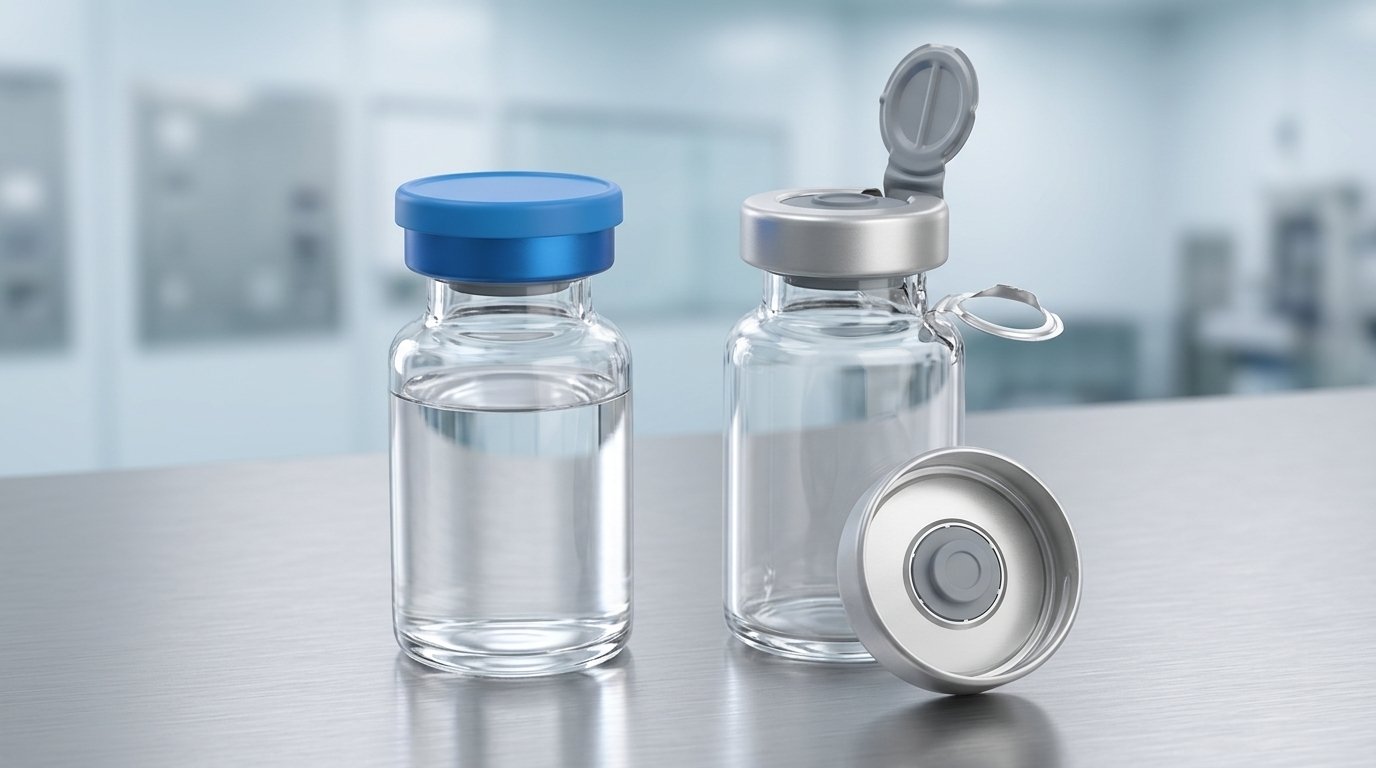
Anesthetic products are used in time-critical settings, so the closure has to open fast and cleanly for repeated multidose access, give clear tamper evidence, and carry colour coding for safe identification under pressure, on necks that are usually 20 mm. In an operating theatre the difference between a clean single-handed open and a fiddly one matters, and the closure design is part of that. The same argument applies with less warning on a resuscitation trolley, which is the subject of emergency drug vial seals.
This page is for anesthetic formulators, packaging engineers and sourcing managers selecting a vial closure. It covers multidose fast access, the tear-down option some anesthetic workflows prefer, tamper evidence and identification, the Autofits seals that fit, and the standards involved.
Key takeaways
- Anesthetic closures must open fast and cleanly for repeated multidose access, give clear tamper evidence, and carry colour coding for safe identification.
- Most anesthetic vials use a 20 mm neck; smaller presentations use 13 mm.
- The FlipTop® Optima flip-off seal in 20 mm is the default for fast needle access; the Button design adds intrinsic tamper evidence.
- Some anesthetic workflows prefer the FlipTop® Tear-Down seal, which removes the whole seal by twisting anticlockwise.
- Closure standards: ISO 8362-6, ISO 15378, USP <381> and EU GMP Annex 1.
What anesthetic packaging needs from the closure
An anesthetic vial is a sterile container-closure system: glass vial, rubber stopper and an aluminium-plastic seal that crimps under the neck flange to compress the stopper against the glass. Anesthetic use, often time-critical and multidose, puts particular weight on three requirements.
Fast access. Anesthetic products are drawn in settings where speed matters, so the closure should open cleanly, ideally single-handed. A flip-off seal suits this: the user flips the plastic button to expose a small central injection point, the needle goes through the stopper, and the aluminium stays crimped so the seal holds between doses on a multidose vial.
Safe identification. Anesthetic errors are high-consequence, so clear identification matters. Colour coding on the seal is a primary means of distinguishing products and strengths at a glance. Flip-off buttons are made in a wide range of colours for exactly this reason.
Tamper evidence. An anesthetic vial that has been opened must be obvious. A flipped or missing button signals an opened seal; the Optima Button design carries intrinsic tamper evidence via a 12-stem flower formed under the button disc, so the opened state is visibly distinct.
Fast access and the tear-down preference
For multidose anesthetic vials that are accessed by needle, the flip-off button gives the fastest clean open: flip, puncture, and the crimp holds between doses. The 20 mm Optima has six tapered bridges and a maximum opening force of 35 N, which keeps the open predictable.
Some anesthetic workflows instead prefer to take the whole seal off, either to expose the full stopper or to fit an accessory. For those, the FlipTop® Tear-Down seal removes the entire closure by twisting the polypropylene disc anticlockwise so the whole seal comes off. The Tear-Down is made in 13, 20 and 32 mm. The FlipTop® Pull Ring in 20 mm and 32 mm is a further full-removal option, removing the seal by pulling the ring and opening anticlockwise.
All seals are supplied Regular, Ready-to-Use (gamma or ETO sterilized, double-bagged for aseptic areas) or Ready-to-Sterilize, so they slot into both terminal and aseptic anesthetic fill lines.
Whichever design you specify, the opening technique is worth training rather than leaving to the moment. The flip-off cap removal techniques comparison and the step-by-step on how to open a vial cap by seal type cover the flip, twist and pull actions and what each one does to the crimp. Anaesthetics also sit on a trolley beside other 20 mm injectables, so it is worth reviewing the 20 mm seal range as a whole rather than product by product. The same colour-differentiation reasoning applies to insulin and hormone vials and to cytotoxic oncology fills, where the consequence of a misread vial is higher again.
Which Autofits seals fit anesthetic vials
- FlipTop® Optima flip-off in 20 mm (and 13 mm for smaller vials): the default for fast needle access on multidose anesthetic vials. The Button design adds intrinsic tamper evidence, and colour coding is available in a wide range of colours, matte or glossy, customised to requirement.
- FlipTop® Tear-Down in 13, 20 and 32 mm: full seal removal by twisting anticlockwise, for workflows that take the whole seal off.
- FlipTop® Pull Ring in 20 mm and 32 mm: a further full-removal option, removing the seal by pulling the ring.
See the FlipTop® Optima page or the applications hub for the full range.
Relevant standards
- ISO 8362-6: the design standard for caps made of aluminium-plastics combinations for injection vials, which the Optima follows. Vial necks follow ISO 8362-1.
- ISO 15378: GMP requirements for primary packaging materials; Autofits seals are produced under ISO 15378:2017.
- USP <381>: elastomeric closures for injections, the reference for the stopper that the seal crimps over on a multidose anesthetic vial.
- EU GMP Annex 1: manufacture of sterile medicinal products, which sets aseptic-filling and CCI expectations for sterile anesthetic preparations.
Frequently asked questions
What seal opens fastest for a multidose anesthetic vial?
A flip-off seal such as the FlipTop® Optima gives the fastest clean open for needle access: you flip the plastic button to expose a central injection point, the stopper is punctured, and the aluminium stays crimped between doses. The 20 mm size is the most common for anesthetic vials, and the Button design adds intrinsic tamper evidence.
When is a tear-down seal preferred for anesthetics?
Some anesthetic workflows take the whole seal off, either to expose the full stopper or to fit an accessory. For those, the FlipTop® Tear-Down seal removes the entire closure by twisting the polypropylene disc anticlockwise. It is made in 13, 20 and 32 mm. The FlipTop® Pull Ring is a further full-removal option.
What size seal do anesthetic vials use?
Most anesthetic vials use a 20 mm neck; smaller presentations use 13 mm. Match the seal to the vial finish and the stopper of the same nominal diameter; the 20 mm Optima page lists dimensions to check against your vial.
How does colour coding help with anesthetic safety?
Anesthetic errors are high-consequence, so clear identification matters. Colour coding on the flip-off button lets staff distinguish products and strengths at a glance. Buttons are available in a wide range of colours, matte or glossy, customised to requirement.
How does the seal provide tamper evidence on an anesthetic vial?
A flip-off seal shows it has been opened once the plastic button is flipped or missing. The Optima Button design adds intrinsic tamper evidence with a 12-stem flower formed under the button disc, so the opened state is visibly distinct.
Related reading
- Vial sealing applications hub
- Insulin and hormone vial seals and closures
- FlipTop® Optima flip-off seals
- FlipTop® Tear-Down seals
- FlipTop® Pull Ring seals
- USP <381>: elastomeric closures for injections
- Flip-off seal: definition
Sources
- Autofits FlipTop Seals dossier and engineering drawings (working/spec-sheets/)
- ISO: ISO 8362-6:2010, Injection containers and accessories, Part 6: Caps made of aluminium-plastics combinations for injection vials (https://www.iso.org/standard/45641.html)
- ISO: ISO 15378:2017, Primary packaging materials for medicinal products, GMP requirements (https://www.iso.org/standard/70729.html)
- USP-NF: General Chapter <381>, Elastomeric Closures for Injections (https://www.usp.org/)
- EudraLex Volume 4, EU GMP Annex 1, Manufacture of Sterile Medicinal Products (https://health.ec.europa.eu/)
*Last updated: 2026-07-06. This page is general technical information, not regulatory or compliance advice; confirm current standard editions and your own specification with Autofits and the issuing bodies.*
