
USP <661> Plastic Packaging Systems: <661.1> and <661.2> Explained
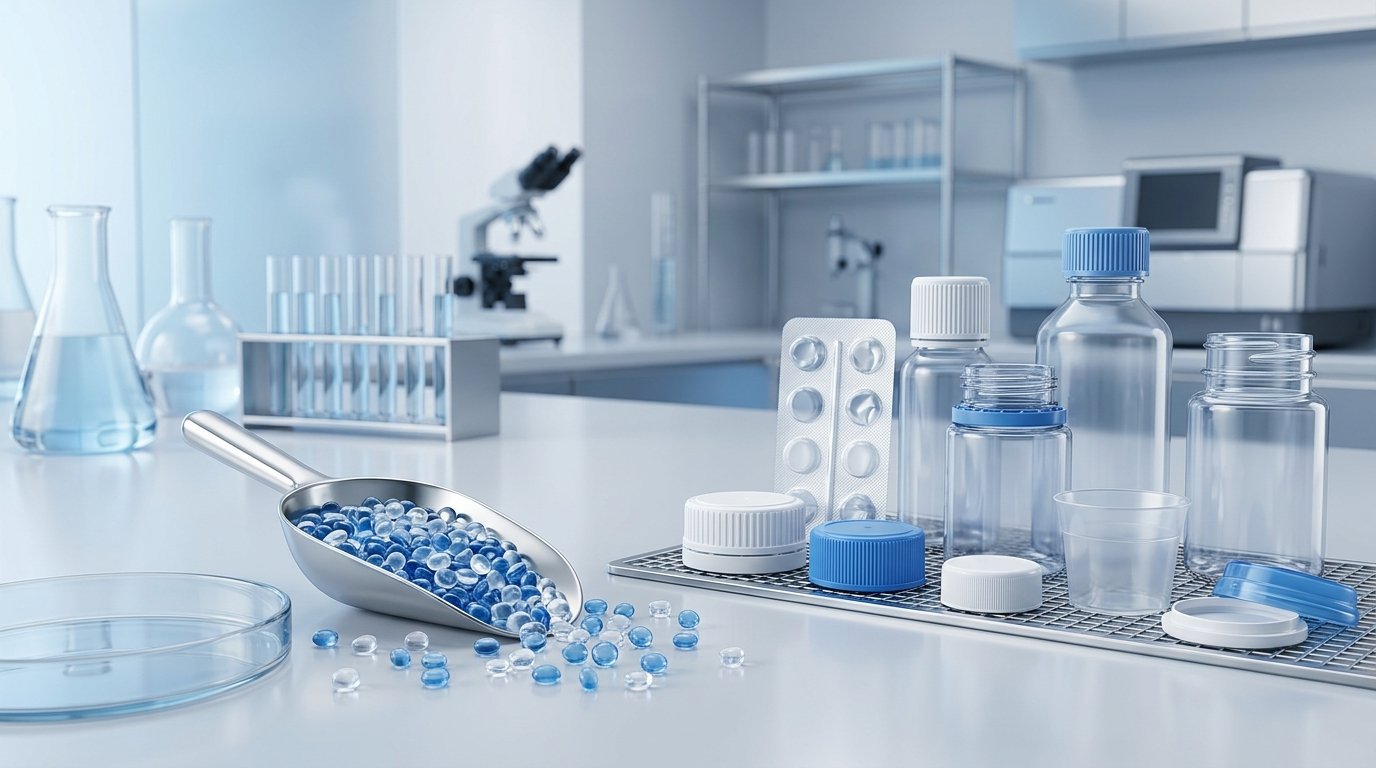 USP <660>; elastomeric closures by USP <381> and USP <382>.
What is the USP <661> series?
The USP <661> series is the set of United States Pharmacopeia general chapters that define the requirements for plastic materials and plastic packaging systems used with pharmaceuticals. It is published in the United States Pharmacopeia and National Formulary (USP-NF) by the U.S. Pharmacopeial Convention.
Historically the requirements sat in a single chapter, <661> Containers, Plastics. USP reorganised this content into two chapters: <661.1>, addressing the plastic materials themselves, and <661.2>, addressing the finished packaging systems. The parent <661> now functions largely as an umbrella that points to the two sub-chapters. This structure reflects how plastic packaging is actually qualified: the polymer is characterised as a material, and the finished container is then evaluated as the system that will contact the drug.
USP <661.1>: Plastic Materials of Construction
USP <661.1> covers the raw plastic materials used to make pharmaceutical packaging: identifying the polymer and testing its physicochemical and biological properties. It is the material-level chapter. Its purpose is to characterise the polymer (for example a specific polyethylene, polypropylene, or other resin) and the additives in it, so that the base material is known and controlled before it is made into a container.
In broad terms, <661.1> addresses material identification and the physicochemical and biological testing of the plastic material of construction. Because it is concerned with the material, it is the chapter a resin or component supplier works to in establishing that a given plastic is suitable as a material of construction for pharmaceutical packaging.
USP <661.2>: Plastic Packaging Systems for Pharmaceutical Use
USP <661.2> covers the finished plastic packaging system: the actual container, closure, or assembly as it will hold the drug product. It is the system-level chapter. Where <661.1> characterises the material, <661.2> evaluates the finished package, including a risk-based assessment of its suitability for the specific drug product and dosage form.
<661.2> is the chapter that connects the packaging to the product it will contain. The testing and assessment expected depend on the route of administration and the sensitivity of the product, with parenteral and ophthalmic products generally receiving the most scrutiny. For higher-risk products, the suitability assessment extends into extractables and leachables work, which examines what could migrate from the plastic into the drug over its shelf life.
How the <661> series fits with glass and closures
The USP <661> series covers plastic packaging; glass containers and elastomeric closures are covered by separate chapters, and they are used together depending on the package design. A given drug product may be packaged in glass, in plastic, or in a combination, with an elastomeric closure.
| Component | Standard |
|---|---|
| Plastic materials | USP <661.1> |
| Plastic packaging systems | USP <661.2> |
| Glass containers | USP <660> |
| Elastomeric closures (material) | USP <381> |
| Elastomeric closures (function) | USP <382> |
For an injectable in a glass vial with a rubber stopper and an aluminium seal, the glass meets USP <660> and the closure meets <381>/<382>; the USP <661> series applies where plastic components are used. Across all of them, what can migrate into the drug is controlled through extractables and leachables studies, and the assembled package is shown to maintain integrity per USP <1207>.
How this works in practice at Autofits
Autofits manufactures aluminium and aluminium-plastic seals for injectable glass vials, so the USP <661> series is most relevant to the plastic component of its combination seals. The FlipTop Optima flip-off seals combine an aluminium shell with a moulded plastic top; the broader range also includes tear-off and tear-down aluminium seals and aluminium pilfer-proof (ROPP) caps (the full products page lists the range). Material selection and control for packaging components sit within Autofits’ quality system. Production runs under an ISO 15378:2017 quality system, alongside ISO 9001:2015 and ISO 14001:2015 certification and a Drug Master File, in a 75,000 sq ft Nashik facility with an ISO Class 8 cleanroom and high-speed visual inspection. The full certification set is on the quality page. The moulded plastic top is what makes the closure an aluminium-plastic seal rather than an all-metal one, and how the two parts are joined is described in the manufacturing process guide.
Frequently asked questions
What is USP <661>?
USP <661> is the United States Pharmacopeia framework for plastic pharmaceutical packaging. The original single chapter, <661> Containers, Plastics, was reorganised into two chapters: <661.1> Plastic Materials of Construction, which covers the raw polymers, and <661.2> Plastic Packaging Systems for Pharmaceutical Use, which covers the finished containers and systems. The parent <661> now mainly points to these two.
What is the difference between USP <661.1> and <661.2>?
USP <661.1> covers the plastic materials of construction: identifying the polymer and testing its physicochemical and biological properties at the material level. USP <661.2> covers the finished plastic packaging system as it will hold the drug, including a risk-based suitability assessment for the specific product. In short, <661.1> qualifies the material and <661.2> qualifies the finished package.
Why was USP <661> split into <661.1> and <661.2>?
The chapter was split so that the plastic material and the finished packaging system are addressed separately, reflecting how packaging is actually qualified. The material (the polymer and its additives) is characterised under <661.1>, and the finished container or system that contacts the drug is evaluated under <661.2>, with the depth of assessment scaled to the product’s risk.
Does USP <661> apply to glass containers?
No. The USP <661> series applies to plastic packaging. Glass containers are covered by USP <660>, Containers, Glass, which classifies glass by hydrolytic resistance. Use USP <660> for glass and the USP <661> series for plastic; a package that combines both is assessed against the relevant chapters for each material.
How does USP <661> relate to extractables and leachables?
For higher-risk products, the suitability assessment under <661.2> extends into extractables and leachables work, which studies what could migrate from the plastic into the drug over its shelf life. USP <661.1> and <661.2> establish the material and system requirements; extractables and leachables testing evaluates product-specific migration.
Related reading
- USP <660>: glass containers
- USP <381>: elastomeric components in injectable packaging
- Extractables and leachables in vial closures
- USP <1207>: container closure integrity
- Container closure system: definition
Sources
- USP-NF: General Chapter <661.1>, Plastic Materials of Construction (https://www.usp.org/)
- USP-NF: General Chapter <661.2>, Plastic Packaging Systems for Pharmaceutical Use (https://www.usp.org/)
- USP-NF: General Chapter <660>, Containers, Glass (https://www.usp.org/)
*Last updated: 2026-06-18. This article is general technical information, not regulatory or compliance advice; confirm current chapter text, methods, and acceptance criteria with USP-NF.*
