
USP <660> Containers, Glass: Glass Types and Testing Explained
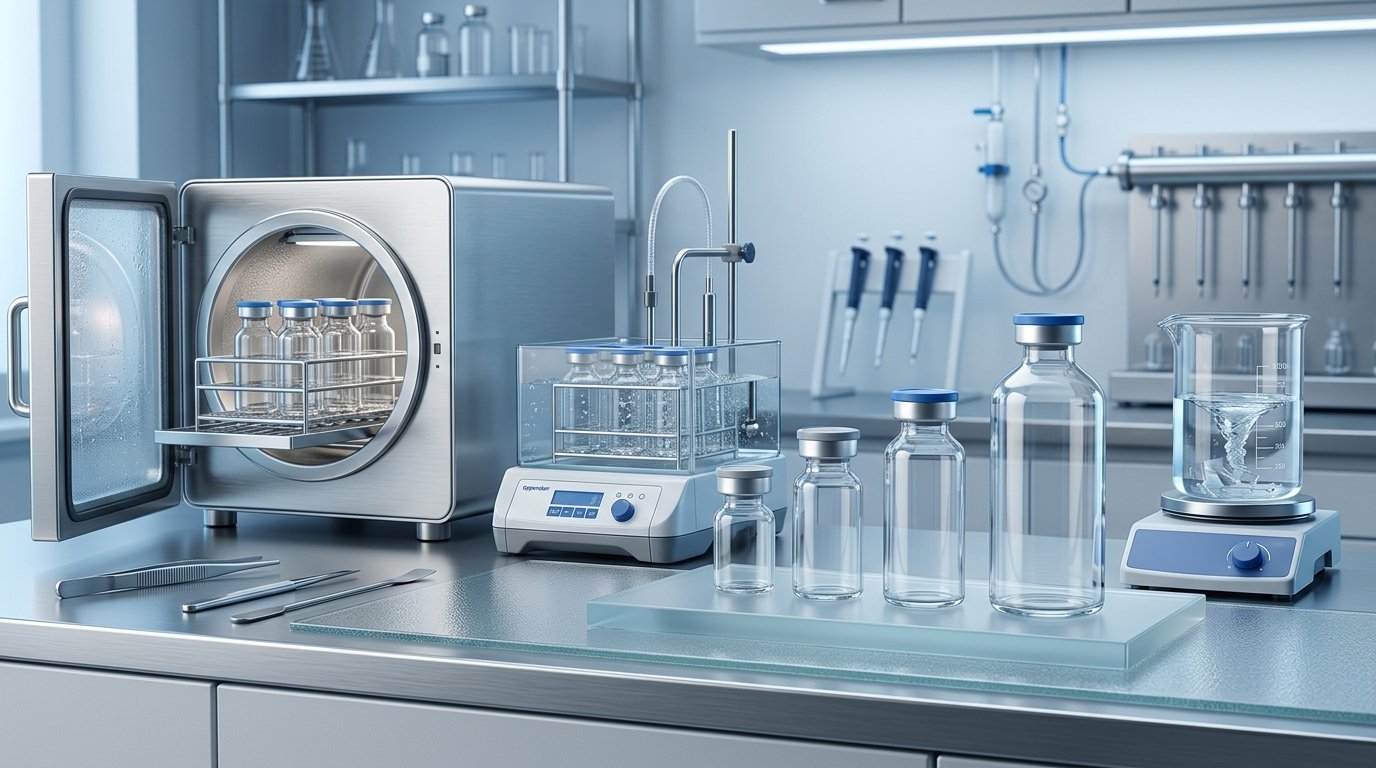 ISO 8362-1.
What is USP <660>?
USP <660> is the United States Pharmacopeia general chapter that defines the requirements and test methods for glass containers intended for pharmaceutical use. It is published in the United States Pharmacopeia and National Formulary (USP-NF) by the U.S. Pharmacopeial Convention.
The chapter exists because the glass that contacts a drug is not chemically inert under all conditions. Water and certain solutions can leach constituents from the glass surface, and in some cases glass can shed flakes (delamination). USP <660> sets out how to classify the glass by its resistance to this attack and how to test it, so that a container is matched to the sensitivity of its contents. It is the reference behind statements like “Type I borosilicate glass,” which appear throughout injectable packaging.
The three glass types
USP <660> classifies pharmaceutical glass into three types by hydrolytic resistance, the measure of how much the glass releases when exposed to water. The higher the resistance, the less the glass interacts with the contents.
| Glass type | Description | Typical use |
|---|---|---|
| Type I | Borosilicate glass, highest hydrolytic resistance | Injectables, sensitive parenterals, most vials |
| Type II | Soda-lime glass with a treated (dealkalised) surface | Aqueous parenterals where Type II is suitable |
| Type III | Soda-lime glass, ordinary resistance | Non-parenteral products and some others |
Type I borosilicate is the default for injectable vials because its low alkali content and high chemical durability minimise interaction with the drug. Type II is soda-lime glass whose inner surface has been treated to improve its resistance. Type III is standard soda-lime glass used where the higher resistance of Types I and II is not required.
What USP <660> tests
USP <660> specifies tests that measure how much a glass surface releases under defined conditions, which is how the glass is classified and verified. The chapter covers test approaches such as:
- Hydrolytic resistance of the glass grains (powdered glass test). Crushed glass is exposed to water under heat, and the alkali released is measured, characterising the bulk glass material.
- Surface hydrolytic resistance (surface or water-attack test). Whole containers are tested so the actual contact surface, including any surface treatment, is assessed as it is used.
- Related surface tests. Methods that distinguish a treated inner surface (Type II) from untreated soda-lime glass (Type III).
The specific procedures, sample numbers, and limits are defined in the current USP-NF text. USP has also worked on glass-quality topics such as delamination propensity, so the current chapter and its companion informational chapters are the controlling reference for what to test and how. Delamination flakes are counted as particulate matter in the finished injection, which is usually where a glass-quality problem first shows up.
How USP <660> relates to vial dimensions and plastics
USP <660> governs what the glass is made of and how durable it is; the vial’s shape and dimensions are set by separate standards, and plastic packaging has its own chapters. The two glass-related references work together: the dimensional standard fixes the form so the closure and cap fit, and USP <660> governs the material.
- Vial dimensions. Tubular glass injection vials are dimensioned under ISO 8362-1, with moulded-glass vials under ISO 8362-4. These standardise the shape and neck finish, not the glass chemistry.
- Plastic packaging. Where the container is plastic rather than glass, the relevant requirements are in the USP <661> series (<661.1> Plastic Materials of Construction and <661.2> Plastic Packaging Systems for Pharmaceutical Use), not USP <660>.
For a complete injectable container closure system, the glass meets USP <660>, the vial dimensions meet ISO 8362-1 or ISO 8362-4, the elastomeric closure meets USP <381> and USP <382>, and the assembled package is shown to maintain integrity per USP <1207>.
How this works in practice at Autofits
USP <660> governs the glass vial; Autofits manufactures the aluminium and aluminium-plastic seals that finish that vial once it is filled and stoppered. The range includes FlipTop Optima flip-off seals, tear-off and tear-down aluminium seals, and aluminium pilfer-proof (ROPP) caps, in 13, 20, and 32 mm sizes (see the full products page). The seal crimps over the stopper and the glass vial neck, so the seal works in tandem with a compliant glass vial to form the container closure system. Autofits produces its seals under an ISO 15378:2017 quality system, alongside ISO 9001:2015 and ISO 14001:2015 certification and a Drug Master File, in a 75,000 sq ft Nashik facility with an ISO Class 8 cleanroom and high-speed visual inspection. The full certification set is on the quality page.
Frequently asked questions
What is USP <660>?
USP <660>, Containers, Glass, is the United States Pharmacopeia general chapter that sets the requirements and test methods for glass used in pharmaceutical packaging. It classifies glass by hydrolytic resistance into Type I, Type II, and Type III, and specifies the tests used to verify that classification, so a container’s glass is matched to the sensitivity of its contents.
What are Type I, II, and III glass?
Type I is borosilicate glass with the highest hydrolytic resistance, used for injectables and most vials. Type II is soda-lime glass with a treated (dealkalised) inner surface for improved resistance. Type III is ordinary soda-lime glass with standard resistance, used where the higher durability of Types I and II is not required. The classification reflects how much the glass releases when exposed to water.
What is hydrolytic resistance?
Hydrolytic resistance is a measure of how well glass resists releasing its constituents (such as alkali) when in contact with water under defined conditions. Higher hydrolytic resistance means the glass interacts less with the contents, which matters for sensitive drugs. USP <660> uses hydrolytic resistance tests to classify and verify pharmaceutical glass.
Why are injectable vials usually Type I glass?
Injectable vials usually use Type I borosilicate glass because it has the highest hydrolytic resistance and low alkali content, so it minimises interaction with the drug and the release of glass constituents. Injectables are often sensitive and administered directly, so the most chemically durable glass is the standard choice.
What is the difference between USP <660> and USP <661>?
USP <660> covers glass containers and classifies glass by hydrolytic resistance. The USP <661> series (<661.1> and <661.2>) covers plastic packaging: the materials of construction and the finished plastic packaging systems. Use USP <660> for glass containers and the USP <661> series for plastic ones.
Related reading
- ISO 8362-1: injection vials made of glass tubing
- USP <661>: plastic packaging systems
- USP <381>: elastomeric components in injectable packaging
- Container closure system: definition
- USP <1207>: container closure integrity
Sources
- USP-NF: General Chapter <660>, Containers, Glass (https://www.usp.org/)
- USP-NF: General Chapters <661.1> Plastic Materials of Construction and <661.2> Plastic Packaging Systems for Pharmaceutical Use (https://www.usp.org/)
- ISO: ISO 8362-1:2018, Injection containers and accessories, Part 1: Injection vials made of glass tubing (https://www.iso.org/standard/74398.html)
*Last updated: 2026-06-18. This article is general technical information, not regulatory or compliance advice; confirm current chapter text, methods, and acceptance criteria with USP-NF.*
